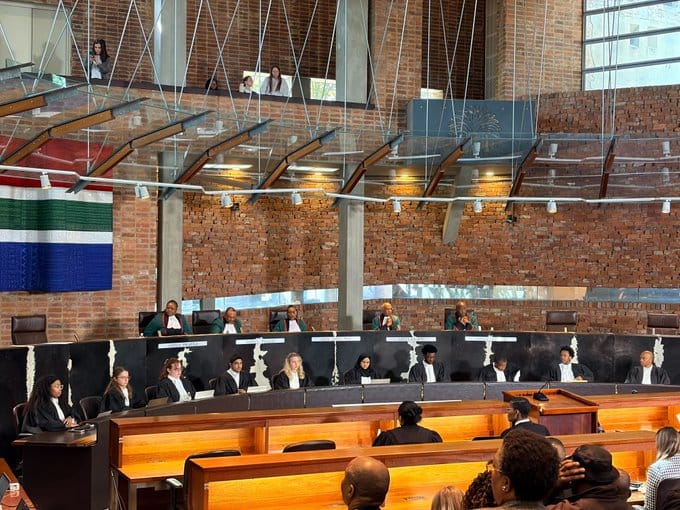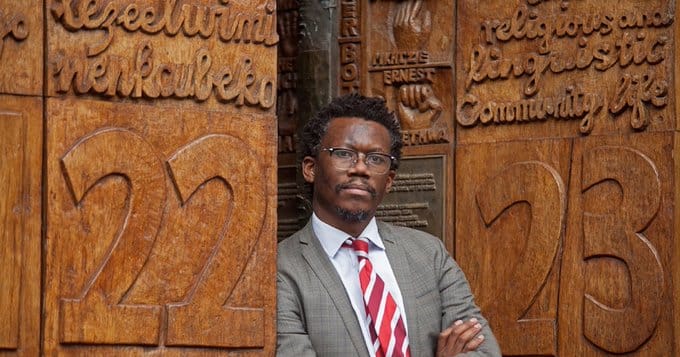
On a crisp autumn morning in Pretoria, the Union Buildings issued a statement that sent quiet tremors through South Africa’s legal fraternity. President Cyril Ramaphosa, acting under Section 175(1) of the Constitution, had appointed senior counsel Tembeka Ngcukaitobi SC to serve as an acting justice of the Constitutional Court. The term: six months, from June 1 to November 30, 2026.
The announcement was brief—just two paragraphs, buried between updates on trade missions and municipal infrastructure grants. But its weight was immense. Ngcukaitobi, 52, is not merely a lawyer. He is a public intellectual, a firebrand advocate, and one of the most recognizable legal voices of the post-apartheid generation. His appointment is being hailed by some as a long-overdue recognition of excellence, and by others as a politically risky embrace of a man whose courtroom victories have often humbled the very government now elevating him.
The Advocate’s Rise
Tembeka Ngcukaitobi’s name has been etched into South Africa’s legal landscape for nearly two decades. Born in the Eastern Cape, he clerked for one of the country’s most revered jurists, former Chief Justice Arthur Chaskalson—a formative experience that shaped his understanding of constitutional law as both a shield and a sword.
But it was his work in the public eye that made him a household name. He was part of the legal team that forced President Jacob Zuma to repay state funds for the non-security upgrades at his Nkandla homestead, a case that became a defining moment in South Africa’s struggle for accountability. He represented the families of the 34 striking miners killed at Marikana in 2012, standing alongside widows who had waited years for justice. And most recently, he helped argue South Africa’s landmark genocide case against Israel at the International Court of Justice, a move that cemented his reputation on the global stage.
“Ngcukaitobi is the kind of lawyer who doesn’t just argue cases—he writes the narrative,” said legal analyst and University of Cape Town professor Dr. Sandile Memela. “He knows that law is politics by another name, and he’s never been afraid to say so in public. That’s precisely why his appointment is so fascinating.”
The Constitutional Provision
Under Section 175(1) of the South African Constitution, the President may appoint an acting judge to the Constitutional Court when any permanent position is vacant or when any serving justice is unable to perform their duties. While the provision is routine, the choice of appointee is anything but. Acting justices serve with full voting powers, and their judgments become binding precedent.
Ngcukaitobi’s six-month term will see him participate in some of the court’s most consequential matters, including appeals on electoral reform, land expropriation without compensation, and the limits of presidential power. His presence, even temporarily, could tip delicate balances in cases that have divided the court 6–5 or 7–4 in recent years.
Praise and Power
Supporters of the appointment have been effusive. The Council for the Advancement of the South African Constitution (CASAC) issued a statement welcoming Ngcukaitobi’s “sharp legal mind, impeccable integrity, and commitment to constitutionalism.” The Black Lawyers Association praised his “unyielding advocacy for the marginalized.”
“He has argued more major constitutional cases in the last decade than most sitting judges have heard,” said legal commentator and advocate Zola Majavu. “He knows the court’s internal logic, its tensions, its blind spots. He will not be a silent actor. He will challenge, provoke, and likely write some of the most memorable judgments of the 2026 term.”
Ngcukaitobi’s reputation as an orator is also legendary. In the Nkandla case, his oral arguments before the court were described by one justice as “poetry with a scalpel.” His ability to distill complex legal doctrines into moral questions has made him a favorite in lecture halls and television studios alike.
The Critics’ Case
But the appointment has not gone unchallenged. Critics have zeroed in on two areas: Ngcukaitobi’s recent legal work for Economic Freedom Fighters (EFF) leader Julius Malema, and a past judgment he delivered in a rape acquittal case that was later overturned on appeal.
In 2024, Ngcukaitobi represented Malema in a defamation lawsuit brought by a political rival. Though he lost the case, his vigorous defense of the EFF leader raised eyebrows among those who believe that acting justices should avoid even the appearance of partisan association. “You cannot serve as Malema’s hired gun in the morning and don the robes of a neutral arbiter in the afternoon,” wrote conservative columnist Rian van der Westhuizen. “Perception matters.”
The second criticism cuts deeper. In 2019, while serving as an acting judge in the Gauteng High Court, Ngcukaitobi acquitted a man accused of rape, citing inconsistencies in the complainant’s testimony. The National Prosecuting Authority appealed, and the Supreme Court of Appeal later overturned Ngcukaitobi’s ruling, finding that he had “misdirected himself on the evidence” and failed to apply proper standards of credibility assessment for sexual offense cases.
Women’s rights groups have been cautious but concerned. “We are not saying Tembeka Ngcukaitobi is biased against survivors,” said Naledi Mokoena of the People Opposing Women Abuse (POWA). “But that overturned ruling is part of his record. We will be watching closely to see how he approaches gender-based violence cases on the bench.”
The Political Chessboard
Ramaphosa’s decision to appoint Ngcukaitobi cannot be separated from the broader political landscape. With the 2026 local elections approaching, the president is navigating a fractured governing coalition, restive opposition parties, and a judiciary that has increasingly pushed back against executive overreach.
Some insiders suggest the appointment is a calculated attempt to co-opt a formidable legal mind who might otherwise continue to vex the government from the bar. Others see it as a genuine recognition of excellence, untainted by political calculus. Still others whisper that Ramaphosa is quietly auditioning Ngcukaitobi for a permanent seat on the court or even the position of Chief Justice—a role that could fall vacant in 2027.
Ngcukaitobi himself has remained characteristically laconic. In a brief phone call with a news outlet following the announcement, he said only: “I am honored to serve the Constitution. The work begins on June 1.”
A Six-Month Test
What happens on the bench will ultimately matter more than the noise surrounding his appointment. Acting justices have gone on to become giants of the judiciary—and others have faded into footnote status after controversial rulings. Ngcukaitobi’s dual legacy as both a champion of the oppressed and a defender of powerful men will shadow every word he writes in his judgments.
As law students, activists, and politicians prepare for the constitutional drama to unfold, one thing is certain: from June to November 2026, all eyes will be on the curved glass facade of the Constitutional Court in Johannesburg’s Constitutional Hill. Inside, a new actor will take his seat—and the law, for better or worse, will never quite look the same.
About The Author