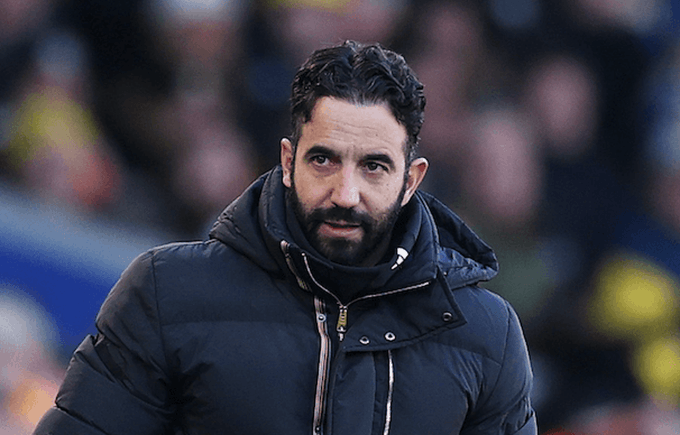
The Rúben Amorim experiment at Manchester United is over. In a move that underscores the relentless pressure and chronic instability at the pinnacle of world football, the 40-year-old Portuguese manager was dismissed by the club on Monday, ending a turbulent 14-month tenure defined by flashes of promise, profound frustration, and ultimately, insufficient results.
The decision, confirmed by the club in a terse midday statement, came on the heels of a dismal 2-0 away defeat to Aston Villa, a performance that left United languishing in sixth place in the Premier League after 20 games, a staggering 18 points adrift of leaders Liverpool. A meagre 30% win rate across all competitions this season proved the final, damning statistic for the hierarchy.
A Union of Promise That Quickly Fractured
Amorim’s arrival in November 2024 was hailed as a bold new dawn. The charismatic former Sporting CP boss, who had broken Benfica and Porto’s duopoly to win a Portuguese league title, represented a shift towards a progressive, tactically rigorous philosophy. His first season offered a tantalising glimpse of potential, as he steered a transitioning squad to the 2025 UEFA Europa League final, only to fall to Atalanta in a narrow 1-0 loss.
However, behind the scenes, a rift was widening. Sources close to the coaching staff indicate Amorim had grown increasingly exasperated by what he perceived as limited and misaligned transfer market support from the football operations department, led by Technical Director Jason Wilcox. The manager’s requests for a specific profile of technically secure, high-intensity players to execute his pressing system were often met with alternatives he deemed unsuitable. This fundamental disconnect over recruitment strategy created a cycle of tension that undermined the project before it could fully take root.
“The vision was never fully aligned,” a club insider stated. “Rúben felt he was sold a project of rebuild and control, but found himself battling for every signing and often receiving players who didn’t fit the system he was hired to implement. The relationship with Wilcox became unworkable.”
Fletcher Steps Into the Interim Breach
With the club facing a critical run of fixtures across the Premier League and FA Cup, the board has turned to a familiar face to steady the ship. Darren Fletcher, the former United midfielder who has been serving as a technical director within the academy structure, will step into the first-team dugout as interim head coach. His immediate mandate is stark: salvage a European qualification spot from the league and navigate a packed schedule that includes an FA Cup fourth-round tie against Leeds United.
Fletcher’s appointment, while interim, is seen as a safe, communicative hand on the tiller—a stark contrast to the sometimes volatile Amorim. “Darren understands the fabric and the expectations of this club better than most,” said CEO Omar Berrada in the club’s announcement. “Our focus now is on providing stability and unity for the remainder of the season as we conduct a thorough process to appoint a new permanent manager.”
A Club in Perpetual Transition
Amorim’s departure marks the fifth permanent or interim managerial exit since Sir Alex Ferguson’s retirement in 2013, a stark testament to the club’s ongoing identity crisis. For the supporters, the cycle has become wearily familiar: initial optimism, a honeymoon period, strategic disagreements, declining results, and a parting of ways.
As the search for a fifth permanent manager in eleven years begins, the questions at Old Trafford grow louder and more fundamental. The dismissal of Rúben Amorim is not just the end of another managerial chapter; it is a fresh indictment of a sporting structure that continues to confuse activity for progress, and where managers are hired for a vision the club seems incapable of fully supporting. The task for Darren Fletcher, and for whoever follows him, is not merely to win matches, but to finally break a debilitating cycle that threatens to define a generation.
About The Author