In a hearing chamber thick with anticipation, the Judicial Commission of Inquiry into Criminality, Political Interference, and Corruption in the Criminal Justice System—the Madlanga Commission—resumed its public sittings on Tuesday with what is arguably its most potentially explosive witness to date: Brigadier Rachel Matjeng, the South African Police Service (SAPS) Section Head for Quality Management. Matjeng’s testimony, which commenced promptly at 09:30, places under the microscope not only her high-ranking position within the police’s internal control environment but also her deeply personal connection to one of the inquiry’s central figures: alleged crime boss Vusimuzi “Cat” Matlala.
The Commission, chaired by retired Constitutional Court Justice Sisi Khampepe, has spent months painstakingly mapping allegations of a shadowy nexus where criminal syndicates, police officials, and political facilitators allegedly collude. Brigadier Matjeng’s appearance represents a direct foray into the most sensitive allegation yet: the potential abuse of intimate relationships to infiltrate and corrupt state procurement.
The Core of the Allegation: Love, Power, and a R360 Million Contract
Prior testimony and evidence before the Commission have alleged that Matjeng was in a long-term romantic relationship with Vusimuzi “Cat” Matlala, a man repeatedly named in proceedings as a central figure in a network involved in illicit mining, extortion, and, crucially, securing lucrative state contracts. The specific focus of today’s questioning is a R360 million contract awarded by the SAPS for the provision of specialised equipment and services. Evidence leaders are expected to present documentation suggesting Matlala’s company, or a front associated with him, was a key beneficiary of this contract during Matjeng’s tenure in a influential procurement oversight role.
The line of inquiry posits a critical conflict of interest: Did Brigadier Matjeng’s personal relationship with Matlala influence, either directly or through the manipulation of processes she oversaw, the awarding of this massive state tender? Did she recuse herself from decisions involving his interests, and did she declare this relationship to her superiors as required by SAPS regulations and the Public Service Code of Conduct?
A Witness Under the Microscope
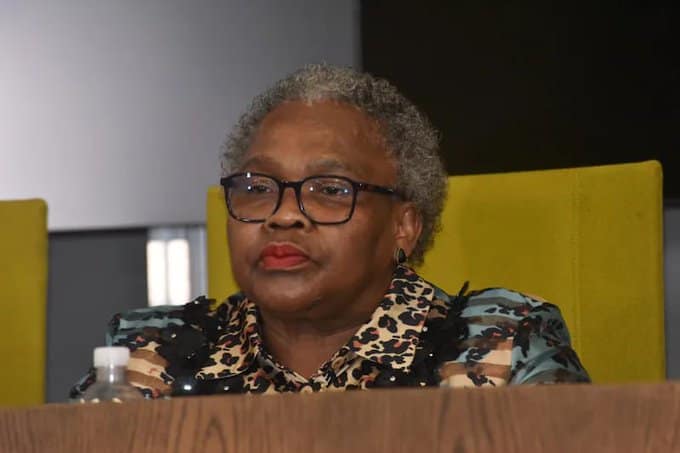
Brigadier Matjeng, dressed in her full police uniform, took the oath with a composed demeanour. In her opening statement, delivered through her legal representative, she acknowledged her professional history and her current role in ensuring quality and compliance within SAPS systems. She is expected to face intense, granular questioning on several fronts:
- The Nature and Duration of the Relationship: Counsel for the Commission will seek to definitively establish the timeline and character of her relationship with Matlala, contrasting it with any prior official denials or omissions.
- Procurement Processes and Influence: Matjeng will be walked through the chain of command and decision-making for the R360 million contract. Questions will focus on her specific actions, recommendations, and approvals at various stages.
- Declarations and Recusal: A key line of attack will be whether she formally disclosed the conflict of interest. Failure to do so would constitute a serious breach of ethics and potentially a disciplinary offence.
- Knowledge of Matlala’s Activities: Evidence leaders may probe the extent of her knowledge of Matlala’s alleged criminal enterprises, testing her defence against claims of wilful blindness.
Stakes for the Commission and the SAPS
Matjeng’s testimony is a pivotal moment for the Madlanga Commission. Successfully demonstrating a corrupt link between a senior police manager responsible for quality management and an alleged criminal syndicate would powerfully validate the inquiry’s core thesis of deep institutional compromise. Conversely, a robust defence from Matjeng could complicate the narrative, though the mere existence of the relationship amid such a large contract is likely to damage public trust.
For the SAPS, already reeling from prior testimony about death squads and evidence tampering, this hearing strikes at the heart of its procurement integrity—a multibillion-rand system historically vulnerable to corruption. The outcome will intensify pressure on National Commissioner Fannie Masemola to demonstrate decisive action against any impropriety uncovered.
As Brigadier Matjeng began her testimony, the gallery—filled with journalists, civil society observers, and affected citizens—leaned in. Her words over the coming hours, and days if needed, will either expose a critical vulnerability in the armour of the state or challenge the Commission to prove its most audacious claim yet. The search for truth within the criminal justice system has entered its most intimate and consequential chapter.
About The Author