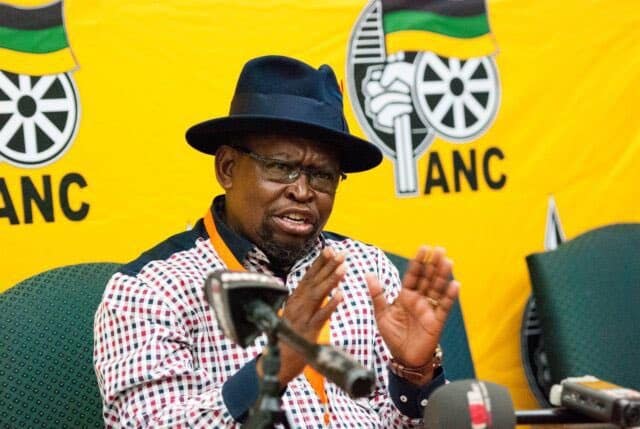
Finance Minister Enoch Godongwana has confirmed that a special Cabinet-level committee has been established to confront the growing fuel price crisis gripping South Africa, as the ripple effects of the ongoing war between the United States and Iran threaten to push petrol and diesel prices to record highs. The announcement, made during a heated session in the National Assembly on Wednesday, comes as motorists and businesses brace for what is expected to be one of the steepest fuel price hikes in years.
Godongwana used his appearance before Parliament not only to address the fuel crisis but also to respond to a recent Western Cape High Court judgment that stripped him of the unilateral power to adjust the VAT rate—a ruling he said he was still weighing whether to appeal. However, it was the soaring cost of fuel that dominated the floor, with opposition parties demanding immediate intervention to prevent what they called a “catastrophic” economic blow to already struggling households.
“We are seized with this matter at the highest level of government,” Godongwana told lawmakers. “The President has authorized the formation of an inter-ministerial committee that I will lead, bringing together the ministers of Mineral Resources and Energy, Trade and Industry, and Transport, among others. Our mandate is to explore all available mechanisms within our fiscal and regulatory framework to mitigate the impact of these exogenous shocks on the South African people.”
The Perfect Storm: War, Oil, and the Rand
The crisis facing South Africa’s fuel price is not of the country’s own making, but its effects are acutely local. The escalating conflict between the United States and Iran—two major players in global energy markets—has sent crude oil prices spiraling upward. With Brent crude now trading consistently above $100 per barrel, the cost of importing fuel has surged dramatically.
Compounding the oil shock is the continued weakness of the rand, which has been trading near R17 to the US dollar. Since South Africa imports all its crude oil, the currency’s slide amplifies every dollar increase in the global oil price. The combined effect has pushed the projected under-recovery on petrol and diesel to levels not seen since the 2022 energy crisis, with economists warning that motorists could face a hike of more than R1.50 per litre in early April.
“This is the worst possible combination—a geopolitical conflict driving up the dollar price of oil at the same time that our currency is under siege,” said independent energy analyst Chris Yelland. “The government has very few levers to pull. The fuel price is determined by international factors and the exchange rate. The only tools available to them are the various levies and taxes that make up a significant portion of the pump price.”
The DA’s Demand: Cut Levies by 50%
The Democratic Alliance (DA) seized on the minister’s announcement to renew its long-standing call for a reduction in the fuel levy. Speaking immediately after Godongwana, DA Shadow Minister of Finance Mark Burke demanded that the government implement an immediate 50% cut in the General Fuel Levy and the Road Accident Fund (RAF) levy, which together account for more than R6 per litre of petrol.
“We cannot tax our way to prosperity, and we certainly cannot tax our way through a crisis,” Burke said, his voice rising above the murmur of the House. “The Minister speaks of a committee to ‘explore mechanisms.’ There is no time for committees and task teams. The mechanism is right in front of you. Cut the fuel levies. Not by a token 10 or 15 cents, but by half. Give immediate relief to the millions of South Africans who are being crushed by the cost of transport, food, and basic necessities.”
Burke argued that the government had accumulated a surplus in the RAF and that the fuel levy had become an “unconscionable burden” on the poor. He accused the African National Congress (ANC) of using the fuel levy as a “hidden tax” to fund inefficiencies and corruption, and he warned that the upcoming hike would trigger a cascade of price increases across the economy.
“Every single thing that moves on a road—food, medicine, building materials, school supplies—will become more expensive if we allow this hike to go through without intervention,” Burke said. “The DA is ready to support any emergency legislation to provide this relief. What we will not support is another committee that reports back in three months after the damage is already done.”
Godongwana’s Delicate Balancing Act
Godongwana, known for his measured and often cautious approach to fiscal policy, responded cautiously to the DA’s demand. While he acknowledged the severity of the situation, he cautioned against knee-jerk reactions that could undermine the fiscus.
“We understand the urgency. We live it. We see it in our constituencies and in our own households,” the minister said. “But we must be responsible. The fuel levy funds critical infrastructure and the Road Accident Fund. Any reduction must be weighed against the impact on the fiscus and on the services that depend on that revenue.”
He noted that the government had previously used the temporary reduction of the fuel levy during the 2022 fuel price crisis, but that such interventions could not be sustained without causing long-term damage to the budget. “We are looking at a combination of measures—not just levy adjustments, but also looking at the regulatory environment, at the slate mechanism, and at the possibility of targeted support for the most vulnerable sectors, such as public transport and agriculture.”
The minister also took a moment to address the VAT ruling, which had threatened to overshadow the fuel discussion. The Western Cape High Court recently found that Godongwana had acted unconstitutionally by adjusting the VAT rate without parliamentary approval. While the minister said he was still considering an appeal, he made it clear that his immediate focus was on the fuel crisis.
“Let me be unequivocal: the VAT judgment does not distract from the work at hand. The committee will begin its work immediately. We will not wait for appeals or legal processes. The people of South Africa need relief, and we are committed to finding a sustainable path forward.”
The Economic Ripple Effects
The fuel price is not merely a concern for motorists; it is a foundational input cost that affects virtually every sector of the economy. Economists warn that a sharp increase in diesel prices, in particular, will have cascading effects on food production, mining, manufacturing, and logistics.
“South Africa is a transport-dependent economy,” said Dr. Azar Jammine, chief economist at Econometrix. “We do not have an efficient rail network for freight. Almost everything moves by road. When diesel goes up, the cost of moving goods goes up, and those costs are passed on to consumers. This is not just about filling up your car. It is about the price of a loaf of bread, a litre of milk, and a taxi fare to work.”
Small business owners, who are already operating on razor-thin margins, are among those most vulnerable to the fuel shock. Thabo Moloi, who runs a small courier business in Soweto with three delivery vans, told reporters that he was already struggling to keep his business afloat.
“Every time fuel goes up, I have to decide whether to absorb the cost or pass it on to my customers,” he said. “If I absorb it, I don’t make a profit. If I pass it on, I lose customers. The government talks about committees and meetings. I need action. I need relief now, not after weeks of discussions.”
Political Fallout
The fuel crisis has injected new energy into an already charged political environment. With municipal elections on the horizon and public discontent over the cost of living running high, the government is under immense pressure to demonstrate that it is both competent and compassionate in its response.
The DA has made the fuel levy its central economic campaign issue, positioning itself as the party of tax relief and fiscal discipline. The party has vowed to introduce a private member’s bill to permanently cap the fuel levy and link it to inflation if the government does not act.
Meanwhile, the Economic Freedom Fighters (EFF) has taken a more radical stance, calling for the complete scrapping of the fuel levy and the nationalization of the country’s fuel supply chain to insulate South Africa from global price shocks.
“The ANC government is held hostage by global capital and imperialist wars,” EFF MP Omphile Maotwe said during the National Assembly debate. “The solution is not to beg the IMF or to form committees. The solution is to take control of our energy resources, to break the stranglehold of multinational corporations, and to ensure that the people of South Africa are not made to pay for wars they did not start.”
The ANC has largely stayed the course, emphasizing its commitment to finding “balanced” solutions that do not compromise the fiscus. However, backbench ANC MPs have begun to voice increasing frustration with the slow pace of government response, warning that the party risks losing the trust of working-class voters if it is seen as indifferent to their suffering.
What Comes Next
The inter-ministerial committee is expected to hold its first formal meeting within the week. Sources close to the ministry have indicated that the committee will consider a range of options, including:
- A temporary reduction in the General Fuel Levy and RAF levy.
- Adjustments to the slate mechanism, which manages the under-recovery or over-recovery of fuel costs.
- Targeted subsidies for the taxi and agriculture sectors.
- Accelerated discussions on the long-term deregulation of the fuel price to allow for more competition.
The Department of Mineral Resources and Energy is also expected to publish the official fuel price adjustments for April in the coming days. If the current projections hold, it will mark one of the largest single-month increases in recent years.
As the National Assembly session drew to a close, Godongwana offered a final word of reassurance—but stopped short of committing to any specific intervention.
“We are not blind to the pain that South Africans are feeling,” he said. “This committee will work with urgency. We will bring recommendations to Cabinet, and we will act. The people of this country deserve no less.”
For millions of South Africans watching from home, the promise of a committee is cold comfort. In taxi ranks, at bus depots, and around kitchen tables across the country, the real calculation is simpler: how much more will it cost to get to work, to send children to school, to put food on the table?
The answer to that question will come not from committee rooms in Cape Town, but from the final price displayed at the pump next month. And for a government already under fire over VAT and the cost of living, the political cost of getting it wrong could be far higher than any fuel levy.
The inter-ministerial committee is expected to report its findings within the next two weeks.
About The Author