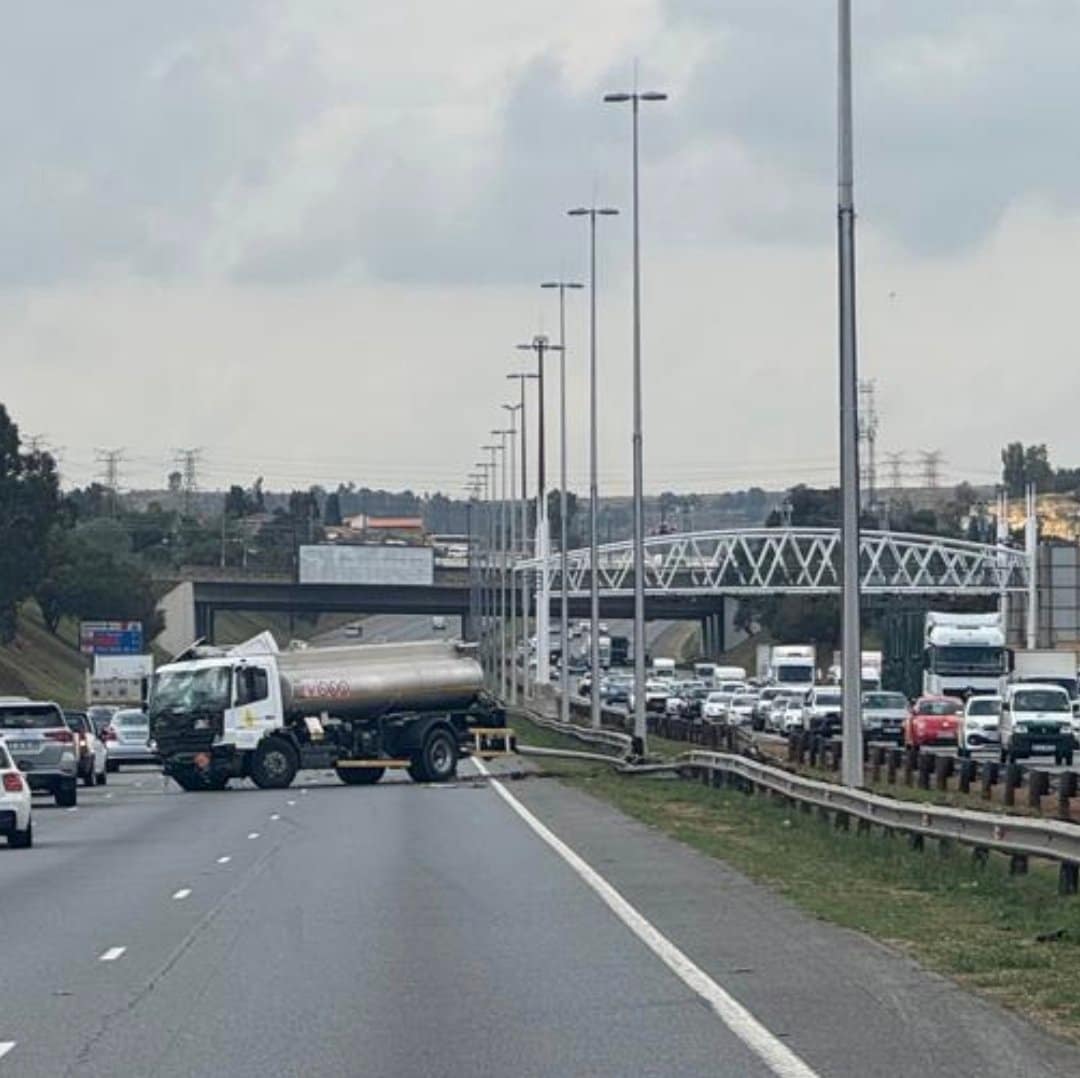
The Wednesday morning rush hour descended into gridlock for thousands of commuters after a tanker truck carrying a full load of paraffin overturned on the N1 South highway, spilling a significant quantity of highly flammable diesel and forcing the complete closure of the vital arterial route for nearly three hours.
The incident occurred around 8 a.m. near the Maraisburg off-ramp, a critical juncture in the city’s road network. According to preliminary reports from the Johannesburg Metropolitan Police Department (JMPD), the tanker appears to have lost control, crashing onto its side and immediately beginning to leak its hazardous cargo onto the roadway.
In a swift and coordinated response, authorities made the decisive call to close all southbound lanes from the Albertina Sisulu Road interchange. The closure was a necessary precaution, officials stated, to prevent any potential ignition source from triggering a catastrophic fire and to allow emergency crews safe access.
“A multi-agency response was immediately activated,” explained JMPD spokesperson Xolani Fihla. “Our primary objectives were to secure the scene, contain the spill to prevent environmental damage, and safely clear the wreckage. We had units from JMPD, Gauteng Traffic Police, and Johannesburg Emergency Management Services on the ground.”
Firefighters deployed absorbent materials and foam to contain the diesel spill, preventing it from flowing into stormwater drains. Specialized recovery teams worked diligently to upright the heavy vehicle and transfer its remaining cargo to another tanker. Despite the dramatic scene and the inherent dangers of the spill, authorities confirmed that no injuries were reported from the accident—a fact hailed as “fortunate” given the circumstances.
The economic and social cost of the closure, however, was immense. The shutdown created a domino effect of congestion, with tailbacks stretching for kilometres and paralysing alternate routes like the M1 and R101 as motorists sought detours. The typical 30-minute commute from the northern suburbs to the city centre stretched into a two-hour ordeal for many.
By 10:45 a.m., after the spill was neutralized and the wrecked tanker was removed, the highway was fully reopened to traffic. While the flow of vehicles gradually returned to normal, the incident served as a stark reminder of the fragility of Johannesburg’s key transport corridors and the widespread disruption that a single accident can cause. An investigation into the cause of the overturn is ongoing.
About The Author