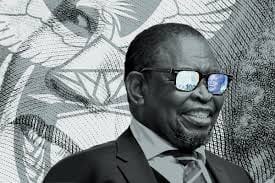
In a decisive move to steer South Africa’s strained public finances toward a more sustainable path, Finance Minister Enoch Godongwana presented a Medium-Term Budget Policy Statement (MTBPS) that signals a significant shift in fiscal strategy. The centrepiece of his address to Parliament on Wednesday was the aggressive phasing out and scaling down of what the National Treasury has deemed “low-priority and underperforming programmes,” a move aimed at protecting essential services while improving spending efficiency.
This strategic pruning represents a departure from the traditional across-the-board cuts, which Godongwana argued have historically eroded frontline services. Instead, the government is adopting a more surgical approach, seeking to eliminate waste and redirect scarce resources to where they are most needed.
The Mechanics of Austerity: TARS, Grants, and a New Budget Culture
The minister outlined a multi-pronged strategy to achieve these goals, anchored by the Targeted and Responsible Savings (TARS) initiative. This programme is designed to systematically root out duplication, eliminate wasteful expenditure, and reorganise government programmes to deliver better value for money. Godongwana revealed that this process has already identified R6.7 billion in medium-term savings.
A high-profile casualty of this new rigour is the Public Transport Network Grant (PTNG), which will be phased out after failing to meet its objectives. Funds from this grant will be redirected toward “better-targeted support,” though the specifics remain to be detailed.
“An integrated public transport system is essential to support working-class communities. We will be reconsidering how to lower the cost of mobility and rework the institutional framework,” Godongwana stated, emphasising that commuter rail remains the backbone of public transport.
Other critical measures include:
- Strengthened Anti-Fraud Measures: Stricter verification processes within the social grants system to protect the country’s largest welfare net.
- Personnel Expenditure Reviews: A reassessment of the public sector wage bill, the single largest expense on the national budget.
- Local Government Grant Reassessment: A review of conditional grants to municipalities to ensure they are effectively bolstering local basic services.
A Fundamental Shift in Fiscal Philosophy
Perhaps the most profound change announced is cultural. Godongwana articulated a move away from a “compliance-driven” budget process, where departments simply follow rules, to one that forces them to actively engage with “resource constraints and trade-offs.”
“Over time, lack of engagement with trade-offs led to across-the-board cuts, eroding services and financial management,” the Minister explained. “These reforms, coupled with performance-oriented frameworks and stronger oversight, will bolster efficiency, protect frontline services, and create space to increase spending on government priorities, including growth-enhancing infrastructure.”
Sectors in the Spotlight: Education and Skills Development
The MTBPS also placed two underperforming sectors on notice: the Community Education and Training (CET) sector and the broader post-school skills development landscape. Despite increased expenditure, outcomes have remained poor, prompting a full review. Updates on how the government intends to rectify this are expected in the February Budget Review.
The Minister assured that the reforms would be implemented in phases to ensure stability, with all savings being reinvested into priority areas such as health, education, and growth-enhancing infrastructure. While the plan has been met with cautious optimism by economists who praise its focus on efficiency, it is likely to face significant political headwinds as specific programmes are identified for closure, affecting their beneficiaries and the political constituencies built around them. The success of this bold fiscal surgery will depend on the government’s ability to withstand this pressure and follow through on its promises.
About The Author