The air in the Auditor-General’s regional office in Germiston is usually quiet—a world of spreadsheets, balance sheets, and the meticulous, unglamorous work of tracking public money. But in recent days, that quiet has taken on an edge. The phones ring more often. The coffee is drunk faster. And the files stacked on desks have grown into towers.
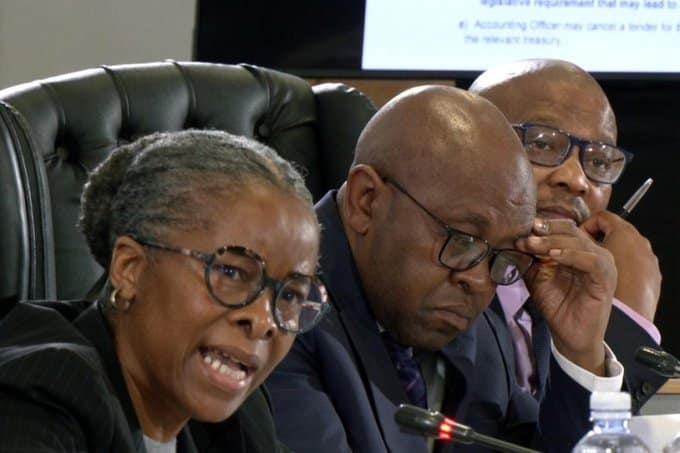
The reason? The Madlanga Commission of Inquiry, sitting just a few kilometers away in the same city, has been disgorging a steady stream of allegations against senior officials at the City of Ekurhuleni—allegations of corruption, tender fraud, and the systematic looting of municipal coffers. And the Auditor-General’s office is watching. Closely.
In a brief but carefully worded statement issued on Wednesday, the AG’s office confirmed that it is “evaluating audit-related matters” arising from testimony before the commission. While the statement offered no details, sources within the office have confirmed to eNCA that a formal probe is being prepared—one that could lead to qualified audits, legal referrals, and even criminal charges.
“We are not just sitting on the sidelines,” a senior official at the AG’s office told eNCA, speaking on condition of anonymity. “When allegations of this magnitude emerge, we have a duty to follow the money. And that is exactly what we are doing.”
The Commission: A Window into Rot
The Madlanga Commission of Inquiry, named after its chairperson, retired Judge President Mogoeng Madlanga, was established by Ekurhuleni Mayor Nkosindiphile Xhakaza in late 2025 following a whistleblower dossier that alleged widespread corruption across several municipal departments. The commission’s mandate is sweeping: to investigate allegations of maladministration, fraud, and corruption in the awarding of tenders, the management of municipal entities, and the conduct of senior officials.
Since it began hearings in January, the commission has heard explosive testimony:
- A former supply chain manager alleged that tender documents were routinely altered after contracts were awarded to favor connected companies.
- A whistleblower from the EMPD testified that vehicle impound contracts were manipulated to benefit a specific service provider, with kickbacks flowing to senior officials.
- A finance department official claimed that millions of rands were paid to “ghost vendors”—companies that existed only on paper—for services never rendered.
- A current municipal manager was accused of personally approving irregular expenditures totaling over R50 million without following proper procurement processes.
Several of those named in testimony are current or former officials of the City of Ekurhuleni—some still drawing salaries, others already suspended, and a few who have since resigned. None have been convicted of any crime. The commission is an inquiry, not a court. But its findings will be referred to law enforcement for possible prosecution.
And now, to the Auditor-General for a different kind of reckoning.
The Auditor-General’s Role: More Than a Scorecard
For most South Africans, the Auditor-General (AG) is a name that appears once a year in news headlines, attached to a report that most people do not read. But behind those reports is one of the most powerful accountability tools in the country’s democratic arsenal.
The AG’s office is constitutionally mandated to audit every government department and municipality in South Africa and to report not just on financial mismanagement but on the “performance” of public funds—whether money was spent efficiently, effectively, and for its intended purpose.
When the AG issues a “qualified audit,” it is a serious black mark. A “disclaimer” (where the AG cannot verify that the financial statements are accurate) is worse. And an “adverse opinion” (where the AG finds material misstatements and non-compliance) is a full-blown crisis.
For the City of Ekurhuleni, which has struggled to clean up its audit record in recent years, the prospect of fresh adverse findings is terrifying. It could trigger provincial intervention, the withholding of equitable share funds, and a cascading loss of investor confidence.
“If the AG finds that corruption has systematically distorted the city’s financial statements, that is not just a political embarrassment,” said municipal finance expert Dr Naledi Mofokeng. “That is a legal and constitutional crisis. It means the city cannot account for its own money. And a municipality that cannot account is a municipality that cannot govern.”
The Evidence: What the AG Is Looking At
While the AG’s office has not released details of its evaluation, sources familiar with the matter have identified three broad areas of concern emerging from the Madlanga Commission’s testimony:
1. Tender Irregularities
Multiple witnesses have alleged that tenders for infrastructure projects—roads, housing, water reticulation—were awarded to companies that did not meet minimum qualifications or that submitted bids significantly higher than competing offers. In some cases, witnesses testified, the same company won multiple tenders across different departments, suggesting coordination or inside information.
The AG will be scrutinizing whether these tenders complied with the Municipal Finance Management Act (MFMA) and the city’s own supply chain management regulations. If not, the city’s financial statements may need to be restated—a costly and embarrassing process.
2. Consultant and Service Provider Payments
The commission has heard testimony that the city paid millions to consultants and service providers who delivered little or no work. In one case, a company allegedly received R12 million for a “strategy review” that consisted of a single PowerPoint presentation copied from the internet.
The AG will be asking: Was there a valid contract? Was the work delivered? Was the price reasonable? And if not, why was the payment approved and by whom?
3. Conflicts of Interest
Perhaps the most serious allegations involve conflicts of interest—officials who allegedly awarded tenders to companies owned by family members, friends, or business associates without declaring their interests or recusing themselves from decision-making.
The AG will be examining whether these relationships were properly disclosed and whether the city’s conflict-of-interest register was maintained and enforced. Failure to do so could constitute a violation of the MFMA and the city’s code of conduct.
The Political Fallout: A Municipality in Turmoil
The AG’s interest in the Madlanga Commission’s findings has sent shockwaves through Ekurhuleni’s already fractious political landscape.
Mayor Nkosindiphile Xhakaza, who established the commission, has positioned himself as a reformer—someone willing to expose rot in order to clean house. But his political opponents have accused him of using the commission to settle scores and weaken rivals ahead of the 2026 local government elections.
“The mayor wants to look like a hero,” said a senior councillor from the Economic Freedom Fighters (EFF), speaking on condition of anonymity. “But he appointed many of these officials himself. If they are corrupt, what does that say about his judgment? The AG’s probe could backfire on him badly.”
The Democratic Alliance (DA), which controls several Gauteng metros but not Ekurhuleni, has called for the entire municipal leadership to be placed under administration.
“This is not a few bad apples,” said DA Gauteng leader Solly Msimanga. “This is a barrel that has rotted from the top. The Auditor-General must not stop at a few officials. They must look at the entire system—and recommend that the provincial government steps in.”
The African National Congress (ANC) in Ekurhuleni has largely remained silent, though insiders say the party is deeply anxious. Several of the officials named before the commission are ANC members, some with powerful patrons at the provincial and national levels.
“If the AG refers these matters to the NPA, careers will end,” one ANC source said. “Not just in the municipality. In the party. This is a test of whether we really mean it when we talk about rooting out corruption.”
The Officials: Who Is in the Crosshairs?
The AG’s evaluation is reportedly focused on a handful of senior officials whose names have surfaced repeatedly in commission testimony. While none have been formally identified by the AG’s office, sources have pointed to:
- A former head of supply chain management, who allegedly approved tenders without competitive bidding and was accused of accepting “gratuities” from service providers.
- A senior finance official, who allegedly signed off on millions in irregular payments despite internal warnings.
- Two municipal managers (one current, one former), who are accused of creating a “culture of impunity” where whistleblowers were intimidated and oversight mechanisms were ignored.
- Several department heads in infrastructure and community services, where tender irregularities appear to have been most concentrated.
All have denied wrongdoing through their lawyers. None have responded to requests for comment.
For those officials, the AG’s evaluation is not an abstract threat. It is a career-ending possibility. A negative finding could lead to being “named and shamed” in the AG’s annual report—a public branding that makes it nearly impossible to work in government again. It could also trigger legal action by the National Prosecuting Authority (NPA) if evidence of criminal conduct is found.
“I have seen careers destroyed by one paragraph in an AG report,” said a former municipal official who now works as a consultant. “You do not recover from that. Even if you are never charged, the stain remains. The AG’s power is not just legal. It is reputational. And reputation is everything in this world.”
The Process: How the AG’s Probe Will Unfold
The AG’s evaluation is still in its early stages, but sources have outlined a likely path forward:
Step 1: Document Review (Current Phase)
The AG’s office is gathering and reviewing all relevant documentation: tender files, payment records, internal audit reports, and minutes of bid adjudication committees. This phase is expected to take 4–6 weeks.
Step 2: Interviews and Site Visits
If the document review reveals anomalies, the AG will request interviews with municipal officials and may conduct site visits to verify whether goods or services were actually delivered.
Step 3: Draft Findings
The AG will issue a draft report to the municipality, giving officials an opportunity to respond and provide additional evidence.
Step 4: Final Report
The final report, including any adverse findings, will be submitted to the provincial legislature and made public. The AG may also refer specific matters to the NPA, the Hawks, or the Public Service Commission.
Step 5: Remedial Action
Depending on the severity of the findings, the provincial government may intervene, suspend officials, or place the municipality under administration.
“It is a slow process. Too slow for many who want heads to roll immediately,” said Dr Mofokeng. “But it is thorough. And when the AG finally speaks, people listen.”
The Broader Context: A Crisis of Municipal Governance
The Ekurhuleni scandal is not unique. Across South Africa, municipalities are failing—financially, administratively, and morally. The AG’s annual report for 2024–2025 found that:
- Over 60% of municipalities received disclaimers or adverse opinions.
- Irregular expenditure across all municipalities exceeded R50 billion.
- Fruitless and wasteful expenditure (money spent without any benefit) topped R5 billion.
- Only 11 municipalities (out of 257) received clean audits for all five consecutive years.
Ekurhuleni, despite being one of Gauteng’s wealthiest metros with a population of over 4 million, has not had a clean audit since 2017. Its financial management has been rated “moderate risk” by National Treasury for several years running.
“The problems in Ekurhuleni are symptoms of a national disease,” said Professor William Gumede, chairperson of the Democracy Works Foundation. “Weak oversight, political interference in administration, a culture of impunity, and a lack of consequences for wrongdoing. The AG can expose the disease. But only political leadership can cure it.”
The Whistleblowers: Unsung Heroes
Behind the headlines and the hearings are the whistleblowers—ordinary municipal employees who risked their careers, their safety, and their sanity to speak out.
One such whistleblower, who testified before the Madlanga Commission under protection, described the toll of coming forward.
“I loved my job. I believed in public service. But I could not sit quietly while millions were stolen. The children who need roads, the families who need houses, the pensioners who need services—they are the real victims. The corrupt officials are stealing from them. Someone had to say something.”
Since testifying, the whistleblower has been threatened, transferred to a dead-end position, and ostracized by colleagues. They do not regret speaking, but they are tired.
“The AG’s probe gives me hope,” they said. “Not because I want revenge. Because I want the truth to come out. And I want the next whistleblower not to have to go through what I went through.”
Epilogue: The Storm Gathers
As the sun set over Germiston on Wednesday, the Auditor-General’s office was still lit up. Staff worked late, reviewing files and preparing for what everyone inside knows is coming: a storm that will not pass quickly.
For the City of Ekurhuleni, the coming months will be defined by three questions:
- Will the AG find systemic corruption, or isolated misconduct?
- Will the findings lead to criminal charges, or merely administrative action?
- And will the political leadership have the courage to act, or will they circle the wagons and protect their own?
Premier Saul of the Northern Cape may be focused on Chinese investment. President Ramaphosa may be focused on national unity. But in Germiston, in a nondescript office building, a different kind of work is underway—the slow, grinding, essential work of accountability.
“It is not glamorous,” the AG official said, closing a file and reaching for another. “But it is necessary. The people of Ekurhuleni deserve to know what happened to their money. We are going to tell them.”
The Madlanga Commission continues its hearings next week. The AG’s evaluation continues in silence. And in the corridors of Ekurhuleni’s municipal headquarters, officials named in testimony are checking their phones, refreshing their emails, and wondering when the knock on the door will come.
The storm is coming. The only question is when it will break.
About The Author