Tensions reached a boiling point in the south of Johannesburg on Monday morning as a group of furious parents forcibly shut down Riverlea Secondary School, barring gates and turning away learners in a dramatic protest over what they describe as “life-threatening” safety conditions at the fire-damaged institution.
The spontaneous shutdown, which effectively paralyzed the start of the school week, has thrust the Gauteng Department of Education back into the spotlight over its handling of school infrastructure crises—this time in the working-class suburb of Riverlea, a community still haunted by past environmental and social struggles.
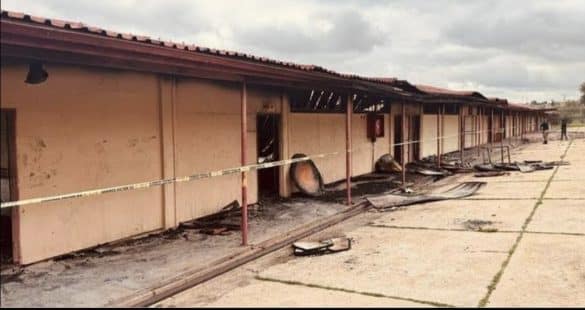
According to multiple parents who spoke to reporters at the scene, the straw that broke the camel’s back came not from a single incident but from months—some say years—of neglect, culminating in a devastating fire that tore through a section of the school last month. While no learners or staff were injured in the blaze, the aftermath has left classrooms charred, electrical wiring exposed, asbestos-containing debris scattered across corridors, and entire wings cordoned off with yellow hazard tape that has since turned brown with dust.
“My child came home last week coughing,” said Nomsa Dlamini, a mother of two learners at the school, her voice trembling with anger and exhaustion. “She told me the ceiling in her classroom is cracked and water leaks onto her desk when it rains. Now there is fire damage everywhere. This is not a school. This is a death trap.”
Parents began gathering as early as 6 a.m., long before the first bell. By 7:30 a.m., a crowd of more than 50 adults had formed a human chain across the school’s main entrance, turning away confused learners and handing out hastily printed flyers listing their demands. The action was organized through neighborhood WhatsApp groups and word-of-mouth, with no formal parent-teacher association meeting preceding the move—a sign, parents say, of how desperate the situation has become.
“We have tried speaking nicely. We have written letters. We have attended meetings. Nothing changes,” said Thabo Molefe, whose son is in Grade 10. “So now we speak the only language they understand: shutdown. No children will enter this building until the department fixes the fire damage, repairs the ceilings, and gives us a written safety guarantee.”
The fire, which authorities believe may have been caused by faulty wiring in an old storeroom, gutted three classrooms and caused smoke damage to a further five. But parents claim the blaze merely exposed deeper, pre-existing structural problems. Among their complaints:
- Cracked and sagging ceilings in multiple classrooms, with chunks of plaster having fallen near learners’ desks.
- Exposed electrical junction boxes and frayed wiring, posing both electrocution and fire risks.
- Mold and damp in ground-floor classrooms due to leaking pipes and poor drainage.
- Inadequate fire safety equipment, including expired extinguishers and blocked emergency exits.
- Pest infestations in areas adjacent to the fire-damaged section.
“These are not minor maintenance issues,” said local community activist Yusuf Patel, who arrived at the scene to support the parents. “These are fundamental safety failures. If an inspector walked through those gates tomorrow, that building would be red-flagged and condemned immediately. The department knows this. They just refuse to act.”
The Gauteng Department of Education, when reached for comment, acknowledged receipt of earlier complaints but maintained that “progress had been made” in assessing the fire damage. Spokesperson Mpho Nkosi confirmed that a structural engineer and an electrician had visited the site last week, but said a full report was still pending.
“We understand the parents’ frustrations, and we do not take their concerns lightly,” Nkosi said in a brief telephonic statement. “However, shutting down the school is not the solution. It only disrupts learning and harms the very children they are trying to protect. We appeal for calm and constructive engagement. An emergency meeting is being scheduled for later this week.”
Parents rejected that appeal outright. “Another meeting? Another promise? We are done,” said a grandmother who identified herself only as Mrs. van der Merwe. “My grandson missed 18 days of school last term because of health problems from that building. I will not bury him because of a collapsed ceiling or a fire. Let the MEC come here herself and stand in that burnt classroom. Then we will talk.”
By mid-morning, the protest had swelled to more than 80 parents, with some holding handwritten signs reading: “Safe Schools Now,” “We Buried Our Children in Soweto – Not Again in Riverlea,” and “Department of Excuses.” A small contingent of police officers stood at a distance, monitoring the situation but taking no action to disperse the crowd.
The shutdown has left approximately 600 learners in limbo. Some were turned away at the gates and returned home; others milled about nearby streets in their school uniforms, unsure of where to go. A handful of teachers arrived but were unable to enter the premises, instead huddling in small groups and speaking in hushed tones.
“I don’t blame the parents,” said one teacher who asked to remain anonymous for fear of departmental retaliation. “I have taught in that building for 12 years. I love my learners. But I also lie awake at night wondering if today will be the day something terrible happens. The fire was a warning. Nobody is listening.”
This is not the first time a Johannesburg school has been forcibly shut down by parents over infrastructure concerns. Similar protests have erupted at schools in Soweto, Lenasia, and Tembisa in recent years, often leading to last-minute departmental interventions—though critics argue the pattern reveals systemic failure rather than isolated incidents.
“The department has a reactive approach, not a proactive one,” said education advocacy group Equal Education in a statement. “They wait until parents take to the streets or shut down gates before acting. That is not leadership. That is damage control.”
As the sun climbed higher over Riverlea on Monday morning, the school gates remained firmly locked from the outside. Parents took turns standing guard while others handed out water and snacks to those who had been there since dawn. There was no indication they would back down.
“We will stay here tomorrow. And the day after. And the day after that,” said Dlamini, adjusting her scarf against the morning chill. “The children are watching. They need to know that someone is fighting for them. Even if that someone is just their mothers and fathers.”
The Gauteng Department of Education has not yet confirmed when officials will visit the site. The MEC for Education, Matome Chiloane, was reportedly attending a budget briefing in the provincial legislature and could not immediately respond.
For now, in the shadow of a fire-scarred school building, a community stands its ground—unwilling to let their children walk back into danger.
About The Author