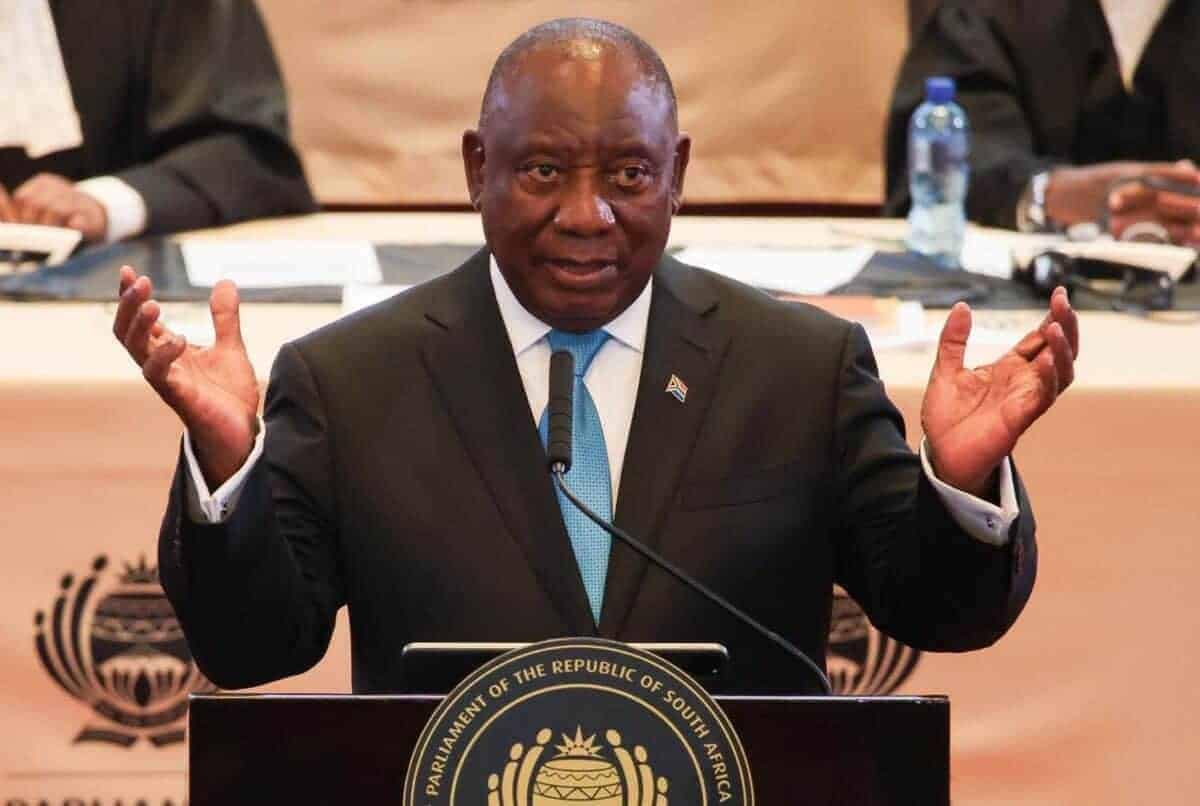
The chandeliers of the National Assembly in Cape Town caught the late afternoon light as President Cyril Ramaphosa rose to deliver the Presidency’s Budget Vote for the 2026/27 financial year. The chamber, usually alive with cross-talk and interjections, fell into a hushed anticipation. For months, economists and ordinary South Africans alike had been asking one question: after years of load-shedding, logistical bottlenecks, and a volatile global economy, what would finally break the cycle of stagnation?
Ramaphosa’s answer was clear, and he did not bury it in bureaucratic language. “Growing our economy and creating jobs will be the singular focus of the Presidency in the year ahead,” he declared, his voice firm but measured. “We have laid the foundation. Now we must build the house—brick by brick, sector by sector, job by job.”
The President acknowledged that while South Africa had made notable progress—stabilising energy supply, passing the long-delayed National Logistics Crisis Committee reforms, and seeing inflation ease—the fruits of that progress had not yet reached millions of unemployed households. “A macroeconomic recovery means nothing,” he said, “if a mother in Soweto cannot afford bread, or a graduate in Gqeberha cannot find their first job.”
To address this, Ramaphosa outlined a three-pillar strategy for the Presidency’s own focus in 2026/27: accelerating implementation of the Energy Action Plan to ensure reliable power for small businesses; scaling up the Presidential Youth Employment Intervention to absorb more first-time job seekers; and reforming visa regimes to attract critical skills and investment while protecting local labour. He also pledged to personally oversee a monthly “Jobs Delivery Unit” review, holding ministers accountable for sector-specific employment targets.
Opposition parties were quick to dismiss the speech as “more promises without timelines,” but Ramaphosa reminded the House that South Africa had emerged from far darker moments. “We are not starting from zero,” he said. “We are starting from experience. And this time, we will finish the job.” As he gathered his notes, the Speaker called for order, but the real debate—whether the Presidency could finally turn pledges into paychecks—had only just begun.
About The Author