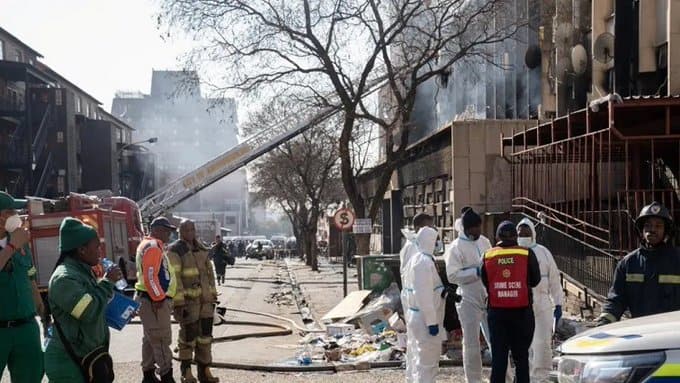
The morning sun hangs low over the High Court in Johannesburg, its pale light doing little to warm the anxious crowd already gathered on the granite steps. Inside the packed gallery, survivors of the Usindiso building fire clutch faded photographs of the 76 lives stolen in the August 2023 blaze. Mothers press handkerchiefs to trembling lips. Fathers stare blankly at the judge’s empty bench, replaying the screams that still haunt their nightmares. After years of postponed hearings, legal maneuvering, and the cruel erosion of hope, today—finally—judgment will fall.
The accused sits motionless in the dock, the man the state alleges lit the fire that tore through the dilapidated inner-city building, trapping families in their makeshift homes. For survivors like Thandiwe Mokoena, who lost her three children when the flames devoured the fourth floor, every delay has been a fresh wound. “I just want to hear the word,” she whispers, knuckles white around a small stuffed bear. “Guilty. Then maybe I can bury them twice—once in the ground, once in my heart.”
Outside, a small memorial of wilting flowers and smoke-blackened bricks marks where the Usindiso once stood. Community members link arms, singing softly in Zulu and Sotho, hymns that weave through the court’s heavy doors. Lawyers shuffle papers; journalists refresh their feeds. The judge finally enters, robes rustling like distant fire.
As the clerk calls for silence, the weight of 76 souls presses down on every breath in the room. For the families, this judgment cannot raise the dead—but it might, at last, allow them to stop running from the smoke. The gavel hangs in the balance, and Johannesburg holds its collective breath.
About The Author