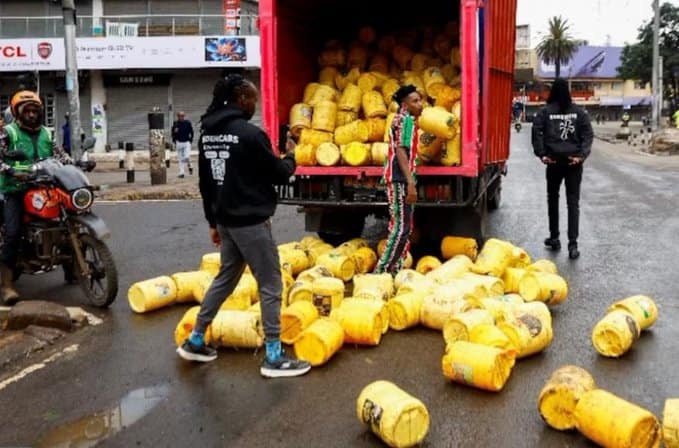
Blood ran through the streets of Kenya’s capital and beyond Monday as four protesters were shot dead and over thirty others seriously injured during explosive nationwide demonstrations against crippling fuel price hikes. The chaos erupted at dawn when thousands of angry matatu (public transport) operators launched an indefinite strike, abandoning their vehicles across major highways, effectively paralyzing the country’s economy. What began as a peaceful work stoppage quickly spiraled into violent confrontations as riot police fired live rounds and tear gas canisters at stone-throwing crowds in Nairobi’s central business district, Mombasa, Kisumu, and Nakuru.
The fury stems from a recent government decision to sharply increase fuel taxes—a direct consequence of escalating geopolitical tensions following the outbreak of war involving Iran, which has sent global oil prices soaring. Desperate commuters found themselves stranded for hours as matatus, which carry over 80% of Kenya’s daily passengers, remained off the roads. Businesses shuttered, schools emptied, and hospitals reported overwhelmed emergency rooms treating victims of rubber bullets, beatings, and stampedes.
Police Inspector General Japhet Koome confirmed the four fatalities but blamed “armed criminal elements” for infiltrating the protests. Opposition leaders, however, accused the government of brutal suppression and called for nationwide civil disobedience until fuel prices are rolled back. President William Ruto has scheduled an emergency cabinet meeting as tensions threaten to boil over into a full-scale uprising.
About The Author