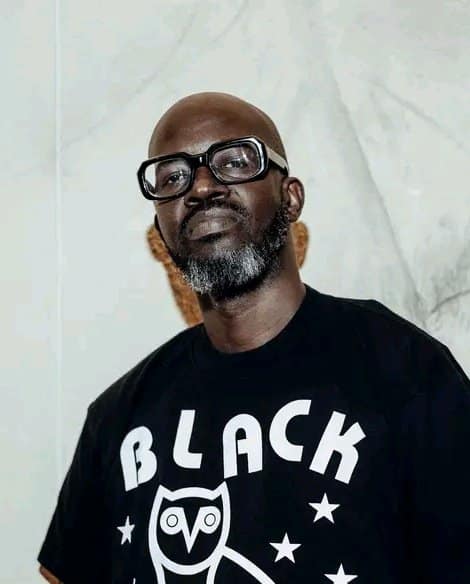
The man who once confidently declared himself the “Roll Up” king, the trap soul pioneer who gave a voice to the dreams and struggles of South African youth, sat in front of the camera on Monday with his vulnerability laid bare. In an emotional and at times heartbreaking interview, 33-year-old rapper Emtee—born Mthembeni Ndevu—broke his silence on the twin crises that have brought him to his knees: the alleged disappearance of nearly R700,000 in royalties and the painful disintegration of his family life.
Fighting back tears, the star detailed a story of artistic betrayal and personal heartbreak that has left him feeling “silenced” by an industry he helped build. The interview, which quickly went viral, showed a side of Emtee rarely seen by the public: a father, a husband navigating a bitter divorce, and an artist questioning whether the system he feeds will ever feed him back.
The Missing Millions: “I Never Saw a Cent”
At the heart of Emtee’s distress is his 2021 album, Logan—a critically acclaimed project named after his firstborn son that featured deeply personal tracks reflecting his journey through fatherhood, fame, and mental health. According to the rapper, the album was distributed by Platoon, a global artist services company that has worked with stars like Billie Eilish. But while Platoon’s systems may have recorded payouts, Emtee insists the money never reached his pocket.
“They’re telling me they paid. They have the records. But I never saw a cent,” Emtee said, his voice cracking. “We’re talking about close to R700,000. That’s not just money. That’s my kids’ school fees. That’s rent. That’s food. That’s the value of my work.”
The allegation is the latest chapter in Emtee’s long and public struggle with the music industry’s financial opaque. Throughout his career, he has been vocal about predatory label deals, unfair contracts, and the struggle for artists to maintain ownership of their masters. He previously parted ways with his former label, Ambitiouz Entertainment, in a bitter dispute that left him without the rights to some of his earliest work.
Now, with the Platoon situation, he says the pattern is repeating. “It’s the same story, different faces. They take your music, they take your soul, and they leave you with nothing. I’m tired. I’m so tired of fighting.”
Family in Ruins: The Restraining Order and the Pain of Separation
As if the financial strain were not enough, Emtee’s personal life has also unravelled in very public fashion. He spoke openly about his recent divorce from his wife, Nicole Chinsamy, the mother of his children. The separation, he revealed, has resulted in a restraining order being filed against him—a development he described as a devastating blow to a man who has always centred his identity around being a present father.
“I’m not a bad person. I’m not a monster,” he said, wiping tears from his eyes. “I love my kids. I love their mother. But things fell apart. We couldn’t fix it. And now I can’t even be in the same space as them without it being a legal issue. It breaks me.”
While Emtee did not go into the specifics of the restraining order, sources close to the couple have suggested that the pressures of the music industry, financial stress, and the toll of public life contributed to the breakdown of the marriage. For Emtee, the pain is compounded by the fact that his children—the very inspiration for the album whose royalties are now in dispute—are caught in the middle.
“My son, Logan, the one I named that album for… what do I tell him? That Daddy worked and worked and worked, and there’s nothing to show for it? That the industry took from us?”
The Burden of the Crown
For those who have followed Emtee’s career, the emotional breakdown is both shocking and, in some ways, predictable. Since bursting onto the scene in 2015 with his debut album Avery, he has carried the weight of being one of South Africa’s most influential hip-hop stars. He pioneered a melodic, introspective style that blended trap beats with raw, local storytelling. He gave a generation anthems of struggle and triumph.
But the crown has always been heavy. Emtee has been open about his battles with depression, his use of marijuana as a coping mechanism, and his frustration with an industry that he feels profits from black artists while leaving them destitute. In recent years, his social media presence has been a rollercoaster of rants, reflections, and cries for help, often leading to concern among fans.
Monday’s interview, however, felt different. It was not the late-night fury of a social media rant, but the measured, tearful testimony of a man at the end of his tether, choosing to lay his truth bare in the hope of accountability.
Fans Rally: “He’s a Walking Legend”
In the hours following the interview, social media was flooded with messages of support for the embattled star. The hashtag #Emtee trended on X (formerly Twitter), with fans, fellow artists, and industry insiders expressing solidarity.
“Emtee has given us classics after classics. He’s a walking legend and a staple of South African hip-hop,” wrote one user. “The fact that he’s crying over money that should rightfully be his is a disgrace to the industry. We stand with him.”
Others called for Platoon to provide clarity on the royalty payments, while some urged the rapper to pursue legal action to recover what he is owed. The outpouring of love was a stark contrast to the isolation Emtee described feeling in the industry.
For now, Emtee’s future remains uncertain. He has hinted at new music, but the creative fire that once burned so brightly seems dampened by the weight of his struggles. As he left the interview set, he offered a final, haunting reflection:
“I just want to be able to look after my kids. I just want to make music without someone stealing from me. I just want peace. Is that too much to ask?”
For a man who has given so much to South African music, the answer, from his fans at least, is a resounding no. The industry that built its fortune on his talent now faces a moment of reckoning—and the eyes of the hip-hop community are watching closely.
About The Author