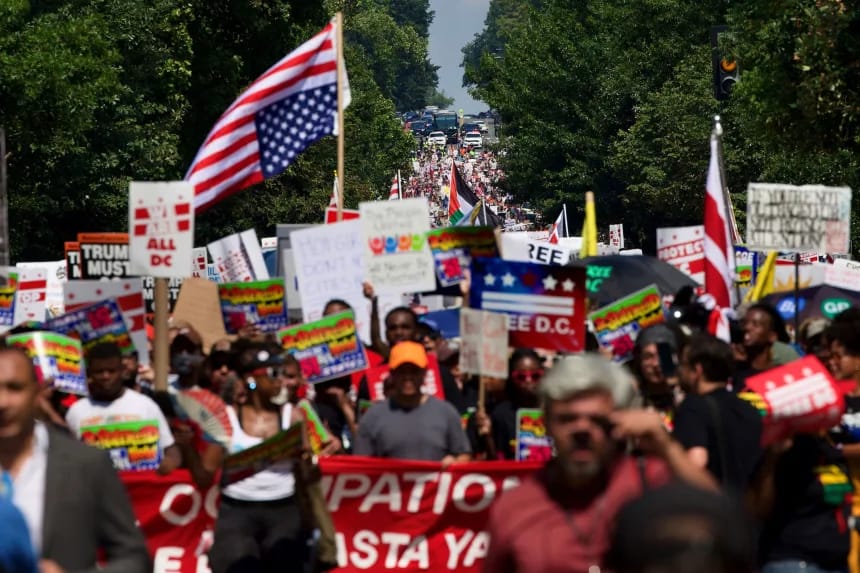
In a stark escalation of his “law and order” campaign rhetoric, President Donald Trump is accelerating a series of drastic measures to deploy federal troops and National Guard units into American cities, defying a growing chorus of judicial rulings, local officials, and—critically—American public opinion.
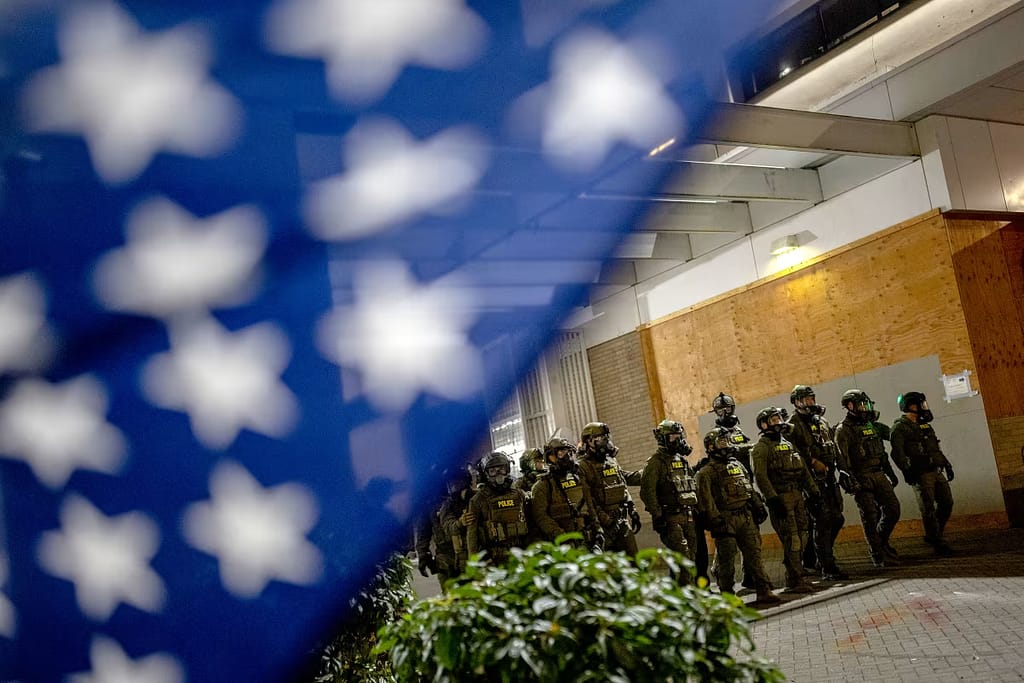
Over a whirlwind few days, the administration has taken a series of ominous steps that signal a willingness to militarize domestic dissent. These include attempting to circumvent a federal judge’s ruling limiting actions in Portland, Oregon; deploying the National Guard to Chicago over the explicit objections of the city’s mayor and the state’s governor; and publicly floating the use of the Insurrection Act—a decades-dormant law that would grant the President sweeping powers to use the military on U.S. soil.
This aggressive push is unfolding despite a glaring lack of justification. The very judge who blocked the Portland deployment—a Trump appointee, Karin Immergut—noted in her ruling that the record showed the protests “were not significantly violent.” There is no evidence of an actual insurrection or extraordinary crime waves in the targeted cities, raising questions about the true motive behind the deployments.
Public Opinion Turns Against the Gambit
While the administration has framed its actions as a necessary response to crime, the American public is increasingly viewing them as a political overreach. A series of recent polls reveals a nation growing more skeptical, not more supportive, of the President’s tactics.
- A CBS News/YouGov poll showed 58% of Americans oppose the deployment of the National Guard to U.S. cities.
- A Quinnipiac University poll found 55% disapprove of Trump’s use of the Guard and federal law enforcement to reduce crime.
- An NPR/Ipsos poll indicated fewer than 4 in 10 Americans supported deployments to specific cities like Washington, D.C.
This marks a significant shift from earlier in the summer when the public was more evenly divided. The data suggests that as Trump’s deployments have become more widespread and politically charged, support has eroded. Notably, an AP-NORC poll from August showed 55% found it acceptable for the military to support local police if local officials didn’t object. The new data indicate that support collapses when these deployments are imposed against the will of local leaders.
A Principle, Not Just a Policy Dispute
The public’s unease appears to be rooted in principle, not just a debate over crime-fighting efficacy. Despite crime being a traditional strength for Trump, his approval ratings on the issue are stagnant or declining. A Reuters/Ipsos poll showed his approval on crime dipping from 43% to 41%, while a Washington Post/Ipsos poll had a majority (54%) disapproving of his handling of the issue.
More tellingly, polls are capturing a fundamental concern about the militarization of domestic politics. A New York Times/Siena College poll presented Americans with a stark choice: were they more worried about crime spiraling out of control without the Guard, or about Trump using the Guard to “intimidate his political opponents”? By a margin of 51% to 42%, Americans chose the latter.
This sentiment was echoed in the Reuters/Ipsos poll, where 58% of Americans agreed that a president should only deploy the military to deal with “external threats,” directly contradicting Trump’s focus on what he calls the “enemy from within.”
President Trump, however, shows no signs of relenting. In a recent speech to military leaders, he repeatedly equated domestic unrest with a foreign enemy, stating, “No different than a foreign enemy.” This rhetoric, combined with his actions, places the nation at a precarious inflection point, testing the constitutional boundaries between civil and military power and demonstrating a willingness to barrel forward with a militarized response, even against the clear will of the people he leads.
About The Author