MAKHADO, LIMPOPO – A journey of hope and homecoming turned into a scene of unimaginable horror late Saturday night when a long-distance bus veered off the N1 highway near Makhado, overturned, and plunged down a steep embankment. The crash, one of the deadliest in recent memory, has left 42 people dead, including seven children, casting a pall of grief over communities from South Africa’s Eastern Cape to Zimbabwe and beyond.
The bus, operated by an intercity coach service, was on the final leg of its long haul from Gqeberha in the Eastern Cape, its ultimate destination Harare, Zimbabwe. Aboard were passengers from multiple Southern African nations—South Africans, Zimbabweans, and others from neighbouring countries—united in their purpose of visiting family, returning from holidays, or seeking economic opportunity.
The precise cause of the accident remains under investigation. Around 11 PM on a clear, star-lit Limpopo night, on a notoriously dangerous stretch of the N1 between Louis Trichardt and Musina, the journey was shattered. Preliminary reports from the South African Police Service (SAPS) and emergency services suggest the bus lost control, careened through a barrier, and rolled multiple times as it tumbled down the embankment.
The silence of the bushveld was broken first by the screech of tearing metal and shattering glass, and then by the desperate cries of the injured.
A Night of Heroic Efforts and Heartbreak
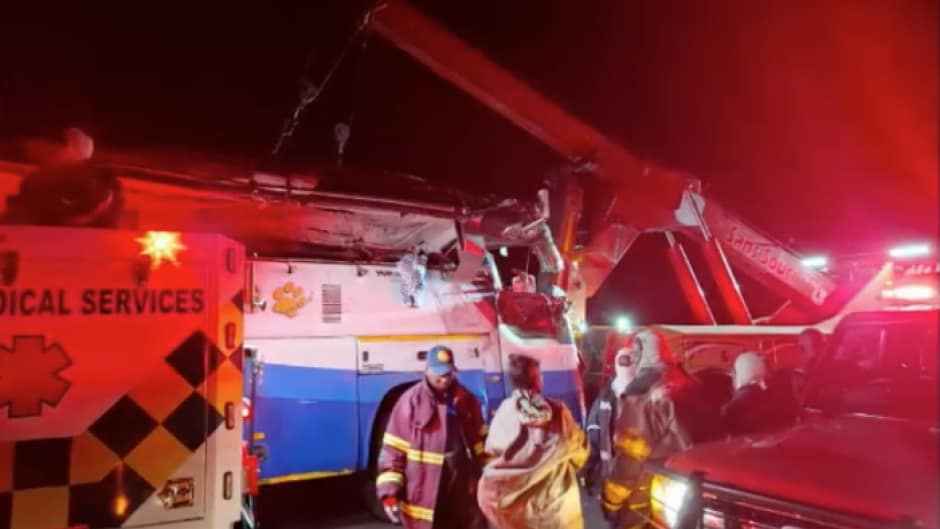
First responders, alerted by frantic calls from other motorists, arrived at a scene described as “chaotic and devastating.” The mangled wreckage of the blue and white bus lay crumpled at the bottom of the slope, its windows blown out, personal belongings scattered like tragic confetti among the thorn trees and red soil.
Rescue teams—paramedics from ER24, local Limpopo emergency services, and SAPS search-and-rescue units—worked with grim determination through the night. The darkness was pierced by the stark beams of floodlights and the flashing lights of emergency vehicles as they navigated the difficult terrain.
“For hours, our teams worked in extremely challenging conditions to extricate survivors and recover the deceased,” said a visibly shaken spokesperson for the Limpopo Emergency Services. “It was a complex and heartbreaking operation. Our focus was on getting to those who were still alive and getting them to hospital as quickly as possible.”
Thirty-eight injured passengers were triaged at the scene and rushed to several hospitals in Makhado and Polokwane. Their conditions were reported as ranging from critical to stable, as medical personnel worked through the early hours of Sunday morning, treating fractures, head injuries, and severe lacerations.
By sunrise on Sunday, the full scale of the tragedy was clear. The lifeless bodies of 42 individuals, including seven young children, were carefully recovered and transported to the state mortuary for formal identification. The monumental and sorrowful task of notifying next of kin has begun, with consular officials from the involved countries activated.
A Highway of Sorrows
The N1 north of Polokwane, a critical artery linking South Africa to Zimbabwe and the broader subcontinent, has long been known for its perilous conditions. The road features challenging gradients, sharp curves, and long, monotonous stretches that can lull drivers into a fatal complacency. It is also heavily trafficked by long-distance trucks and buses, whose drivers often face exhausting schedules.
This latest catastrophe has reignited urgent questions about road safety on this corridor. It is a grim addition to a history of fatal bus accidents on the same route, raising issues of driver fatigue, vehicle roadworthiness, and speeding.
“The N1 towards Beitbridge is a death trap. We see it time and again,” said a local community leader from Makhado. “How many more families must be shattered before this road is made safer?”
Transport Minister Sindisiwe Chikunga expressed her “deepest condolences” to the families of the victims and confirmed that a full investigation led by the Road Traffic Management Corporation (RTMC) is underway. “Every aspect of this tragic incident will be scrutinized—the condition of the vehicle, the driver’s fitness, and the road conditions. We owe it to the deceased and their families to find the truth.”
For now, the N1 highway remains closed between Louis Trichardt and Musina, causing significant traffic disruptions as authorities continue their painstaking work at the crash site. But the greater disruption is to the lives of the hundreds connected to the souls on that bus—a community now bound together by a shared, profound loss, their lives forever altered on a night along a highway known too well for its sorrows.
About The Author