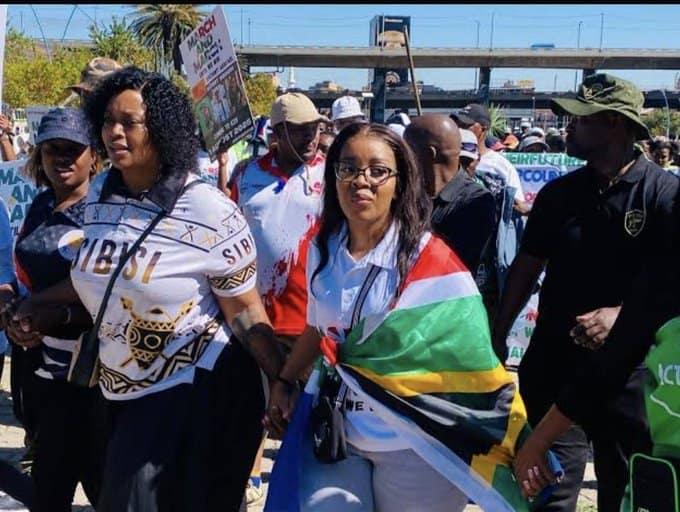
March and March leader Jacinta Ngobese-Zuma has forcefully rejected allegations that her organisation’s increasingly vocal demonstrations against undocumented immigrants amount to xenophobia, insisting instead that the protests are a lawful expression of frustration over rampant crime, unemployment, and the collapse of border control in South Africa.
Speaking to reporters outside the Durban Magistrates Court on Thursday, where several of her supporters face public violence charges following recent clashes with foreign nationals sheltering at the Diakonia Centre, Ngobese-Zuma dismissed accusations of hate speech as “a desperate attempt to silence legitimate concerns.”
“We are not xenophobes. We are South Africans who are tired,” she said, her voice rising above a small crowd of chanting supporters. “When we point out that undocumented foreigners are running spaza shops without permits, when we say that our young people cannot find jobs because illegal immigrants work for next to nothing—that is not hatred. That is reality.”
Ngobese-Zuma, a former community policing forum chair who launched March and March two years ago, acknowledged that some individuals attending her protests may have engaged in violent or intimidating behavior, but she denied that such actions were ever sanctioned by her leadership. “There are hooligans in every crowd,” she said. “But our message remains clear: enforce the law. Deport those who are here illegally. Secure our borders. That is what any sovereign nation would do.”
Human rights organisations and the United Nations High Commissioner for Refugees (UNHCR) have condemned March and March’s rhetoric, pointing to a documented rise in attacks on foreign nationals coinciding with the group’s protests. The South African Human Rights Commission has reportedly opened a preliminary inquiry into whether the organisation’s statements incite xenophobia.
Ngobese-Zuma, however, remained defiant. “Calling me names will not fix potholes or put food on the table,” she said. “We will not be silenced by tears or by activist labels. The constitution allows us to protest, and protest we will—until our government starts putting South Africans first.” She confirmed that a larger march is planned for early June, despite calls from civil society to cancel it
About The Author