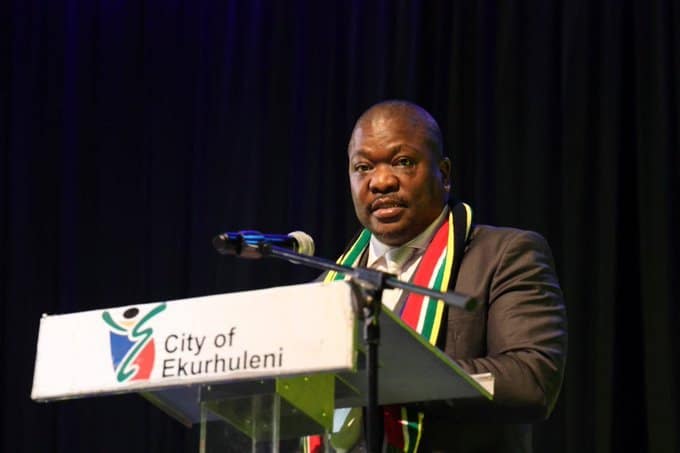
The fluorescent lights of the mayoral boardroom on the 11th floor of the OR Tambo Government Precinct in Germiston burned late into the night on Tuesday. Inside, Executive Mayor Nkosindiphile Xhakaza sat hunched over a stack of documents, the weight of a fragile city government pressing down on his shoulders. By the time the sun rose over the East Rand on Wednesday morning, the political landscape of Ekurhuleni had been quietly, but decisively, redrawn.
Xhakaza’s office released a statement at dawn announcing a sweeping reshuffle of his mayoral committee—the powerful executive arm that runs the daily affairs of South Africa’s fourth-largest metropolitan municipality. On the surface, it was a routine administrative adjustment: new faces, reassigned portfolios, a promise of enhanced service delivery. But beneath the carefully crafted political language, the reshuffle tells a more volatile story. It is the latest chapter in the ongoing, high-stakes drama between the African National Congress and the Economic Freedom Fighters, two uneasy bedfellows locked in a coalition marriage of convenience that grows more strained by the day.
A Coalition on the Brink
When the ANC lost its outright majority in Ekurhuleni during the 2021 local government elections, it turned to old adversary Julius Malema’s EFF to help govern. The resulting arrangement was never a love match—more a calculated political survival pact. For the better part of three years, the two parties have circled each other warily, co-governing through a combination of backroom deals, public posturing, and the constant threat of collapse.
Insiders within both parties describe the current climate as “ice-cold.” The EFF, never comfortable playing junior partner to the organization it built its brand opposing, has grown increasingly restive. National EFF leaders have publicly lambasted the ANC’s performance in Ekurhuleni, accusing them of governing as if they still held an outright majority. Tensions boiled over in recent weeks over budget allocations, procurement decisions, and what EFF local leaders describe as “consultation fatigue”—the sense that their input is sought but seldom acted upon.
It was against this backdrop that Xhakaza moved his political chess pieces.
The New Dispensation
The reshuffle brings fresh assignments across ten critical portfolios. Cllr Jongizizwe Dlabathi retains the powerful Finance and Strategy portfolio—a signal from the Mayor that fiscal discipline remains paramount. Cllr Jean Sthato assumes control of Metro Utilities, responsible for the city’s struggling electricity and water services. Cllr Nomadlozi Nkosi takes on Metro Operations and Maintenance, while Human Settlements, one of the most politically sensitive portfolios in a city grappling with a massive housing backlog, goes to Cllr Leshaka Manamela.
Development Planning and Real Estate is now under Cllr Dino Peterson. The remaining portfolios have been distributed among councillors representing the coalition’s diverse political strands.
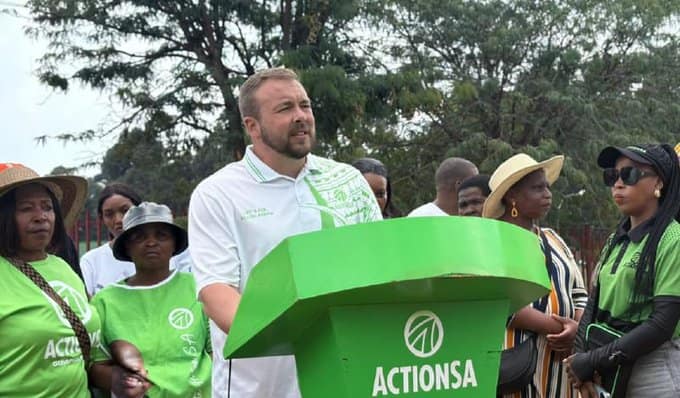
On paper, the numbers appear balanced. The ANC holds five mayoral committee positions, the EFF two, while the Patriotic Alliance, ActionSA, and the National Freedom Party each secured one. But political arithmetic in coalition governments is never just about numbers—it is about weight, about influence, about which portfolios control the resources that matter.
The EFF’s Calculation
The EFF’s two positions, while numerically modest, are strategically placed. The party secured Community Safety and the critical Roads and Transport portfolio. The latter controls massive infrastructure budgets, thousands of employees, and the kind of visible service delivery projects that allow politicians to campaign on tangible achievements. It is no accident that the EFF fought hard to retain influence in these areas.
But whether two portfolios will be enough to keep the red berets satisfied remains the central question hanging over Ekurhuleni’s immediate future. EFF regional leaders have been careful in their public statements, praising the “consultative process” while subtly reminding everyone that their continued participation depends on meaningful implementation. Behind closed doors, the message has been blunter: the EFF will not be taken for granted, and it will not serve as a voting bloc for an ANC that ignores its concerns.
The ANC’s Tightrope
For Xhakaza, the reshuffle represents a high-wire act with no safety net. He must simultaneously placate an increasingly assertive coalition partner, maintain coherence within his own fractured ANC caucus, and demonstrate to Ekurhuleni’s 4 million residents that the city can actually govern itself without descending into chaos.
The Mayor’s official statement struck an optimistic tone, speaking of “strengthening the Ekurhuleni Government of Local Unity” and ensuring that “service delivery remains at the center of our collective efforts.” Thirteen of the sixteen political parties represented in council have now signed onto a governance framework intended to prevent the kind of coalition collapses that have plagued other metros like Johannesburg and Tshwane.
But frameworks are pieces of paper. Trust is built in actions.
What Comes Next
Political analysts watching Ekurhuleni closely describe the current moment as a “pressure test.” The reshuffle has bought time, redistributed influence, and temporarily satisfied the immediate demands of coalition partners. But the underlying tensions remain unaddressed. The EFF wants more than portfolios—it wants evidence that its ideological fingerprints are visible on city policy. The ANC wants stability and control. These are not naturally compatible ambitions.
The coming months will reveal whether this reshuffle was a genuine reset or merely a temporary Band-Aid over a coalition wound that refuses to heal. Budget votes, tender awards, and major policy decisions will all become battlegrounds where the true state of the relationship will be tested.
For ordinary residents of Ekurhuleni—commuters stuck in potholed roads, families living in informal settlements without electricity, small business owners struggling with unreliable water supplies—the political drama unfolding on the 11th floor can feel distant, almost abstract. But its consequences are deeply concrete. When coalitions fight, service delivery stalls. When partners distrust each other, projects grind to a halt. When political survival consumes the agenda, the needs of the people become an afterthought.
Xhakaza knows this. Standing at the window of his boardroom as the new dawn broke over Germiston, watching the first commuter trains crawl toward the city center, he understood the stakes. The reshuffle was the easy part. Making it work—making it deliver—that is where the real test begins.
About The Author