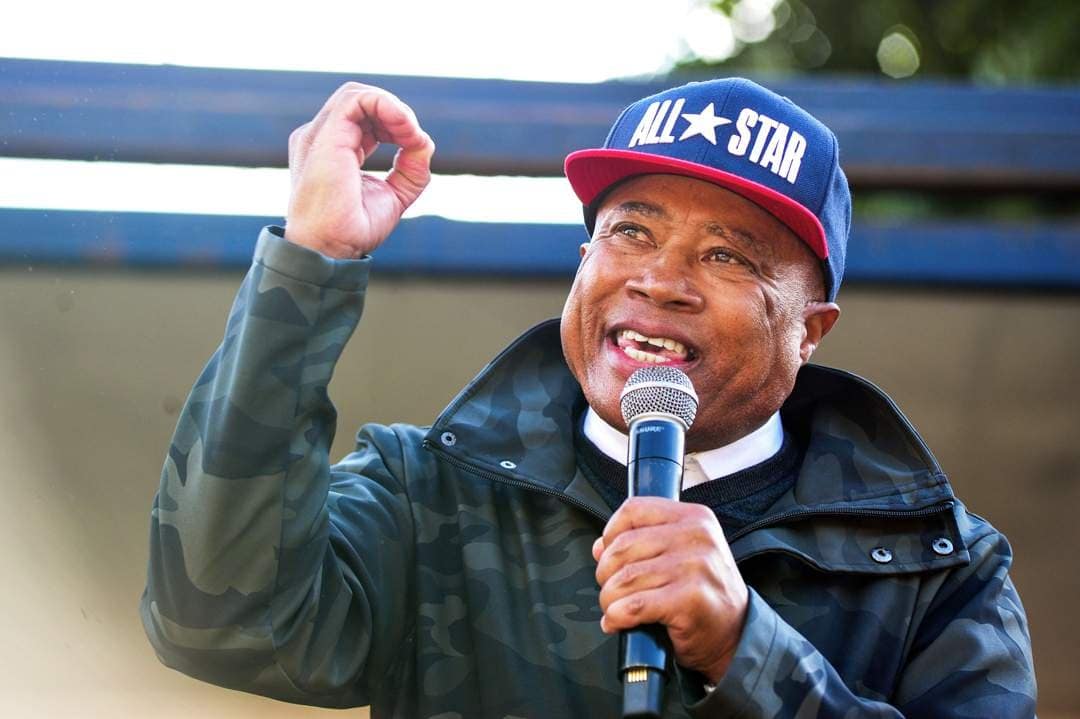
In a move that signals a potent consolidation of the radical economic transformation faction within the fledgling uMkhonto weSizwe (MK) Party, veteran activist and former ANC National Executive Committee member Tony Yengeni has been ushered into the party’s top leadership. His ascension was marked by a deeply personal and evocative speech that traced a decades-long “struggle journey” alongside former President Jacob Zuma, binding their personal histories to the new party’s political mission.
A Speech Steeped in Shared Sacrifice
Addressing a fervent crowd of MK Party supporters, Yengeni’s address was less a political manifesto and more a raw chronicle of shared sacrifice. He spoke not of policy documents or election strategies, but of prison cells, clandestine meetings, and the unbreakable bonds forged in the fires of the anti-apartheid struggle.
He took listeners back to the 1980s, recalling Zuma’s role as a senior ANC intelligence operative and his own as a fiery youth leader in the United Democratic Front. “We did not meet in the comfortable boardrooms of Luthuli House,” Yengeni declared, his voice resonating with emotion. “We met in the trenches of the struggle. We met in the shadows, where the price of being discovered was torture or death. That is a bond that cannot be broken by political expediency.”
He specifically invoked their shared time as political prisoners on Robben Island, a hallowed ground in the liberation narrative, framing their current alliance as a continuation of a fight that began behind bars.
The “Struggle Credential” and the MK Party’s Identity
Yengeni’s narrative serves a critical strategic purpose for the MK Party. As it seeks to position itself not as a breakaway but as the true inheritor of the ANC’s original liberation mantle, his impeccable struggle credentials are a potent weapon.
By weaving a story that intimately links his own journey with Zuma’s, Yengeni directly challenges the current ANC leadership’s moral authority. The subtext of his speech was clear: We are the true revolutionaries; we remember the cost of the fight, and we see that the revolution has been betrayed by those now in power.
His appointment is a clear message to disaffected ANC members, particularly those from the party’s military veteran wing, that the MK Party is their natural home. It grounds the new party’s identity in a history that the current ANC, in their view, has abandoned.
A Calculated Political Resurrection
For Yengeni himself, this is a dramatic political resurrection. Once a powerful figure within the ANC, his career was marred by a 2003 conviction for fraud related to the controversial “Arms Deal,” which led to a prison sentence and a subsequent fall from grace within the party’s upper echelons.
His alignment with Zuma, who also faces his own legal battles and intense criticism from the ANC, represents a union of two formidable, controversial, and politically wounded figures. Together, they are positioning themselves as martyrs of a system they claim is now weaponized against the true heirs of the struggle.
In his closing remarks, Yengeni framed the new mission in stark terms. “The struggle is not over. It has simply entered a new phase. We fought for liberation from white minority rule; now we must fight for economic liberation from those who have hijacked our victory for their own enrichment.”
With this speech, Yengeni has not just taken a new job; he has thrown down a gauntlet, framing the upcoming political battle as the next, necessary chapter in a story that began on Robben Island. The MK Party is betting that this powerful narrative of shared struggle and sacrifice will prove more compelling to voters than the promises of its established rivals.
About The Author