The glass-and-steel towers of Sandton gleam in the afternoon sun, monuments to corporate ambition and African prosperity. But just a few kilometers away, in Alexandra, Soweto, and Orange Farm, the reality is radically different. Here, residents queue for water that doesn’t come, sit in darkness when electricity fails, and watch garbage pile up on street corners as waste collection trucks remain stubbornly absent. It is this Johannesburg—the Johannesburg of broken promises and failing infrastructure—that has become the central battleground for the city’s political future.
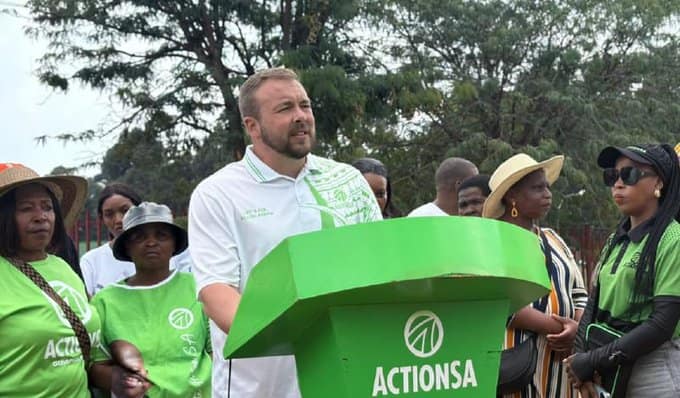
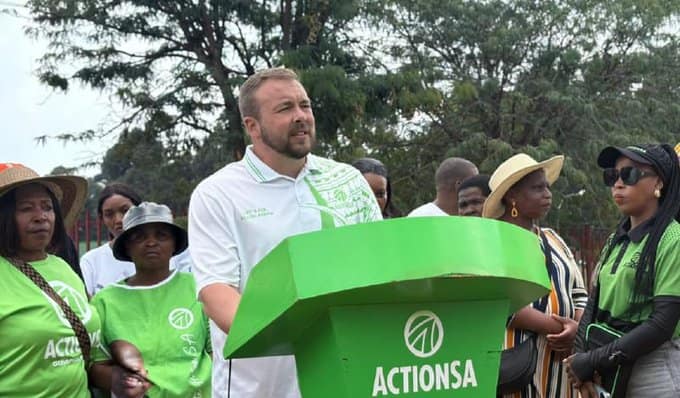
Into this landscape of frustration steps ActionSA, the political movement founded by former Johannesburg mayor Herman Mashaba. On Wednesday, the party announced a significant shift in its approach to local government: when it selects its candidate for Johannesburg’s mayoral chain this year, the deciding factor will not be political connections, charisma, or even fundraising ability. It will be something far more prosaic, and for residents of the city, far more meaningful: a demonstrable track record in service delivery.
The Criteria: Proof, Not Promises
In a briefing held at the party’s Johannesburg headquarters, ActionSA’s national leadership laid out what they describe as a “rigorous, evidence-based selection process.” The candidate, they said, must be able to point to concrete achievements in turning around failing systems—whether in government, state-owned enterprises, or even the private sector.
“We are done with the era of the professional politician who has never managed anything more complex than a party branch meeting,” said a senior party official who spoke on condition of anonymity. “Johannesburg is a R70 billion a year entity. It employs over 25,000 people. It provides services to nearly 6 million residents. This is not a training ground for amateurs. This is a complex corporate operation, and it needs to be led by someone who understands how to fix things, not just how to cut ribbons.”
The party has circulated a detailed questionnaire to potential candidates. Among the questions: “Describe a time when you took a failing system or organization and improved its performance. What metrics did you use? What obstacles did you face? What was the measurable outcome?” Candidates will also be required to present documented evidence of their claims—performance reviews, audited statements, third-party evaluations.
The Johannesburg Crisis
The urgency behind ActionSA’s approach is understandable. Johannesburg, once the proud flagship of African urban centers, has in recent years become a cautionary tale of municipal collapse. Johannesburg Water struggles to maintain aging infrastructure, leaving entire suburbs dry for days. City Power, the electricity utility, faces a mountain of debt, aging equipment, and rampant illegal connections that cause frequent blackouts. Pikitup, the waste management entity, cannot keep up with the city’s refuse, leading to illegal dumping and health hazards.
The political instability at the top has only worsened the situation. Since the 2021 local government elections, Johannesburg has cycled through multiple mayors—some lasting months, others mere weeks. Each change brings new priorities, new allegiances, and new delays in long-term planning. The city’s administration, once the envy of the continent, now operates in a state of perpetual crisis management.
“Every day, my phone rings with complaints,” says a ward councillor from the south of Johannesburg, who asked not to be named. “No water. No lights. The rubbish hasn’t been collected in three weeks. And when I go to the municipality to ask for help, I’m told there’s no budget, or the contractor has disappeared, or it’s someone else’s problem. The system is broken, and the people at the top don’t know how to fix it because they’ve never fixed anything in their lives.”
The Mashaba Factor
For ActionSA, the mayoral race in Johannesburg carries particular significance. It was here, in 2016, that Herman Mashaba pulled off one of the most stunning political upsets in post-apartheid South Africa, leading a multi-party coalition that ejected the ANC from power in the city for the first time. Mashaba’s tenure, though controversial in some respects, was marked by a relentless focus on service delivery basics—revenue collection, pothole repairs, by-law enforcement.
Now, as ActionSA positions itself for the 2026 local government elections, the party is seeking to recapture that magic. The choice of mayoral candidate will signal whether the party remains true to its founding identity as a movement of practical problem-solvers, or whether it will follow the path of other opposition parties into the swamp of internal politicking and ideological posturing.
Mashaba himself has been closely involved in designing the selection process. Insiders describe him as “obsessive” about the need for demonstrated competence. “Herman has a simple test,” one party source said. “He asks: if your lights went out at home, would you trust this person to fix them? If your water stopped running, would you want them in charge? It’s that basic. The people of Johannesburg are living with the consequences of failed leadership every day. They don’t need more speeches. They need someone who knows how to turn the lights back on.”
The Candidate Pool
So who might emerge as ActionSA’s standard-bearer? The party is keeping its cards close to its chest, but sources indicate that the field includes former municipal managers, experienced engineers, and private sector executives with turnaround experience. There is also speculation about the possible return of some figures from the Mashaba mayoral era—technocrats who earned reputations for competence during that tumultuous period.
What is clear is that the party is looking beyond its own internal ranks. “We are not limiting ourselves to card-carrying members,” the senior official said. “If the best person for the job is not currently in ActionSA, we will talk to them. We will convince them. This is bigger than any one party. This is about saving Johannesburg.”
The Broader Context
ActionSA’s move comes as Johannesburg voters grow increasingly cynical about political promises. The 2021 election saw record-low turnout, with many residents simply staying home, convinced that no party could make a difference. The subsequent years of coalition chaos have done nothing to restore faith.
But there are signs that 2026 could be different. The emergence of “service delivery” as a primary voting issue—rather than the old tribal and ideological loyalties—has the potential to reshape the city’s political landscape. Parties that can demonstrate practical competence may find unexpected support from voters who have given up on grand narratives and simply want their taps to run.
The ANC, still the largest party in the city, faces its own challenges. Its internal processes for selecting candidates remain opaque, and critics argue that loyalty to the organization is often valued above actual ability. The DA, the official opposition, has struggled to shake its image as a party of professional politicians rather than practical managers. The EFF’s radical posturing appeals to the disaffected but offers few concrete solutions to the technical challenges of running a complex metropolis.
Into this vacuum steps ActionSA, with a message that is simple, almost brutally so: we will find someone who can actually do the job. Whether that message resonates with voters will depend on whether the party can deliver on its promise—not just in choosing a candidate, but in governing effectively if it wins.
The Road Ahead
The selection process is expected to take several months, with an announcement likely in mid-2026, ahead of the formal election campaign. In the meantime, ActionSA will be scrutinizing potential candidates, verifying their claims, and preparing to present its choice to the voters of Johannesburg.
For the residents of Alexandra, waiting in line for water that may or may not come today, the political maneuvering in party headquarters can feel distant. But if ActionSA’s gambit works—if it can find a candidate with a genuine record of fixing broken systems—it might just offer something that has been in desperately short supply in Johannesburg for years: hope that things can actually get better.
As one Soweto resident, queuing at a communal tap on a dusty afternoon, put it: “I don’t care who the mayor is. I don’t care what party they belong to. I just want to turn on my tap and have water come out. Is that too much to ask? Is that really too much to ask?”
In the boardrooms of Johannesburg, where political futures are being decided, that question hangs in the air, unanswered, waiting for someone with the competence and the courage to finally provide an answer.
About The Author