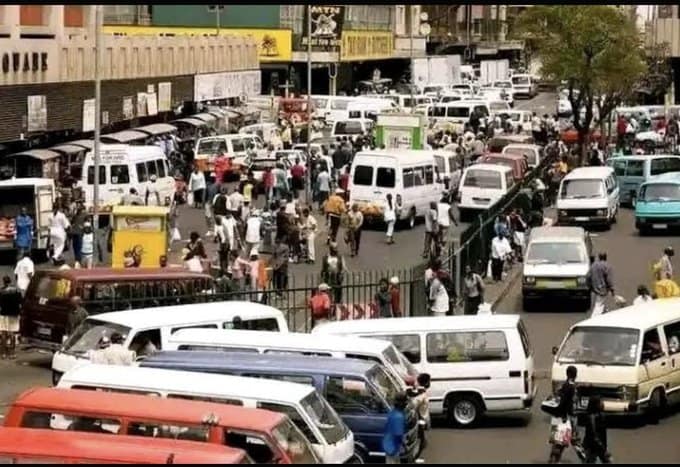
Millions of South Africans who depend on the minibus taxi industry for their daily commute could soon find themselves digging deeper into their pockets, as taxi operators warn that relentless increases in fuel prices are set to force a round of fare hikes that may take effect as early as 1 April. The proposed increase, which would ripple through the country’s most widely used form of public transport, threatens to add yet another layer of financial strain to households already grappling with elevated food prices, housing costs, and stagnant wages.
The South African National Taxi Council (SANTACO), the industry’s primary representative body, has been unequivocal in its message: the taxi industry is under severe pressure, and the current trajectory of operating costs is unsustainable. With global oil prices climbing amid ongoing conflict in the Middle East and a weakening rand exacerbating local fuel costs, operators say they have reached a breaking point and have little choice but to pass a portion of the burden onto commuters.
Fuel Prices: The Ticking Time Bomb
The specter of higher taxi fares is not a new phenomenon, but the current confluence of factors has created what industry insiders describe as a perfect storm. The Department of Mineral Resources and Energy is expected to announce official fuel price adjustments for April in the coming days, with early projections pointing to a substantial increase in both petrol and diesel prices.
Diesel, which powers the vast majority of minibus taxis, is particularly sensitive to global crude oil fluctuations and currency volatility. South Africa’s fuel is priced in US dollars, meaning that every time the rand weakens against the greenback, the cost of importing refined petroleum products rises. With the rand trading at historically weak levels and geopolitical tensions driving up the price of crude, the cumulative effect on diesel prices has been punishing.
For taxi operators, fuel is the single largest variable cost. A typical minibus taxi operating on a busy urban route can consume hundreds of liters of diesel per week, and even a modest increase of 50 cents per liter translates into thousands of rands in additional monthly expenses per vehicle. For operators running fleets of multiple taxis, the sums become staggering.
“We are not crying wolf. This is a matter of survival,” a SANTACO spokesperson said. “The fuel price is going up, and we cannot absorb these costs any longer. We have held the line as long as we possibly could, but if we do not adjust fares, many operators will be forced off the road, and that will hurt commuters even more.”
The Domino Effect on Commuters
For the estimated 15 million South Africans who rely on minibus taxis daily—a number that swells when including occasional users—any fare increase will be felt acutely. Unlike train or bus commuters who may have the buffer of subsidized fares or employer-provided transport allowances, taxi commuters are almost entirely self-funded, paying cash for each trip.
The taxi industry is the backbone of South Africa’s public transport system, carrying more passengers than all other modes combined. In cities like Johannesburg, Pretoria, Cape Town, and Durban, as well as in townships, rural areas, and cross-border corridors, the taxi is often the only available form of transport. There are no viable alternatives for the vast majority of commuters, meaning that when taxi fares rise, commuters have no choice but to pay—or to forgo travel altogether, potentially losing access to jobs, education, and essential services.
The timing of the proposed fare hike, set for the beginning of April, is particularly sensitive. April marks the start of the new financial year for many households, a period when rent increases, school fee payments, and municipal rate hikes often take effect. An additional transport cost burden, even if it amounts to a few rand per day, can push already stretched household budgets to the breaking point.
“I spend R100 a day on taxis just to get to work and back,” said a commuter in Soweto who spoke to reporters. “If that goes up, something else has to give. Maybe I eat less. Maybe I cut back on electricity. The taxi owners say they are struggling, but so are we. We are all in the same boat.”
Industry Pressures Beyond Fuel
While fuel prices have been the immediate trigger for the proposed fare hike, taxi operators point to a broader array of pressures that have been building for years. The cost of vehicle maintenance has skyrocketed, with spare parts and tires becoming significantly more expensive due to supply chain disruptions and currency depreciation. Insurance premiums for public transport vehicles have also risen sharply, reflecting the high-risk nature of the industry.
In addition, the taxi industry has faced increasing regulatory and compliance costs. The rollout of the National Land Transport Act and the requirement for operating licenses, vehicle roadworthiness testing, and driver professional permits have added administrative and financial burdens. While many of these measures are designed to improve safety and professionalism, they have also increased the cost of doing business.
“People think taxi owners are wealthy, but the reality is that most of us are just scraping by,” a taxi operator in Gauteng said. “We have vehicle repayments, insurance, permits, maintenance, and now fuel. And we have to pay our drivers. After all of that, there is very little left. If we do not increase fares, we will start losing vehicles to repossession, and then the commuters will have no taxis at all.”
The Regulatory Landscape and the Role of Government
The proposed fare increase is not a simple matter of operators unilaterally raising prices. Taxi fares are subject to provincial regulatory frameworks, and any increase must be approved by relevant transport authorities. However, in practice, the informal nature of much of the taxi industry means that fare adjustments often occur at the route level, with associations and individual operators setting prices based on local conditions.
SANTACO has indicated that it will engage with provincial transport departments to discuss the proposed increases, but the organization has made it clear that some form of adjustment is inevitable. The council has also called on government to consider interventions that could mitigate the impact, including fuel subsidies for public transport operators or a review of the fuel levy structure.
“We are not asking for a handout, but we need government to understand that the taxi industry is a critical part of the national economy,” the SANTACO spokesperson said. “When the taxi industry suffers, the country suffers. We need a sustainable solution, not just a temporary fix.”
A Broader Conversation on Public Transport
The looming taxi fare hike has reignited a broader conversation about the state of South Africa’s public transport system. For decades, the minibus taxi industry has operated in a grey area—formally recognized but lightly regulated, essential but underfunded, ubiquitous but often overlooked in infrastructure planning.
While significant investments have been made in bus rapid transit (BRT) systems in cities like Johannesburg (Rea Vaya) and Cape Town (MyCiTi), these networks serve only a fraction of the population. The rail network, once the backbone of urban transport, has deteriorated due to mismanagement, vandalism, and underinvestment, leaving millions without reliable alternatives.
Transport economists argue that the recurring cycle of fare hikes and commuter hardship reflects a deeper structural failure. Without a coordinated strategy that integrates taxis into a modern, efficient, and affordable public transport system, the working class will continue to bear the brunt of external shocks like rising oil prices.
“The taxi industry is not the problem; it is a symptom of a system that has failed to provide a coherent public transport solution,” a transport analyst said. “Every time fuel prices go up, we have this same conversation. But we never address the underlying issues: the lack of investment in rail, the fragmentation of regulation, and the absence of a long-term vision.”
What Happens Next?
As the 1 April deadline approaches, commuters across the country are bracing for the impact. For many, the prospect of higher taxi fares is not an abstract economic issue but a daily reality that will require difficult trade-offs. Some may seek to carpool, others may walk longer distances, and some may simply have to find work closer to home.
For taxi operators, the coming weeks will be a test of both their business resilience and their relationship with the commuters who depend on them. While fare hikes are never popular, operators argue that they are acting in the interest of keeping the industry—and the country—moving.
“We are not the enemy,” the Gauteng operator said. “We are the same people as the commuters. We live in the same communities, we send our children to the same schools. We are all just trying to survive. If the fare goes up, it is because we have no other choice.”
With fuel price announcements expected imminently, the question is no longer whether taxi fares will rise, but by how much—and how millions of South Africans will cope with yet another cost-of-living blow in an economy that offers few easy answers.
About The Author