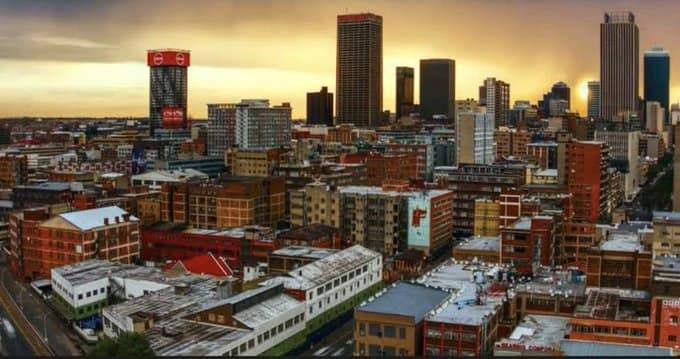
Johannesburg – For the past several days, a mysterious and pungent odour has descended upon South Africa’s economic hub, triggering a wave of confusion, frustration, and concern across social media platforms. From the upscale malls of Sandton to the bustling streets of Soweto, residents have been holding their noses and asking the same question: What is that terrible smell?
Since the weekend of 7-8 March 2026, parts of Johannesburg, including Randburg, Roodepoort, and Fourways, have been intermittently plagued by a powerful stench, commonly described as resembling rotten eggs, burning sulphur, or, as some put it, even cat urine . The phenomenon has moved beyond a mere nuisance, reigniting serious debates about air quality in a province already burdened by industrial pollution .
A City Holds Its Nose: The Social Media Reaction
As the smell permeated neighbourhoods, residents took to X (formerly Twitter) and community forums to share their experiences. The reactions ranged from humorous bewilderment to genuine alarm. “There’s a smog over the @CityofJoburgZA city, which can be seen clearly from the Randburg/Sandton direction. And in the city a smell of sulphur is hanging over the air. What is going on? Please?” posted one user . Others joked about the city’s latest “mystery,” but for many, the experience was deeply unsettling, reviving memories of similar incidents in 2022 and earlier this year in January .
The Scientific Explanation: Hydrogen Sulphide and Temperature Inversions
Authorities and experts have moved quickly to identify the culprit. The City of Johannesburg’s Environment and Infrastructure Services Department (EISD) launched an investigation, utilising its air quality monitoring network . According to Dr Tebogo Modiba, the EISD Executive Director, monitoring stations at Buccleuch and Alexandra recorded elevated levels of hydrogen sulphide (H₂S), the gas responsible for that characteristic rotten egg odour . At its peak, the Alexandra station recorded H₂S concentrations of approximately 36-37 parts per billion (ppb) .
But where is this gas coming from? Professor Rebecca Garland, an atmospheric scientist at the University of Pretoria, explained that hydrogen sulphide “comes from many different sources, some of them could be more local, but also there are industries, open mines, coal-fired plants, and sewage treatment plants” .
The City’s Air Quality Management Unit has attributed the heightened and pungent smell to a perfect storm of weather conditions typical of late summer. “Over the past two days, weather conditions in Johannesburg have been characteristic of late summer, characterised by warm temperatures, humid air, and occasional rainfall,” the unit stated . These conditions, particularly a phenomenon known as a temperature inversion, trap cool air—and its pollutants—close to the ground, preventing it from rising and dispersing . Furthermore, specific wind patterns from the east and south-east have been carrying a plume of polluted air directly over the City of Ekurhuleni and the Johannesburg region .
Tracing the Source: The Mpumalanga Highveld Connection
The investigation points to a source far beyond the city limits. The City of Johannesburg was quick to defend its own territory, stating that it “does not host major heavy industrial operations” and that all local licensed facilities are regularly monitored . The finger of blame points east, towards the Mpumalanga Highveld.
The odour’s characteristics are a near-perfect match for emissions associated with the massive industrial complex in Mpumalanga, which is home to a dozen coal-fired power stations and major petrochemical operations like Sasol’s Secunda plant . Data from the Three Rivers ambient air quality monitoring station confirmed that prevailing winds during the period were blowing from the east and north-east, making it highly plausible that pollutants had travelled from Mpumalanga into southern Gauteng .
Boitumelo Kwakwa, programme manager for air quality at the University of Johannesburg, confirmed this theory. “The smell is coming from sulfur dioxide emissions from coal-burning in Mpumalanga, where there are many coal mining companies and a lot of electricity generation,” she told the Sowetan . The matter has since been escalated from the City and Gauteng province to the national Department of Forestry, Fisheries and the Environment for further investigation .
This is not an isolated event. The City of Johannesburg noted that over the past five years, similar sulphur-related odour episodes have occurred intermittently, particularly between January and March, when atmospheric conditions favour this long-range transport of pollutants .
Is It Dangerous? Health Advice for Residents
While the smell is undeniably unpleasant, authorities have moved to calm public fears, stating that the levels detected are not immediately dangerous. “While these short-term spikes were detected, overall pollutant concentrations remained generally low and close to background levels. The levels recorded are sufficient to produce a noticeable odour but remain below concentrations typically associated with significant health risks,” assured Dr Modiba . Officials added that while the odour may cause discomfort, headaches, or nausea for some people, it is not expected to pose serious health risks at the levels experienced .
However, experts caution that this incident is a symptom of a much larger, chronic problem. The Centre for Research on Energy and Clean Air (CREA) has linked air pollution to an estimated 16,000 annual deaths in Gauteng . Data from a sensor in Jabavu, Soweto, has shown average daily PM2.5 levels (tiny particulate matter that can enter the lungs and bloodstream) sometimes exceeding 300 µg/m³—far higher than the World Health Organisation’s recommended limit of 75 µg/m³ per day .
Professor Garland emphasised that while Gauteng’s levels may not be as high as in some other parts of the world, they are still a grave concern. “Our levels [in winter] do get high. They exceed the standards that the government has set. We do have policies in place that we’re working to improve air pollution. But it’s not improving fast enough,” she said . Kwakwa echoed this, stating, “It’s actually a frequent occurrence, but we should not accept it as normal because it brings short-term and long-term complications… It will probably come back every year, and will probably worsen because of climate change” .
In the meantime, the City and health experts have issued clear advice for residents, especially vulnerable groups like children, the elderly, and those with respiratory conditions :
- Stay indoors and keep windows and doors closed .
- Avoid strenuous outdoor activities while the pungent air persists .
- Use air-conditioning or air purifiers if available .
- Wear a mask if you must go outside .
- Monitor for symptoms such as eye or throat irritation, headaches, dizziness, or fatigue .
For now, residents of Johannesburg are left to endure the stench, hoping for a shift in the wind. But as the smell lingers, it serves as a potent and unpleasant reminder of the deep-seated environmental challenges facing the region and the urgent need for long-term solutions to clean up the air that millions breathe.
About The Author