For more than 12,000 of the most vulnerable residents in KwaZulu-Natal, the countdown has begun. The South African Social Security Agency (SASSA) has fired a warning shot across the bows of beneficiaries across the province, declaring that their lifeline—the monthly social grant—will be cut off if they fail to attend mandatory reviews.
The ultimatum, issued from SASSA’s KZN provincial office, is stark in its simplicity and devastating in its potential consequences. Beneficiaries who have been flagged for review have a limited window to present themselves at their local offices to verify their details. If they do not, the taps of financial support will be turned off.
“We are appealing directly to the more than 12,000 beneficiaries who have not yet responded to our summons,” said SASSA KZN spokesperson Sandy Godlwana. “We have sent messages. We have sent letters. We have done everything we can to reach you. Now, the responsibility falls on you. If you do not come in, your grant will be suspended.”
The reviews are a standard but critical part of SASSA’s administrative function. They are designed to ensure that grants are only paid to those who are still eligible—that children listed for child support grants are still in the caregiver’s care, that disability statuses are current, and that no fraudulent claims are slipping through the net. However, for the beneficiaries, the process can be daunting.
The Valley of Despair and Distance
In the remote rural reaches of the province, such as the deep gorges of the Harry Gwala District or the scattered villages of uMkhanyakude, a trip to a SASSA office is not a simple errand. It can mean a journey of hundreds of kilometers, multiple taxi fares that consume a significant portion of the grant money itself, and a full day away from piece jobs or childcare.
“The people are scared,” said Nomsa Dlamini, a community health worker in the Ingwavuma area. “They get these letters, but they don’t have the money to travel. They are old. They are sick. They look at the letter, they panic, and then they do nothing because they don’t know what to do. And now, they will be punished for their fear.”
For elderly pensioners, many of whom are the sole providers for entire households of orphaned grandchildren, the threat of suspension is a source of profound anxiety. A single grant often pays for the month’s food, the children’s school uniforms, and the paraffin for lighting.
“I will walk if I have to,” said 78-year-old Gogo Mkhize from Bergville, her voice trembling. “I cannot lose this money. These children eat because of this money. But my legs are not what they used to be. I am praying I can make it.”
SASSA’s Tightrope Walk
SASSA finds itself walking a tightrope. On one hand, it is legally and ethically obligated to clean up its beneficiary roll. The agency has been plagued for years by stories of “ghost beneficiaries” and fraudulent claims that drain millions from the fiscus. The reviews are essential to maintaining the integrity of the social security system.
On the other hand, the agency is acutely aware that the people caught in this administrative dragnet are the poorest of the poor. Cutting them off is not like canceling a credit card; it is a decision that can tip a family from precarious survival into outright destitution.
“We do not want to suspend anyone,” Godlwana emphasized. “This is not a punishment. This is a process. We are saying to people: help us to help you. Come in, let us verify your details, and we can ensure the money keeps flowing without interruption.”
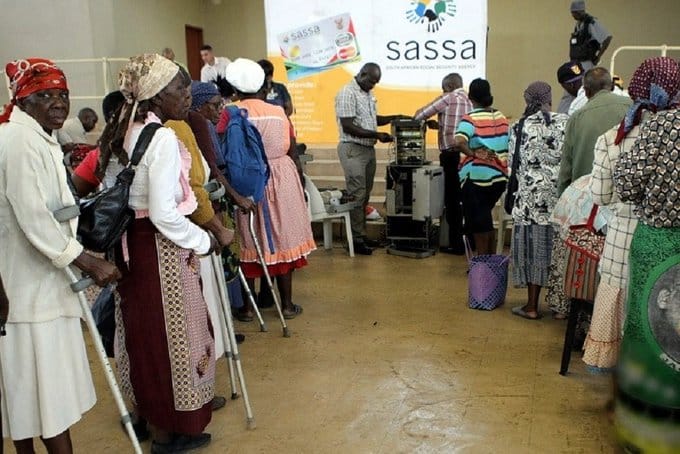
To mitigate the crisis, SASSA has extended its operating hours at certain high-volume offices and has deployed mobile units to some of the more inaccessible areas. But for the 12,000, the message is clear: the agency has done its part; now it is up to them.
A Race Against Time
As the deadline approaches, the atmosphere at SASSA offices across the province is a mixture of desperation and determination. Queues snake around buildings in the early morning chill as beneficiaries, clutching their green ID books and letters, wait for their names to be called.
For those who miss the cut, there is a glimmer of hope: suspensions are not permanent. Beneficiaries can apply for reinstatement once they complete the review. But the reinstatement process can take weeks, leaving families in a financial limbo with no income.
Community leaders are now mobilizing, spreading the word through churches, taxi ranks, and informal gatherings. They are pleading with their neighbors to find a way to the office, to not let fear or distance rob them of their only security.
“Go. Borrow money if you must. Ask your neighbor for a lift,” Dlamini urged. “Do whatever it takes. Because once that grant is gone, it is not just a letter you lose. It is your dignity. It is your food. It is your future.”
The clock is ticking for 12,000 families in KZN. And for SASSA, the hope is that the warning shot will be heard before it is too late.
About The Author