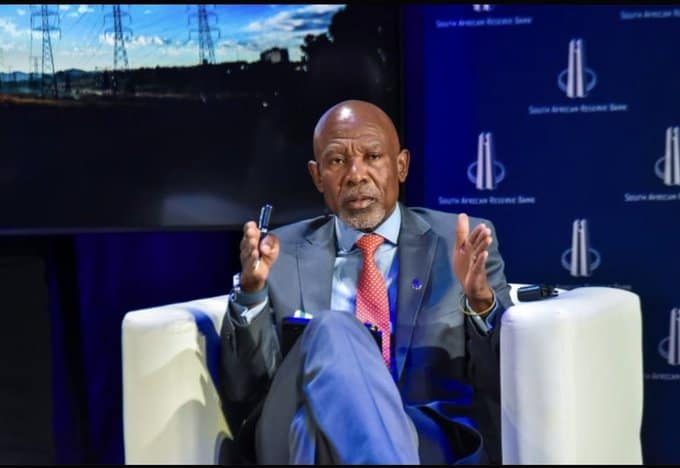
In a resolute and wide-ranging address to the Bureau for Economic Research (BER) in Cape Town, South African Reserve Bank (SARB) Governor Lesetja Kganyago left no ambiguity about the central bank’s singular focus, forcefully reiterating that its primary and non-negotiable duty is to ensure price stability. His speech, titled “The Imperative of Anchored Expectations,” served as both a stern policy commitment and a critical public education campaign at a time of significant global economic uncertainty and persistent domestic pressures.
The Core Message: No Mission Drift
Against a backdrop of volatile commodity prices, geopolitical tensions, and a challenging local fiscal landscape, Kganyago delivered a clear message to markets, government, and the public: the SARB will not be distracted from its core mandate.
“We are not, and cannot be, all things to all people,” Governor Kganyago stated emphatically. “Our constitutional mandate is clear. Our task is to protect the value of the currency in the interest of balanced and sustainable economic growth. This is not an academic exercise. It is the foundation upon which every South African’s planning—from the largest pension fund to the poorest household buying a loaf of bread—depends.”
He directly addressed calls from various quarters for the bank to adjust its approach to also explicitly target growth or employment. “To suggest we lower interest rates to stimulate growth, while ignoring inflation, is to prescribe a sugar rush that ends in a diabetic coma for the economy. Sustainable job creation is built on stable prices and prudent investment, not on the temporary illusion of cheap money that evaporates into higher prices for everything.”
The 3-6% Target: A New “Lock-In” Period
A significant portion of the governor’s remarks focused on the bank’s revised inflation target range of 3% to 6%, a shift from the previous 3-5% band. Kganyago framed this not as a relaxation of discipline, but as a pragmatic adjustment in a world of structurally higher global inflation pressures. He described a concerted effort to “lock in” public and market expectations firmly within this new range.
“The target is a covenant with the South African people. Our credibility hinges on delivering inflation outcomes that are consistently within the target band,” Kganyago explained. He warned that allowing inflation expectations to become “unanchored”—where businesses and workers automatically factor in high future inflation—creates a self-fulfilling prophecy that is “toxic and expensive to reverse.”
To reinforce this, he detailed the SARB’s enhanced communication strategy, including more detailed forward guidance, expanded public briefings, and targeted engagement with labour unions and business leaders to explain the corrosive impact of inflation on wages and savings.
Navigating Domestic Tempests and Global Gales
The governor did not shy away from enumerating the severe headwinds facing the bank’s mission:
- Fiscal Risks: He pointedly noted that monetary policy “cannot clean up after fiscal folly,” a clear reference to concerns over unsustainable government debt, spending pressures from state-owned enterprises, and the risk of expansive pre-election budgets. “The most effective thing the government can do to support lower interest rates is to instill fiscal discipline,” he asserted.
- Logistical Failures: The debilitating impact of Transnet’s rail and port inefficiencies, along with ongoing power supply uncertainty from Eskom, were highlighted as major, persistent “cost-push” inflation drivers. “These are structural constraints that directly increase the cost of doing business and the price of goods. They are not solvable by interest rates, but they must be overcome to achieve durable price stability.”
- Global Uncertainty: From volatile oil prices due to conflict to “stickier than expected” inflation in major advanced economies, Kganyago outlined a global environment that limits the SARB’s policy flexibility and necessitates a cautious, data-dependent approach.
Analyst Reaction: A Necessary, Unyielding Stance
Economists largely praised the governor’s unambiguous communication. Isaac Matshego, Chief Economist at Nedbank, commented: “This was a textbook demonstration of central bank independence and clarity. In an era of political noise and economic pain, the Governor is correctly emphasizing that the SARB’s role is to be the anchor, not the sail. You may not always like where the anchor holds you, but it stops you from being dashed on the rocks of hyperinflation.”
However, some critics, particularly from organised labour and social justice groups, argue the stance is overly rigid. Zwelethemba Mokoena, an economist with the Labour Research Service, countered: “While price stability is important, the Governor’s almost theological commitment to it ignores the real economic emergency of unemployment. The trade-offs are real, and the social cost of maintaining high interest rates in a stagnant economy is borne by the poor and the jobless.”
The Road Ahead: Vigilance as a Virtue
Governor Kganyago concluded with a sobering outlook. The journey to firmly anchor inflation expectations at the mid-point of the new target range, he suggested, would be long and require unwavering resolve.
“We will remain vigilant, data-dependent, and—above all—independent in our pursuit of this mandate,” he stated. “Trust is earned through consistency of action and transparency of purpose. The SARB will continue to act predictably against inflation, because unpredictable inflation is the most vicious tax on the poor and the greatest destroyer of long-term economic prospects.”
The speech solidified Governor Kganyago’s position as a stalwart guardian of orthodox central banking principles. It made clear that in the turbulent seas of the global and South African economy, the SARB under his leadership intends to be an unyielding anchor, prioritizing long-term stability over short-term political or popular expediency. The message to the nation was clear: the path to sustainable prosperity runs directly through the door of price stability.
About The Author