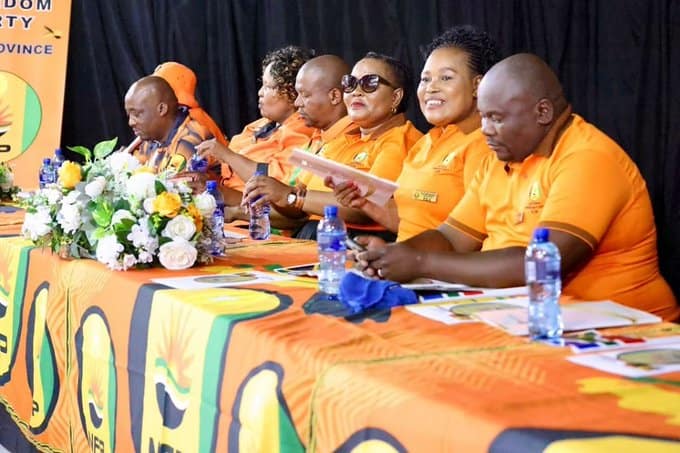
In a move that has shattered the stability of KwaZulu-Natal’s power-sharing arrangement, the National Freedom Party (NFP) has officially announced its immediate withdrawal from the province’s Government of Provincial Unity (GPU). The decision, declared by party president Ivan Barnes during a tense and packed media briefing in Durban on Friday, effectively collapses the existing coalition and sends the province into uncharted political territory, with the looming specter of complex negotiations or even early elections.
“Our participation in the GPU was founded on the principle of meaningful cooperation to serve the people of KwaZulu-Natal,” stated Barnes, flanked by the party’s top leadership. “However, after exhaustive engagement and deliberation, we have concluded that the current arrangement no longer serves that fundamental purpose. The NFP can no longer, in good conscience, lend its support to a government that persistently marginalizes our voice and ignores the urgent needs of the communities we represent.”
The Breaking Point: A Litany of Grievances
Barnes outlined a detailed list of grievances that precipitated the divorce, painting a picture of a partnership riddled with distrust and dysfunction:
- Systematic Marginalization: The NFP leadership accused their primary coalition partner, the African National Congress (ANC), of consistently sidelining them in key decision-making processes. “We were treated as a voting bloc, not a governing partner. Crucial budget allocations and policy directives affecting our constituencies were decided unilaterally, in violation of our foundational agreements.”
- Unfulfilled Commitments: Central to the fallout was the alleged failure to honor a pre-coalition deal on the rotation of certain key positions within provincial portfolios and committees, which the NFP claims was a cornerstone of their initial agreement.
- Policy Paralysis and Divergence: Barnes pointed to specific, stalled initiatives—particularly around service delivery in rural municipalities and township economic revitalization—which the NFP had championed but seen “endlessly delayed and diluted.”
Immediate Fallout: A Government in Minority
The withdrawal is a severe blow to the ANC’s hold on the province. The NFP, while holding a limited number of seats, was a critical component in providing the GPU with a stable working majority in the KZN Legislature. Its exit now reduces the ANC-led coalition to a minority government, leaving it vulnerable to motions of no confidence and unable to pass budgets or major legislation without securing new, ad-hoc alliances on a vote-by-vote basis.
Political analyst Professor Mpendulo Ndlovu of the University of KwaZulu-Natal described the situation as “the most serious provincial governance crisis since the 2019 elections.”
“This isn’t just a minor reshuffling,” Ndlovu said. “This is the foundational pillar of the KZN administration being pulled out. The ANC is now in a deeply precarious position. They must either engage in humiliating and significant concessions to other parties to survive, or face the very real possibility of the legislature collapsing and forcing an early provincial election.”
Possible Scenarios and Kingmakers
All eyes now turn to the province’s other kingmaker parties and their potential allegiances:
- The Democratic Alliance (DA): Has historically been opposed to the ANC. Could they be persuaded to enter a stability pact to avoid an election, or would they seek to bring the government down?
- The Economic Freedom Fighters (EFF): Their radical policy positions make a formal coalition with the ANC complex, but they could offer issue-based support at a high political price.
- The Inkatha Freedom Party (IFP): As a historic rival turned occasional partner, its role becomes pivotal. The IFP’s next move could determine the province’s immediate future.
A Nationwide Ripple Effect
The crisis in KZN is being watched closely at a national level. It serves as a stark warning of the fragility of coalition governments ahead of the 2024 national elections, where no single party may achieve an outright majority. The NFP’s dramatic exit underscores the perils of unstable alliances and the potential for single-issue or personality-driven politics to derail governance.
In his closing remarks, President Barnes struck a defiant yet focused tone: “Our departure is not an act of sabotage, but an act of principle. We return to the people, we consolidate, and we prepare for the future. The ball is now in the court of those who remain to see if they can govern with the humility and collaboration that the people of this province deserve.”
As Friday’s briefing concluded, the scramble began. The ANC in KZN has called an emergency provincial executive committee meeting, while smaller parties are reportedly being inundated with calls. The calm in KwaZulu-Natal’s political landscape has been shattered, ushering in a period of high-stakes negotiation and uncertainty that will test the resilience of South Africa’s provincial democracy.
About The Author