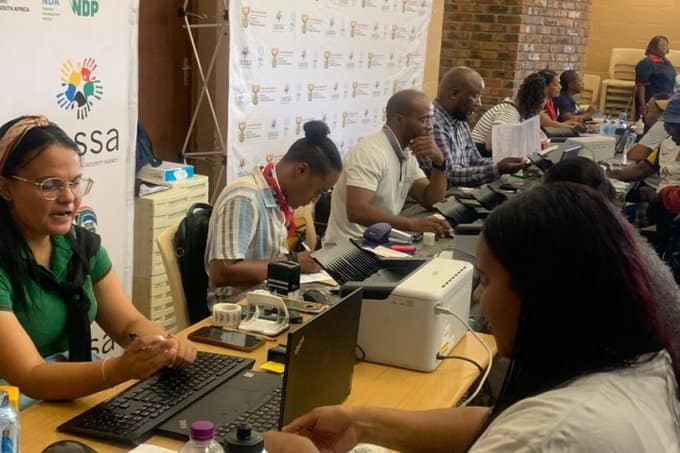
The queues outside Sassa offices across KwaZulu-Natal have been longer than usual this summer. But for once, the mood among the waiting crowds has been one of cooperation rather than complaint. After months of meticulous verification, door-to-door visits, and data cross-checking, the South African Social Security Agency has emerged with a stunning result: a clean-up of the grants system that has saved the fiscus half a billion rand.
In an announcement that has been welcomed by anti-corruption advocates and treasury officials alike, Sassa confirmed that it has suspended approximately 70,000 grants across the province following a comprehensive review of the social assistance database. The move, which officials describe as the largest single clean-up operation in recent memory, has uncovered widespread irregularities—from grants paid to deceased beneficiaries to fraudulent claims by individuals who were never entitled to receive a cent.
But in a twist that has surprised even seasoned Sassa officials, the success of the operation has been credited not just to forensic investigators and data analysts, but to the grant recipients themselves.
Speaking at a media briefing in Durban, Sassa’s KwaZulu-Natal regional executive manager hailed the “openness and teamwork” displayed by the vast majority of beneficiaries during the verification process. Unlike previous exercises, which were often met with resistance, confusion, and allegations of heavy-handedness, this round of checks saw communities actively participating in ensuring the system’s integrity.
“We went into this process expecting pushback,” the manager admitted. “Instead, we found partners. Beneficiaries came forward with information. Community leaders helped us identify households where grants were being misused. People want this system to work, and they understand that corruption hurts the most vulnerable among us.”
The scale of the operation was staggering. Over a six-month period, Sassa teams fanned out across the province’s 11 districts, from the urban sprawl of eThekwini to the deep rural reaches of uMkhanyakude and Harry Gwala. They conducted biometric verifications, cross-referenced identities with the Department of Home Affairs’ population register, and followed up on thousands of tips received through the agency’s fraud hotline.
What they found painted a troubling picture of systemic abuse. In some cases, grants continued to be paid months—even years—after a beneficiary had passed away, with family members or acquaintances continuing to collect the money. In others, individuals were found to be claiming multiple grants under different identities, a fraud that required sophisticated collusion with corrupt officials or access to forged documents. There were also instances of people who had found employment or whose financial circumstances had improved, yet continued to draw grants to which they were no longer entitled.
The financial impact of these discoveries is monumental. The R500 million saved annually represents funds that can now be redirected to those who genuinely need assistance—the elderly, the disabled, children in poverty-stricken households. In a province with some of the highest unemployment rates in the country, where millions rely on social grants as their only source of income, every rand counts.
But the clean-up has not been without its human complications. For every fraudulent claim uncovered, there have also been cases of genuine beneficiaries who were inadvertently caught in the net. Sassa officials acknowledge that some payments were suspended pending verification, causing temporary hardship for families who rely on the monthly stipend to buy food and medicine.
“We have been careful to balance the need for integrity with our constitutional obligation to provide social assistance,” explained a senior Sassa official involved in the operation. “Where suspensions occurred, we prioritised rapid review. If a beneficiary could prove their entitlement, the grant was reinstated and backdated. We are not in the business of punishing the poor. We are in the business of protecting the system that supports them.”
The success in KwaZulu-Natal is now being held up as a model for other provinces to follow. National Sassa leadership has indicated that the verification methodology developed in the province—combining technological tools with community engagement—will be rolled out countrywide over the coming year. The target is ambitious: to clean up the national grants database, saving billions and restoring public confidence in a system that is the bedrock of South Africa’s social safety net.
For anti-poverty activists, the news is bittersweet. While they celebrate the crackdown on fraud, they warn that the savings must translate into improved services for legitimate beneficiaries. “R500 million is a lot of money,” said a spokesperson for the Black Sash, a human rights organization that has long advocated for grant recipients. “We will be watching closely to ensure that this money is not simply absorbed into the fiscus, but is used to expand coverage, increase grant values, and improve the efficiency of payments.”
Back in the queues outside Sassa offices, the mood is cautiously optimistic. Pensioners and caregivers clutch their identity documents, waiting their turn to be verified. There is grumbling about the waiting times, but there is also a quiet pride. They are part of a clean-up, they know. They are helping to ensure that the money meant for them goes to them, and not to fraudsters.
As one elderly woman, waiting in the sun outside the Sassa office in Pietermaritzburg, put it: “This money is all I have. If someone else is stealing it, they are stealing from me. Let them clean. Let them clean it all.”
About The Author