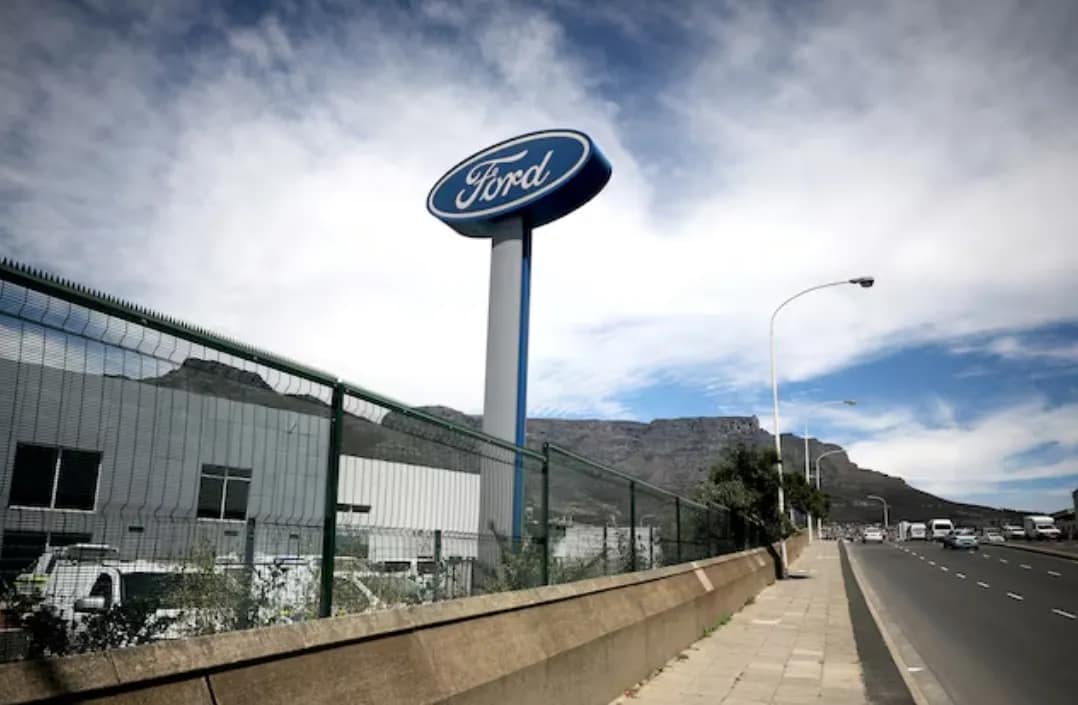
In a stark reminder of how interconnected the global automotive industry is, Ford Motor Company’s South African operations have announced plans to retrench 474 workers, a decision directly tied to a significant tax policy shift in the United Kingdom and disappointing sales of its flagship plug-in hybrid model.
The company issued formal Section 189 retrenchment notices last month, affecting employees at its key manufacturing hubs: the Silverton vehicle assembly plant in Pretoria and the Struandale engine plant in Gqeberha. This move underscores the vulnerability of local manufacturing to international market dynamics and regulatory changes.
The UK Tax Reclassification: A Direct Blow to Export Orders
The primary driver behind the job cuts is a substantial drop in European orders for the Ford Ranger, a vehicle for which South Africa is a crucial production base. Neale Hill, President of Ford Motor Company Africa, pinpointed a recent change in the UK’s tax code as a major cause. Effective from April 2025, double-cab pickups with a payload of one tonne or more have been reclassified from “commercial vehicles” to “passenger cars” for benefit-in-kind (BIK) tax purposes.
This reclassification makes these vehicles significantly more expensive for company car users, a core market for pickup trucks in Europe. “As a consequence of that, people have unfortunately reduced their volume. So that’s had a big impact in terms of our European orders,” Hill explained on the sidelines of a recent auto industry conference. This policy shift has forced Ford to scale down its South African operations from three production shifts to just two.
The Plug-in Hybrid Puzzle: High Cost and Tariff Hurdles
Compounding the issue is the underwhelming performance of the plug-in hybrid (PHEV) version of the Ranger, which is exclusively produced in South Africa for global export. Hill revealed that the model has failed to hit its projected sales targets. The vehicle’s high price point is one barrier, but a more complex issue involves international trade rules.
“We are not getting to the European originating content, which then makes it able to go into Europe duty-free,” Hill stated. This refers to rules of origin requirements, which mandate that a certain percentage of a vehicle’s components must be sourced from within the European Union to qualify for tariff-free access. Failure to meet this threshold makes the South African-built hybrid Ranger less competitive in its key European market.
Stable Local Market, Underutilized Capacity
Despite the export challenges, Hill noted that domestic demand for the Ranger remains “stable and probably increasing slightly.” However, this local resilience is insufficient to offset the export shortfall. The Silverton plant, with an annual production capacity of 200,000 vehicles, is now operating well below its potential. Hill confirmed that output for this year will be around 100,000 units, with a planned “capable volume” of 140,000 units moving forward.
The planned retrenchments are a sobering development for South Africa’s automotive sector, highlighting how external policy decisions and the slow adoption of new, expensive technologies can have immediate and painful consequences for local jobs and industrial stability.
About The Author