The labyrinthine connections between South Africa’s law enforcement and political elite were laid bare this week, as the controversial ascent of Cedrick Nkabinde—from a police detective to the chief of staff for the suspended Police Minister—became a central focus of a parliamentary inquiry, raising profound questions about patronage, integrity, and the blurring of lines within the state.
KwaZulu-Natal Police Commissioner Lieutenant-General Nhlanhla Mkhwanazi, testifying under oath, provided a rare and startling glimpse into Nkabinde’s trajectory. He revealed that Nkabinde facilitated his own relationship with the now-suspended Minister Senzo Mchunu during a meeting over coffee at Nkabinde’s house—a meeting that took place while Nkabinde was reportedly unemployed.
A Relationship Forged in the Crucible of Investigation
The origins of the Nkabinde-Mchunu relationship, as recounted by Mkhwanazi, are particularly contentious. Mkhwanazi stated that Nkabinde first came to know Mchunu while investigating a case involving him. “There was a death of someone in KZN, and the minister at the time was accused of having interfered with the destruction of crucial evidence,” Mkhwanazi told the inquiry. He added, with pointed ambiguity, that he is “unsure why Mchunu was not arrested at the time.”
This revelation paints a picture of a bond formed not through conventional political channels, but through a sensitive investigation, suggesting that Nkabinde’s transition from investigator to confidant of his former subject is at the heart of current concerns over political interference in law enforcement.
An Unprecedented Ascent and a Question of Qualification
The appointment itself was marked by a striking lack of political experience. Mkhwanazi recalled that when Mchunu offered Nkabinde the chief of staff position, Nkabinde was so unfamiliar with the role that he had to call Mkhwanazi to ask, “What does a chief of staff do?” Mkhwanazi advised him it was an administrative role, but noted he was initially under the impression Nkabinde would be serving Mchunu at the Department of Water Affairs, not the critical Police portfolio.
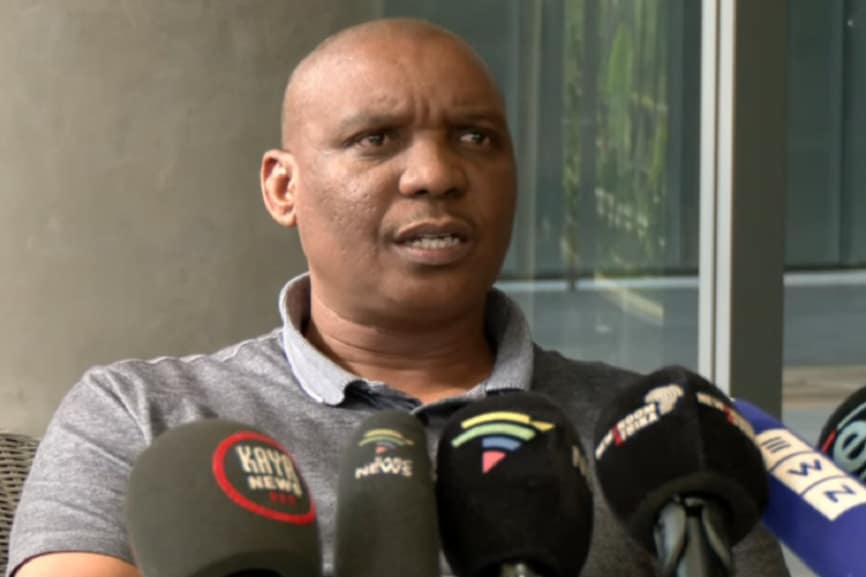
In a separate media briefing, Nkabinde defended his credentials, stating he holds a BTech degree in policing and garnered management experience as a head of forensics at a bank after leaving the Independent Police Investigative Directorate (IPID). He emphasized that all official appointment processes were followed and that he “more than qualify[s]” for the position.
A Career Marked by Internal Conflict and Close Ties
Nkabinde’s career path has been anything but smooth. He joined the police in 2004, rose to detective, and was promoted to a senior investigator at IPID. However, his tenure there was cut short by internal strife. He confirmed he voluntarily resigned after a “fallout” and reached a settlement agreement, while violence monitor Mary de Haas noted he was part of a faction that opposed the then-head of IPID, Robert McBride.
His personal relationship with Mkhwanazi also came under scrutiny. Mkhwanazi described them as having a “colleague relationship,” but Nkabinde elaborated that they were “very close friends who partied together,” with Mkhwanazi even visiting him at his private sector workplace.
Nkabinde is currently on leave from his chief of staff duties to testify at the Madlanga Commission, his story emblematic of a governance ecosystem where investigative pasts, political patronage, and personal loyalties are deeply and troublingly intertwined. His rise from handling dockets to holding one of the most influential administrative posts in the country’s security apparatus serves as a potent case study in the complex—and often controversial—dynamics of power in South Africa.
About The Author