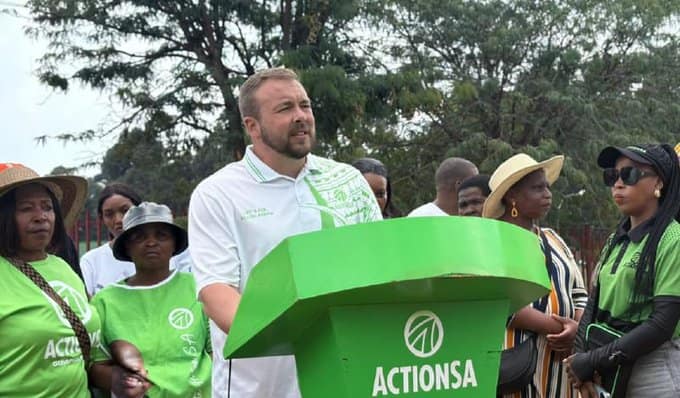
In a move that has sent ripples through South Africa’s political landscape, Dr. Dion George, the former Shadow Minister of Forestry, Fisheries and the Environment, has resigned from the Democratic Alliance (DA) and simultaneously stepped down as a Member of Parliament.
The surprise announcement, confirmed in a brief statement from Dr. George on Tuesday, marks the abrupt departure of one of the party’s most senior and recognizable figures. Having served as the DA’s frontline spokesperson on critical environmental and economic portfolios for years, his exit represents a significant loss of institutional knowledge and a notable fracture within the official opposition.
A Pillar of DA Policy
Dr. George, a respected economist and former investment banker, was a long-standing DA stalwart. He served as the party’s Shadow Minister of Finance before taking on the high-profile Environment portfolio. In this role, he was the DA’s chief critic of the ANC government’s policies on issues ranging from the controversial seismic surveys for oil and gas to the management of South Africa’s national parks and the just energy transition. His approach was often characterized by a focus on market-led solutions, sustainable resource use, and the economic potential of the “green economy.”
His resignation statement was notably concise, offering no detailed explanation for his departure. He simply thanked his colleagues, staff, and the constituents he served, stating that he was “moving on to pursue new opportunities.” This lack of specific reasoning has fueled intense speculation in political circles.
Reading Between the Lines: Speculation on Motives
The timing and nature of the resignation have led to several theories among analysts and insiders:
- Internal Party Tensions: The resignation comes amid a period of intense strategic debate within the DA regarding its role in the Government of National Unity (GNU) and its future electoral direction. Some speculate that Dr. George may have disagreed with the party’s leadership or its policy compromises within the GNU framework, particularly concerning environmental and economic policy.
- The “Bosasa” Shadow: While not mentioned in his statement, Dr. George’s name was recently cited in testimonies during the State Capture Commission related to the Bosasa scandal. Although he has not been charged with any wrongdoing and has denied any improper involvement, some observers suggest the ongoing association may have created untenable pressure.
- Pure Career Move: A simpler explanation is that he has been offered a significant role in the private sector, where his expertise in finance, economics, and environmental, social, and governance (ESG) investing is highly sought after.
Immediate Fallout and Succession
The DA confirmed the resignation, thanking Dr. George for his service and wishing him well. The party now faces the immediate task of appointing a new Shadow Minister of Environment, a critical role as climate policy and energy security remain at the forefront of national debate.
His departure also triggers a change in the composition of Parliament. As he vacates his seat, the DA will be entitled to fill it with the next candidate on its provincial list from the Western Cape, from which he was elected.
A Symbolic Blow
Beyond the practical implications, Dr. George’s exit is a symbolic blow to the DA. It removes a seasoned, articulate, and policy-driven figure from its benches at a time when the party is seeking to project stability and governance competence as a key partner in the national unity government. His resignation raises questions about unity within the party’s upper echelons and may signal deeper undercurrents of discontent that could surface further as the GNU experiment continues.
The political community and environmental sector will be watching closely to see if Dr. George provides further clarity on his reasons and, more importantly, what his next move will be—whether in business, civil society, or potentially even a realignment within the broader political opposition.
About The Author