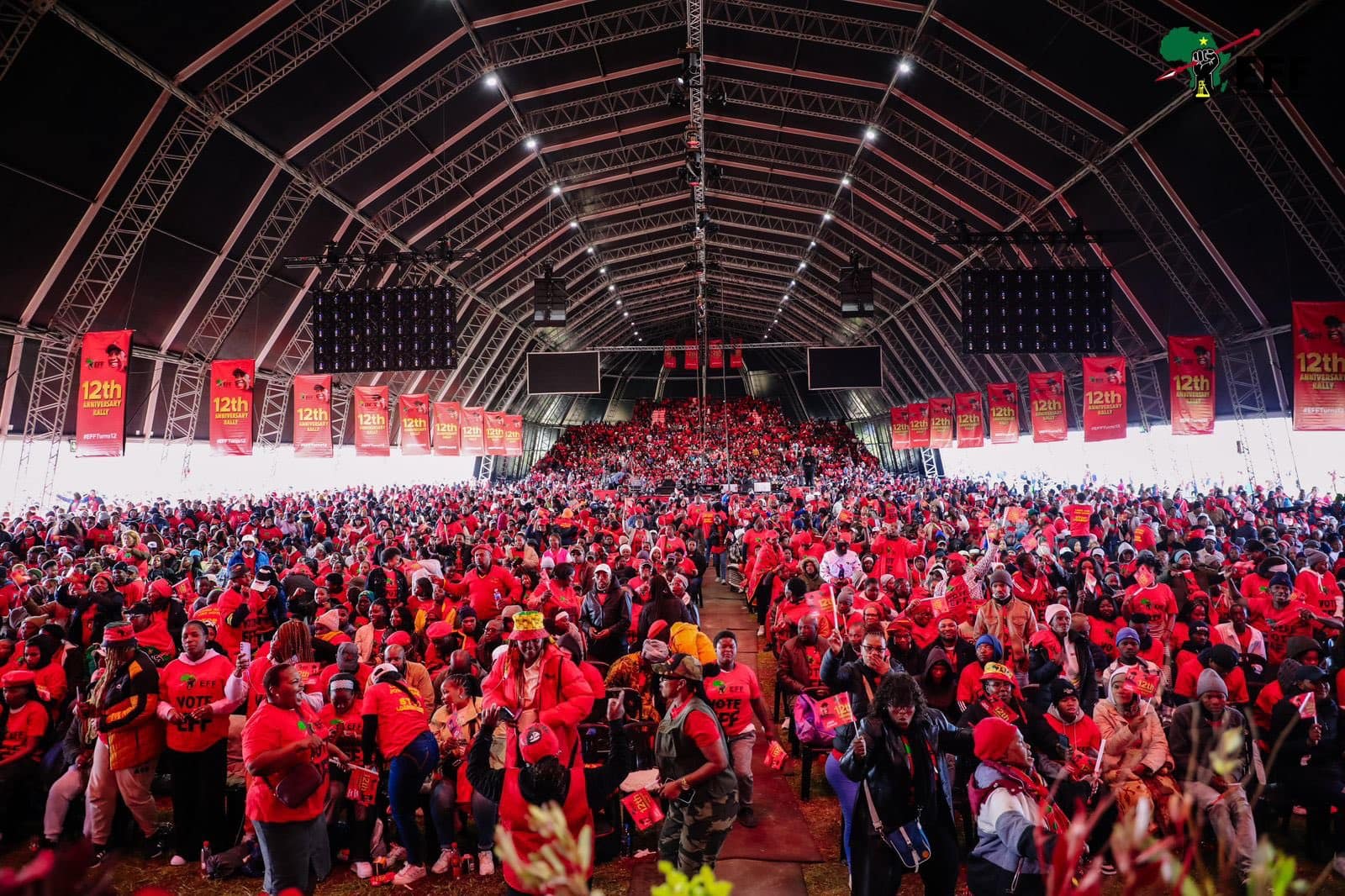
The Gauteng Provincial Legislature descended into a brief but dramatic scene of political theatre on Tuesday as members of the Economic Freedom Fighters (EFF) staged a calculated disruption to thwart a motion of no confidence against Premier Panyaza Lesufi, tabled by the Democratic Alliance (DA). The incident laid bare the complex and often contradictory alliances that define South Africa’s political landscape.
The session, intended by the official opposition to hold the Premier accountable for what it terms “failures in service delivery, particularly in crime, corruption, and the energy crisis,” was abruptly interrupted when EFF MPLs made a grand entrance into the chamber. They brandished placards with a pointed message aimed squarely at the DA: “The DA Gave Us Lesufi.”
A Strategic Disruption
The EFF’s entrance, timed to coincide with the speech by DA Provincial Leader Solly Msimang, brought the proceedings to a halt for several minutes. The chants and display of placards created a palpable tension, forcing Msimang to cut his address short as he struggled to be heard over the commotion.
The slogan on the placards is a direct reference to the 2024 coalition negotiations that saw Panyaza Lesufi re-elected as Premier. In that intricate political dance, the EFF, along with other smaller parties, ultimately supported the African National Congress (ANC) candidate. The EFF’s message is a blunt retort to the DA: that the official opposition’s own political maneuvers and inability to form a cohesive counter-coalition were instrumental in allowing Lesufi to retain his position.
Political Point-Scoring Over Governance
An EFF spokesperson, following the session, defended their actions. “Why is the DA crying today when they are the very architects of the current provincial government?” the member asked. “Their motion is nothing but cheap political point-scoring. They had an opportunity to form an alternative government and failed. Now they waste the legislature’s time with a motion they know will not succeed, instead of focusing on the real issues facing the people of Gauteng.”
For the DA, the disruption was characterized as an affront to democracy. “This is typical of the EFF and ANC—to avoid accountability through chaos,” a frustrated Msimang stated after reconvening. “We are trying to hold an incompetent Premier to account for his failures, and they respond with childish stunts. It shows they have no defence for his record.”
A Fragile Political Calculus
The event underscores the fragile nature of the ANC’s hold on Gauteng, South Africa’s economic heartland. Without an outright majority, the ANC relies on the support of parties like the EFF to pass crucial votes and maintain control. The EFF’s very public defence of Lesufi, albeit in their typically confrontational style, signals a continued, if uneasy, political understanding between the two parties that effectively neutralizes the DA’s efforts to unseat the Premier.
While the motion of no confidence ultimately proceeded after the EFF members took their seats, the disruptive interlude succeeded in its apparent goal: to overshadow the DA’s accusations and reframe the narrative around the opposition’s own perceived complicity in the current administration’s formation. The brief chaos was a powerful reminder that in Gauteng politics, the battle is not always fought on the substance of governance, but often on the stage of political symbolism and alliance-making.
About The Author