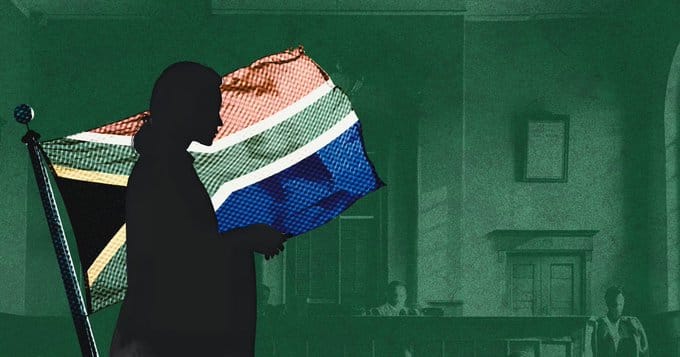
As the first parliamentary sessions of 2026 gavel to order, a profound and urgent mission is crystallising in the corridors of power: to finally fortify the nation’s defenders of truth. With a renewed mandate for transparency echoing from the electorate, the ruling Government of National Unity (GNU), in a rare show of cross-party consensus, has placed the long-delayed Protected Disclosures Amendment Bill – dubbed the “Whistleblower Protection Law” – at the very apex of its 2026 legislative agenda.
This decisive move signals a pivotal shift from reactive scandal management to proactive institutional safeguarding, aiming to dismantle the culture of fear and retaliation that has, for decades, stifled accountability.
From Tragedy to Imperative: The Catalysts for Action
The push for robust legislation is not born in a vacuum. It is forged in the fires of recent history. Legal experts and advocacy groups point to a harrowing trilogy of cases that exposed the fatal flaws in the current system:
- The Gauteng Health Department Whistleblower: A senior official who exposed a multi-billion rand personal protective equipment (PPE) procurement scandal was systematically harassed, demoted, and subjected to a prolonged disciplinary process described by the Labour Court as “victimisation masquerading as administration.”
- The Municipal Engineer in the Eastern Cape: After revealing evidence of corrupt tenders for water infrastructure, the engineer’s home was firebombed. While no arrests were made, he and his family were forced to abandon their community, their lives irrevocably shattered.
- The Life Esidimeni Arbitration Legacy: The testimony of mid-level government employees who admitted they “feared to speak up” due to a lack of protection highlighted how systemic silence can enable atrocities.
“These are not isolated incidents,” asserts Advocate Thandiwe Nkosi, director of the Open Democracy Initiative. “They are symptoms of a system that pays lip service to whistleblowing while leaving the whistleblower exposed to professional crucifixion, financial ruin, and physical danger. The current law is a shield made of paper.”
The 2026 Bill: Key Provisions for a New Era
Draft versions of the bill, now undergoing final technical refinements by the Justice Department, propose a revolutionary framework based on three pillars: Protection, Support, and Justice.
- Expanded Scope & Anonymous Disclosure: Protection would extend beyond traditional employees to include contractors, suppliers, volunteers, and even former employees. Crucially, a secure, technologically advanced channel for anonymous disclosures to an independent body will be established, a first for South Africa.
- The Office of the Whistleblower Protector (OWP): The centrepiece of the new law is the creation of a standalone, constitutionally insulated OWP. This agency will have the power to investigate retaliation claims, issue binding protection orders, and provide whistleblowers with a holistic support package. This includes immediate relocation assistance, psychological counselling, legal aid, and a dedicated fund for interim financial support to survive lengthy legal battles.
- Criminalisation of Retaliation: Making a protected disclosure would become an explicitly unfair labour practice, with stringent penalties. More significantly, acts of intimidation, harassment, or violence against a whistleblower or their family would be categorised as a distinct criminal offence, carrying the prospect of direct imprisonment.
- Mandatory Corporate Compliance: All state organs and private companies above a certain turnover would be required to institute certified internal disclosure procedures and appoint independent ethics officers, with non-compliance resulting in significant penalties.
Political Will and the Road Ahead
The announcement has been met with cautious optimism. “This is the most significant piece of anti-corruption legislation since the dawn of our democracy,” stated the Minister of Justice, during a briefing. “We are not merely amending an act; we are seeking to change a culture. To move from a society where speaking truth to power is an act of bravery, to one where it is a safeguarded duty.”
However, formidable challenges loom. The parliamentary portfolio committee on justice is expected to face intense scrutiny and potential pushback during public hearings, particularly regarding the OWP’s broad powers and funding model. Furthermore, embedding the new norms within a historically resistant state and corporate bureaucracy will be a years-long undertaking.
For the countless South Africans who have risked everything—their careers, their safety, their peace—to expose malfeasance, 2026 represents a potential turning point. The message from Parliament is clear: the nation’s conscience must no longer be its most vulnerable asset. As the debate begins, the eyes of the nation, and every potential whistleblower weighing a terrible choice, are fixed on Cape Town, waiting to see if words will finally translate into an unbreakable shield.
About The Author