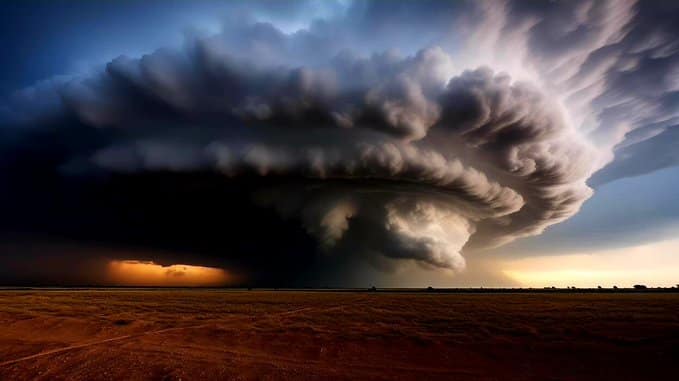
The South African Weather Service (SAWS) has issued a severe and sustained warning, indicating that the volatile and destructive weather patterns that have marked the start of 2026 are expected to continue unabated throughout the remainder of the summer season. Eastern and north-eastern regions of the country are bracing for a prolonged period of extreme weather, with forecasters predicting repeated episodes of severe thunderstorms, heavy downpours, large hail, damaging winds, and a persistent risk of tornado development.
The warning comes after a particularly destructive start to the new year, with several confirmed tornado touchdowns and severe storm cells already causing significant damage to infrastructure, agriculture, and homes across Mpumalanga, Limpopo, and KwaZulu-Natal. As of 7 January 2026, disaster management teams have been activated in multiple municipalities, responding to incidents of flooding, structural damage, and power outages.
According to senior SAWS meteorologist Kgolo Mthembu, the current atmospheric setup is “exceptionally conducive to severe storm development.” A persistent, moisture-laden airflow from the Indian Ocean is channelling vast amounts of subtropical humidity inland, where it is colliding with continental heat and complex topographical features like the Mpumalanga and KwaZulu-Natal escarpments. This clash creates the violent uplift necessary for supercell thunderstorms—the primary breeders of tornadoes and giant hail.
“We are in a pattern that shows no sign of a major breakdown for the next 6 to 8 weeks,” Mthembu stated. “The conditions for severe weather are not isolated to a few days; they are embedded in the larger seasonal forecast. Communities across Mpumalanga, Limpopo, Gauteng, KwaZulu-Natal, and the eastern parts of the Free State and North West must remain on high alert. The threat is not just heavy rain, but a combination of hazards including flash flooding, lightning, wind gusts exceeding 80 km/h, and isolated tornadoes.”
The agricultural sector, particularly in Mpumalanga’s fruit and maize belts, faces potentially catastrophic losses. Early-season hailstorms have already stripped orchards and flattened young crops. “We are looking at a season that could wipe out an entire year’s income for many farmers,” said Jan Hendrik van der Walt, spokesperson for Agri-SA in the region. “The repeated nature of these storms doesn’t give crops or soil a chance to recover.”
Disaster management authorities have urged the public to take the warnings with the utmost seriousness. Key recommendations include:
- Securing loose outdoor items and trimming overhanging tree branches.
- Having a safety plan and emergency kit ready, including medications, important documents, and battery-powered radios.
- Avoid travel during severe storm warnings and never attempt to cross flooded roadways.
- Seeking immediate, sturdy shelter in the lowest interior room of a building if a tornado warning is issued for their area.
“This is not a typical summer thunderstorm season,” emphasised Portia Mofokeng, head of the Provincial Disaster Management Centre in Mpumalanga. “The frequency and intensity are unusual. We urge everyone to download weather apps, monitor SAWS advisories daily, and report any storm damage immediately to local authorities. Complacency could cost lives.”
The extended forecast suggests that while brief drier interludes may occur, the overall pattern remains unstable. As climate scientists note, the increased frequency and intensity of such extreme weather events are consistent with long-term projections for southern Africa in a warming world, where warmer air holds more moisture, fueling more powerful storms. For now, millions of residents across the eastern half of South Africa must prepare for a long, turbulent, and dangerous summer.
About The Author