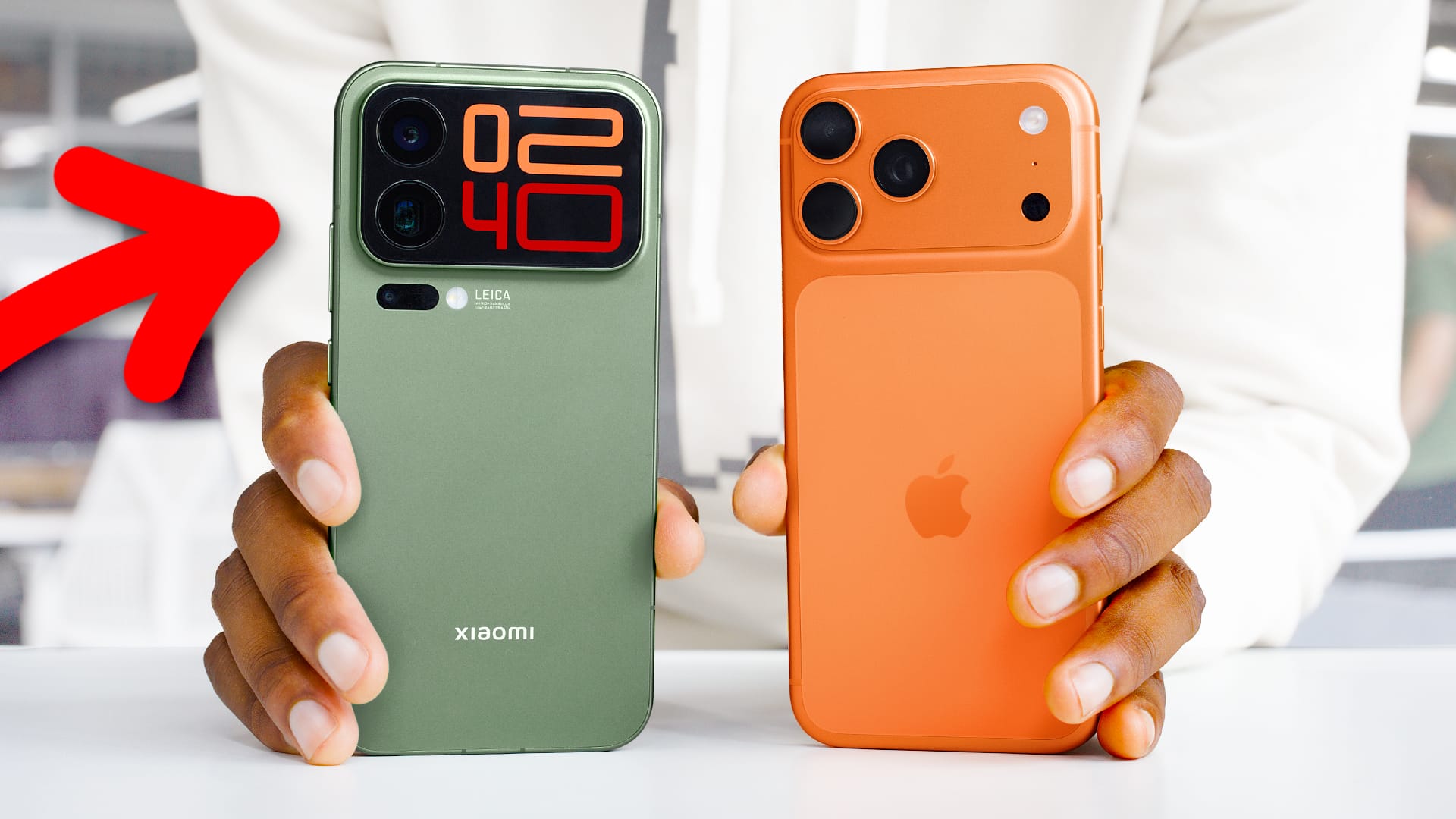
The smartphone landscape of late 2025 has become a stage for a compelling drama of contrasting fortunes, pitting the established hegemony of Apple against the relentless ascent of Xiaomi. At the center of this narrative are their flagship devices—the iPhone 17 Pro Max and the Xiaomi 17 Pro Max—whose recent launches have sparked very different conversations, highlighting the divergent philosophies and challenges facing the tech industry’s top players.
Apple’s Orange Hues Fade to Pink: Aesthetic Anxiety and a Fake Market Boom
Launched in September 2025 to its customary global fanfare, the iPhone 17 Pro Max initially drew praise for its refined design and performance enhancements. However, a growing thread of user complaints is now tarnishing its sleek, orange titanium facade. Social media platforms and tech forums are documenting a peculiar issue: the phone’s signature orange frame is reportedly undergoing an unexpected chemical transformation, discoloring to a pinkish or copper hue.
Industry analysts and Apple support forums suggest this is likely a case of oxidation affecting the anodized layer on the titanium alloy—a problem that, while officially verified in only a handful of cases so far, is generating outsized anxiety among the brand’s loyal consumer base. “For a device that serves as a status symbol, any cosmetic flaw is magnified,” notes mobile industry analyst, Liam Chen. “Apple’s reputation is built on perfection, and even a minor, isolated issue can cause a major reputational ripple.”
This ripple effect has, in turn, spawned a more sinister problem, particularly in emerging markets. In countries like Nigeria, a thriving underground market has emerged for “Frankenstein” iPhones, where scammers are taking older models like the iPhone 15 Pro Max and modifying them with aftermarket orange housings and counterfeit software to pass them off as the latest 17 Pro Max. These sophisticated fakes are ensnaring unsuspecting buyers, capitalizing on the hype while the genuine article faces its own quality control questions.
Xiaomi’s Calculated Strike: The “Value Flagship” Championed by Influencers
While Apple navigates these challenges, Xiaomi’s simultaneous release, the 17 Pro Max, is enjoying a remarkably positive reception. Launched in China on September 25, 2025, with a starting price of approximately $631, the device is being hailed as a “value flagship” that refuses to compromise on specs.
The phone’s praise was significantly amplified when influential tech reviewer Marques Brownlee featured it in his “Phone of the Year” shortlist, highlighting its “all-day-and-then-some” battery life, courtesy of a massive 7,500mAh cell. Coupled with blazing-fast 100W wired charging and a suite of high-end features including a superior 120Hz LPTO display and a versatile quad-camera system, the Xiaomi 17 Pro Max is being framed as the pragmatic power-user’s dream.
The Core Conflict: Raw Hardware vs. Refined Ecosystem
The simultaneous scrutiny of these two devices has reignited a classic tech debate. Independent benchmark tests confirm that, despite its smaller battery, Apple’s A-series chip and deeply optimized iOS deliver superior battery efficiency per mAh, along with unmatched performance in video editing and graphics-intensive gaming.
However, Xiaomi’s strategy is one of overwhelming hardware generosity. The comparison underscores the fundamental choice facing consumers in 2025: the seamless, integrated, and premium-priced ecosystem of Apple, now showing rare signs of vulnerability, versus the raw, spec-sheet dominance and aggressive pricing of challengers like Xiaomi.
The discourse is no longer confined to tech review sites. It has spilled over onto social media platforms like X (formerly Twitter) and Weibo, where the hashtag XiaomiValue is trending alongside user-generated photos of discolored iPhone frames. This online conversation is shaping public perception in real-time, proving that in the modern tech arena, a compelling narrative can be just as powerful as a processor’s clock speed. As the market digests these developments, the battle for flagship supremacy is proving to be as much about trust and perceived value as it is about silicon and software.
About The Author