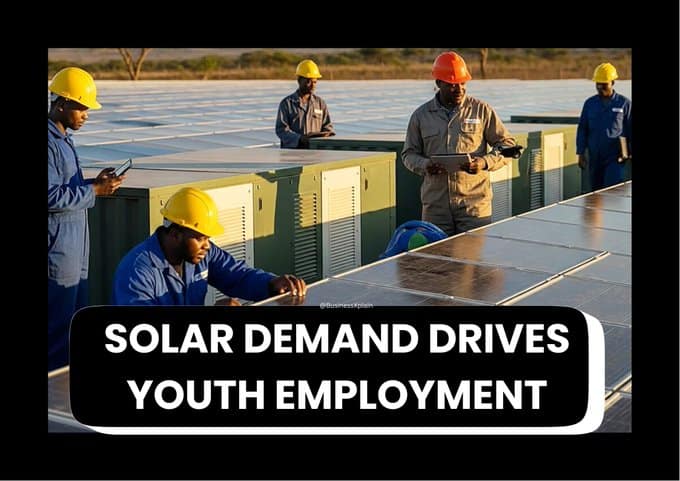
Amidst persistent national unemployment, a powerful and resilient engine for youth jobs is rapidly taking shape: South Africa’s renewable energy sector. New research and industry projections are painting an overwhelmingly positive picture, forecasting the creation of up to 275,000 direct and indirect jobs by 2030, with solar energy positioned as the single largest employment pillar within this green industrial revolution.
This transformative growth is being driven by the relentless rollout of utility-scale wind and solar projects under the government’s Renewable Energy Independent Power Producer Procurement Programme (REIPPPP), coupled with a booming private sector surge in commercial and residential installations. The shift is not just about generating clean power; it is fundamentally about generating meaningful, future-focused careers for a generation in desperate need of economic opportunity.
Solar at the Forefront: 140,000 Roles in the Sun
The numbers are staggering. Analysis by the South African Wind Energy Association (SAWEA) and the South African Photovoltaic Industry Association (SAPVIA) indicates that solar photovoltaic (PV) technology alone has the potential to create approximately 140,000 jobs over the next six years. These roles span the entire value chain, moving far beyond the installation teams visible on rooftops.
“The narrative that renewables only create temporary construction jobs is outdated,” says Niveshen Govender, CEO of SAPVIA. “While construction provides vital short-term employment, the long-term ecosystem requires a vast array of high- and semi-skilled professionals. We’re talking about a permanent new industry taking root.”
The sector’s hunger for talent is diverse:
- Technical & Engineering: Civil, electrical, and mechanical engineers; PV technicians and solar system designers; grid integration specialists and battery storage experts.
- Professional Services: Project developers and managers; finance and investment analysts specializing in green energy; legal experts in energy procurement and regulatory compliance; environmental assessment specialists.
- Skilled Trades: Electricians, welders, and metalworkers with specialized training in renewable technology; quality control and operations & maintenance (O&M) technicians for long-term plant management.
Building the Pipeline: From Graduates to Artisans
Recognizing the acute skills gap, the industry is proactively investing in the workforce of tomorrow. Major independent power producers (IPPs) like Mainstream Renewable Power, Scatec, and Enel Green Power, alongside engineering firms, are significantly expanding their graduate development programmes, internships, and learnerships.
Furthermore, a critical push is underway to strengthen vocational training. Partnerships between industry bodies and Technical and Vocational Education and Training (TVET) colleges are developing certified curricula for solar PV technicians, wind turbine service technicians, and energy efficiency auditors. “We are moving to create clear, accredited career paths for artisans in the green economy,” notes Megan van der Horst, a sustainable development manager at a leading IPP. “It’s about making these jobs accessible and aspirational.”
Rooted in Community: Development Beyond the Megawatt
Perhaps the most transformative aspect of the renewable boom is its geographically distributed nature. Unlike centralized coal power, renewable projects are built where the resources are—often in rural and underserved regions of the Northern Cape, Eastern Cape, and North West. The REIPPPP mandates strong socio-economic development (SED) and enterprise development (ED) components, ensuring that projects deliver local benefits.
This translates into targeted local hiring, supplier development for small businesses, and the funding of community education and skills training trusts. “A wind farm in the Karoo isn’t just an energy project; it’s a catalyst for regional economic development,” explains Mpho Sekwele, a community liaison officer. “We are training local youth as security personnel, data collectors, and hospitality staff for the construction phase, with a focus on upskilling them for long-term O&M roles.”
Challenges on the Horizon
To fully realize this 275,000-job potential, stakeholders acknowledge critical hurdles. These include streamlining grid access and connection processes, accelerating the rollout of new project bids, and ensuring that the expansion of TVET programmes keeps pace with industry demand. There is also a pressing need for policies that support local manufacturing of renewable components to capture even more of the job value chain.
Nevertheless, the momentum is undeniable. As South Africa navigates its energy transition, the renewable sector is emerging as one of the most potent tools for inclusive economic growth. It is providing a tangible answer to the youth employment crisis, not with promises, but with portfolios of projects, expanding company HR departments, and a clear vision of a workforce powered by the sun and the wind.
About The Author