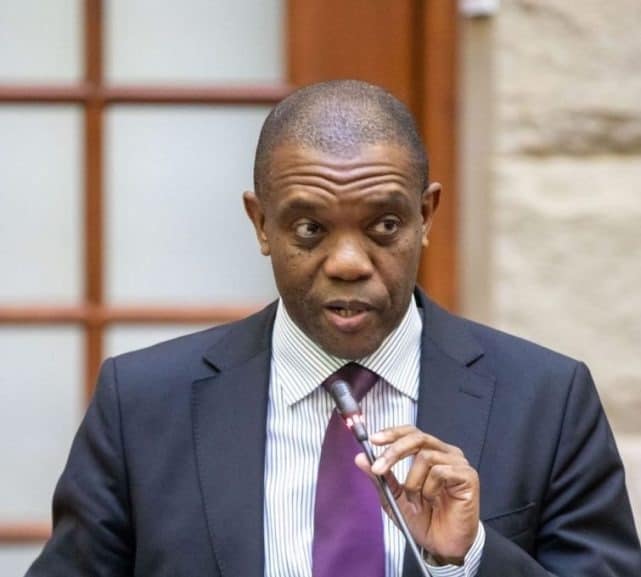
The stale air in the Johannesburg press room buzzed with tension. Songezo Zibi, leader of Rise Mzansi, stepped to the podium, his expression unreadable—until he began to speak. Then, the gravity of his message landed like a thunderclap.
“We are sleepwalking into a preventable war,” Zibi declared, his voice echoing off the tired walls. “Not with guns and armies, but a war of neighbors against neighbors, of desperation pitted against fear.”
He warned that South Africa’s immigration crisis—a festering wound of broken systems, xenophobic flare-ups, and crumbling asylum processes—had reached a critical threshold. For years, the government had relied on ad-hoc raids, political scapegoating, and sporadic deportations. Meanwhile, frustrated citizens watch jobs vanish and clinics overflow, while foreign nationals live in the shadows, exploited by criminal networks and denied basic dignity.
Zibi pointed to the recent violence in Soweto and Durban, not as isolated incidents, but as symptoms of a deeper rot. “When there is no clear, lawful pathway for a migrant to contribute, and no credible plan to manage borders with humanity and efficiency, the vacuum fills with rage. And rage always finds a target.”
He rejected easy answers on both sides. “Closing our doors is not a strategy—it is surrender to fear. Opening them without planning is surrender to chaos.” Instead, he called for a systematic national response: a single, digitized asylum system; regional diplomatic engagement with neighboring states; investment in border management technology; and, crucially, a public campaign to separate criminality from migration.
“We cannot police our way out of a policy failure,” Zibi concluded, his voice softening but losing none of its edge. “The question is not whether South Africa will reform. The question is how many lives will be broken before we do.”
As he stepped away from the podium, the silence that followed was not peace—it was the held breath of a nation standing at the edge of a very dangerous cliff.
About The Author