The stone marker in the Phelindaba Cemetery is simple, almost humble. It bears the names of the 69 people who were cut down by apartheid police bullets on March 21, 1960. Sixty-nine souls. Sixty-nine stories. Sixty-nine families for whom the passage of 66 years has done little to dull the ache of loss. As South Africa observes Human Rights Month—a period meant to honor the ultimate sacrifice made for the country’s hard-won freedom—the families of the Sharpeville Massacre victims are sending a clear and urgent message to the government: wreaths, speeches, and moments of silence are not enough. The unfinished business of justice demands more.
Gathered under the harsh autumn sun at the memorial site in Vereeniging this past weekend, a multi-generational group of descendants spoke not only of the past, but of the present. Their pain, they argue, has been frozen in time. While the political landscape has transformed, the socioeconomic realities they face remain stubbornly rooted in the inequalities that the Sharpeville martyrs died fighting against.
“We are always invited to the ceremonies. We are asked to stand, to be recognised, to cry for the cameras,” said 78-year-old Sarah Tshabalala, whose father, a passbook protester, was one of those shot in the back as he ran from the police. “But when the cameras leave, we are forgotten. We go back to our shacks, to our unemployment, to the same poverty. My father died for freedom, but where is our freedom?”
The Day the World’s Eyes Opened
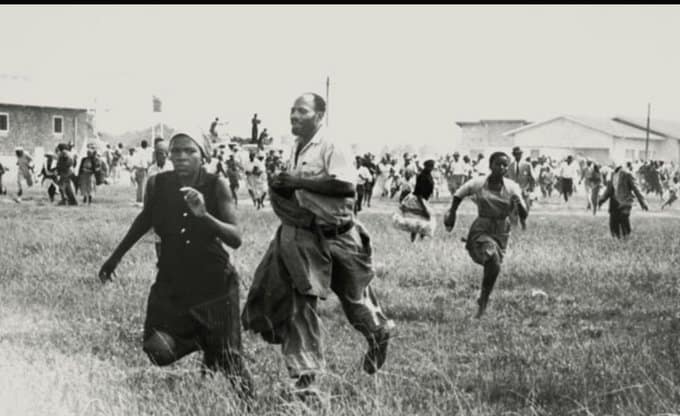
The Sharpeville Massacre remains one of the most searing and indelible images of apartheid’s brutality. On that fateful day, a large crowd gathered at the local police station to protest the hated pass laws, which restricted the movement of Black South Africans. Without warning, police officers opened fire on the unarmed crowd, killing 69 people and wounding 186 others. Most of the victims were shot in the back as they fled.
The massacre was a turning point. It galvanised international opposition to apartheid, led to the outlawing of the Pan Africanist Congress (PAC) and the African National Congress (ANC), and set the country on an irrevocable path toward liberation. The United Nations later declared March 21 as the International Day for the Elimination of Racial Discrimination.
But for the families left behind, the legacy is not one of abstract historical significance. It is one of breadwinners lost, of childhoods shattered, and of a promise of “never again” that they feel has not been fully honoured.
The Lingering Questions of Restitution
The families’ demands are not new, but they have been sharpened by frustration. At the top of the list is the call for formal, official apologies—not just from the government of the day, but from the descendants of the police officers who pulled the triggers, and from the institutions that sanctioned the killings. While former President F.W. de Klerk expressed regret in the 1990s, the families argue that a full, unqualified apology from the state for the massacre itself has never been explicitly delivered.
More concretely, they are demanding meaningful economic reparations. Following the 60th anniversary in 2020, the government pledged to build a R300 million Sharpeville Heritage and Liberation Centre. While the land has been identified, construction has yet to begin. For the families, this is emblematic of a pattern of grand promises and slow delivery.
“We don’t want to live in a museum,” said Thabo Letsie, a spokesperson for the Sharpeville Massacre Victims’ Trust. “We want jobs for our young people. We want decent housing in Sharpeville, not just more RDP houses that fall apart. We want the government to invest in this community so that the sacrifice of our parents becomes the foundation of our prosperity, not just a footnote in a history book.”
The community of Sharpeville today remains predominantly poor, battling high unemployment and a lack of economic opportunity. It stands in stark contrast to the prosperous suburbs just a short drive away. This geographical proximity of wealth and poverty is a daily, living monument to the economic apartheid that the families argue has never been adequately dismantled.
A Call for Living History
As part of Human Rights Month, the families are also calling for a revitalisation of the Sharpeville heritage sites. They want the memorial, the museum, and the actual site of the shooting to be better maintained and integrated into a living history curriculum for schools across the country. They argue that young South Africans, born after 1994, are increasingly disconnected from the sacrifices that made their freedom possible.
“Children come here on school trips, they walk around, they take photos, and they leave,” Letsie observed. “We need to make sure they understand that this was not just a tragedy, it was a victory. It was a victory that they are now the beneficiaries of. And with that victory comes a responsibility to carry the struggle forward—not against an armed enemy, but against poverty and inequality.”
“More Must Be Done”
The government’s official Human Rights Day commemoration is scheduled to take place in Sharpeville later this month. President Cyril Ramaphosa is expected to deliver the keynote address. The families say they will be listening, and they will be watching.
“We will be there, as we always are,” said Tshabalala. “We will lay our wreaths, and we will remember. But after the president’s speech, after the motorcade leaves, we will still be here. And we will still be waiting. The work of honouring the dead is the work of uplifting the living. And on that front, more must be done.”
For the families of Sharpeville, the journey for justice did not end in 1994. In many ways, they argue, it is only just beginning. The bullets of 1960 may have stopped firing, but the fight for the dignity and prosperity that those 69 men and women marched for continues, with renewed urgency, today.
About The Author