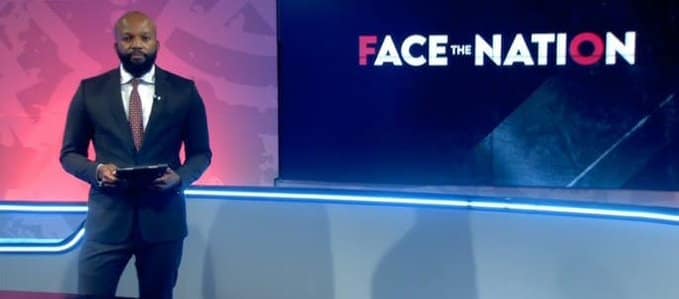
In a decision that has sent shockwaves through South Africa’s media landscape, the South African Broadcasting Corporation (SABC) has abruptly cancelled the acclaimed political talk show Face the Nation, leaving staff, industry watchers, and loyal viewers reeling. The move comes despite the programme, hosted by the incisive Clement Manyathela, consistently drawing strong viewership numbers and establishing itself as one of the few remaining platforms where the nation’s most powerful figures are subjected to rigorous, unfiltered scrutiny.
The public broadcaster confirmed the cancellation in a brief internal memo, citing a “strategic shift in programming direction” as the rationale. However, sources within the corporation who spoke on condition of anonymity revealed that the decision was made at the highest levels of SABC management, with little to no consultation with the show’s production team or news division. The final episode is slated to air within weeks, bringing an abrupt end to a programme that had become a Sunday morning staple for politically engaged South Africans.
Face the Nation, which aired in a coveted weekend timeslot, was widely regarded as a crown jewel of the SABC’s current affairs offerings. Under Manyathela’s stewardship, the show distinguished itself through its relentless pursuit of accountability. Cabinet ministers, opposition leaders, state-owned entity executives, and even President Cyril Ramaphosa had all sat in the hot seat, facing pointed questions on topics ranging from load-shedding and corruption to fiscal policy and service delivery. The show’s format—direct, uninterrupted, and unwilling to accept political platitudes—earned it a dedicated following and critical acclaim at a time when trust in both political leadership and state institutions is at a premium.
The decision to axe the programme has been met with a torrent of criticism from media freedom advocates, opposition parties, and the very viewers who made the show a success. Many have interpreted the move not as a mere programming adjustment, but as a troubling signal of the SABC’s retreat from its public service mandate under political and commercial pressure.
“This is a dark day for South African journalism,” said a veteran political correspondent who requested anonymity due to fear of professional reprisal. “Face the Nation was doing exactly what a public broadcaster should be doing: holding power to account without fear or favor. Its cancellation sends a chilling message that hard-hitting journalism is no longer welcome at the SABC. The viewership numbers prove the public wants this kind of accountability; management’s decision suggests they are listening to a different constituency.”
The timing of the cancellation has only intensified suspicions. The decision comes as the SABC is engaged in fraught licensing fee negotiations with government and as the corporation faces ongoing financial struggles that have long made it susceptible to political interference. Critics argue that by axing its most formidable accountability platform, the SABC is signaling a willingness to soften its editorial stance at a moment when robust journalism is most needed—particularly with the 2026 local government elections approaching.
Host Clement Manyathela, who has remained largely silent since the news broke, is said by colleagues to be deeply disappointed by the decision. Having cultivated a reputation as a fair but formidable interviewer, Manyathela’s departure from the flagship role is seen as a significant loss to the public broadcaster’s credibility. Sources indicate that he was given no prior warning of the show’s cancellation and was informed only shortly before the internal memo was circulated.
The SABC’s official statement attempted to frame the decision within the context of routine programming changes. “The SABC is committed to refreshing its content offering to better serve the evolving needs of the South African public,” the statement read in part. “While Face the Nation has been a valued part of our schedule, we are making way for new formats that align with our strategic objectives.”
That explanation has been met with widespread skepticism. Media Monitoring Africa (MMA) issued a sharp rebuke, calling on the SABC board to explain the decision publicly and to clarify what “strategic objectives” could justify the removal of a high-performing, critically important public affairs programme.
“This is not a case of a show failing; it is a case of a show succeeding too well at its job,” said MMA director William Bird. “When a public broadcaster cancels a show that is both popular and performing its democratic function, the public has a right to ask: who benefits from this silence? The SABC owes South Africa a far more detailed explanation than a vague reference to strategy.”
Opposition parties were swift to condemn the move. The Democratic Alliance (DA) accused the ANC-led government of exerting undue influence over the public broadcaster to neuter critical voices. The Economic Freedom Fighters (EFF), while often at odds with the show’s questioning, nonetheless criticized the decision as an attack on media freedom. Even some ANC insiders expressed private dismay, noting that the party’s own leaders had valued the platform to directly address the nation, even when the questioning was uncomfortable.
As news of the cancellation spread, social media was flooded with expressions of outrage and nostalgia. The hashtag #FaceTheNation trended for hours, with viewers sharing clips of memorable interviews and lamenting the loss of a show they described as “essential,” “unflinching,” and “the last line of defense against unchecked power.”
For the SABC, the decision marks another chapter in its troubled history of editorial independence. Having fought for years to rebuild public trust after the era of state capture, the public broadcaster now faces renewed accusations that it is buckling under pressure. With Face the Nation set to air its final episode in the coming weeks, the question looming over the corporation is whether this is an isolated programming change or the beginning of a broader retreat from the kind of journalism that a democracy requires.
The SABC has not yet announced what will replace Face the Nation in its Sunday timeslot, nor has it indicated whether Clement Manyathela will be retained in another capacity. For now, South Africans who valued the weekly ritual of watching their leaders held to account are left to mourn the loss of a programme that, for a time, made the powerful uncomfortable—and the public, better informed.
About The Author