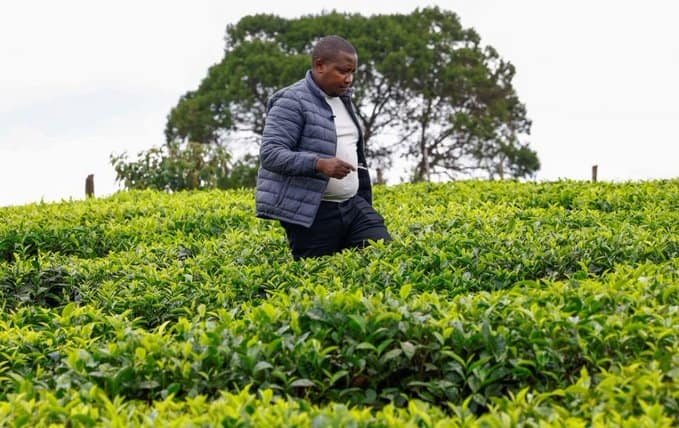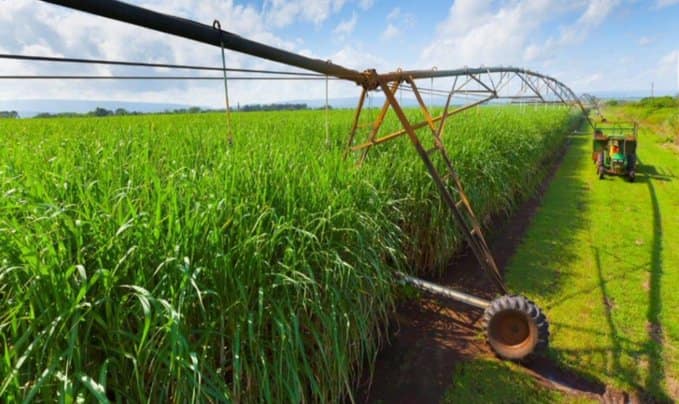
The sugarcane sways in the February heat, green and gold under the KwaZulu-Natal sun, reaching toward a sky that offers no answers. It has been this way for generations: the planting, the waiting, the cutting, the carting to the mill. The cycle is as predictable as the seasons, as reliable as the rainfall, as certain as the debts that accumulate between harvests and payments.
But this season, the certainty has fractured. The mill at Maidstone, which has crushed cane continuously since 1908, faces an uncertain future. The mill at Amatikulu, whose chimneys have dominated the horizon of the uThungulu district for more than a century, may not receive the 2026 harvest. The mill at Felixton, at Darnall, at Gledhow—all of them, all the massive steel cathedrals where cane becomes sugar and sugar becomes money—stand at the precipice of silence.
South African Canegrowers has done the math. It is not complicated math, though its implications are devastating. Tongaat Hulett, the 130-year-old sugar giant that processes approximately 30% of South Africa’s sugarcane, is on the verge of liquidation. The business rescue practitioners, having exhausted their options and watched a proposed R4.7 billion buyout by the Vision consortium dissolve into recrimination and collapse, have applied to the Pietermaritzburg High Court for provisional liquidation.
If the court grants the application, the mills will close. The cane will rot in the fields. The trucks will stop running. The 21,000 direct employees of Tongaat’s milling and farming operations will receive their final payslips. The 18,000 small-scale growers—most of them Black farmers who emerged from the land reform programmes of the post-apartheid era—will lose their only market. The communities that have grown up around the mills, that have defined themselves through the rhythm of the crushing season, will face an extinction event.
“It is not an exaggeration to say that a million livelihoods depend on this industry,” said Thomas Funke, chairperson of South African Canegrowers, his voice heavy with the weight of accumulated warnings. “A million people. Not employed directly, necessarily, but supported. The tractor hire operators. The fertilizer suppliers. The transport contractors. The spaza shops that sell bread and milk to cane cutters. The schools that educate their children. The clinics that treat their illnesses. All of it, all of it, rests on the continued operation of these mills.”
The Anatomy of a Collapse
Tongaat Hulett’s decline was not sudden. It was the slow accumulation of decades of mismanagement, strategic missteps, and financial engineering that ultimately proved unsustainable.
The company, founded in 1892 as the Tongaat Sugar Company, had grown through acquisition and expansion into one of Africa’s largest agro-processing concerns. At its peak, it operated not only in South Africa but in Zimbabwe, Mozambique, and Swaziland (now Eswatini). It diversified beyond sugar into property development, starch production, and aluminum extrusions. It was a conglomerate in the classic South African mould—sprawling, ambitious, and heavily leveraged.
The leverage proved fatal. By 2022, Tongaat Hulett had accumulated debt of approximately R9 billion, much of it denominated in foreign currencies and subject to the volatile exchange rates that characterize emerging market finance. The company had also, it emerged, been cooking its books. An independent forensic investigation commissioned by the board in 2019 revealed widespread accounting irregularities spanning at least seven years. Revenue had been inflated. Costs had been deferred. The true extent of the company’s liabilities had been concealed from shareholders, creditors, and regulators.
“I have covered corporate failures in South Africa for twenty-five years,” said financial journalist Sikonathi Mantshantsha. “I have never seen anything quite like Tongaat. It was not merely that they were mismanaged. It was that the mismanagement was systemically concealed through deliberate falsification of financial records. The company was dying for years before anyone acknowledged it. By the time they admitted the truth, it was too late to save them.”
The admission triggered a cascade of consequences. The share price collapsed. Key executives resigned or were dismissed. Creditors demanded repayment or additional security. The board placed the company into business rescue in October 2022, hoping that the process would provide sufficient protection from creditors to enable a restructuring or sale.
The business rescue practitioners spent nearly three years attempting to achieve that outcome. They negotiated with multiple potential investors. They reduced costs through asset sales and workforce reductions. They restructured debt obligations and extended repayment timelines. They identified a preferred bidder—the Vision consortium, comprised of Zimbabwean and South African investors with experience in the sugar industry—and spent months negotiating a comprehensive buyout agreement.
The agreement collapsed in January 2026. The parties offered competing narratives of blame: the consortium claimed that Tongaat’s financial position had deteriorated beyond the terms of their offer; the business rescue practitioners claimed that the consortium had failed to secure necessary funding. The practical effect was unambiguous: the company had run out of road.
The Growers’ Gamble
For the small-scale growers who constitute the human face of this crisis, the collapse of Tongaat Hulett represents not merely a business failure but a betrayal of specific promises and implicit guarantees.
The sugar industry was, for most of the twentieth century, a white-dominated enterprise. Large commercial farmers—many of them descendants of colonial-era settlers—controlled the vast majority of production and enjoyed privileged access to milling capacity, financing, and markets. Black farmers were systematically excluded, confined to subsistence production on trust land or employed as wage labourers on white-owned estates.
The post-apartheid government sought to redress this historical injustice through a combination of land reform and industry transformation initiatives. The Sugar Act of 1978 was replaced with the Sugar Industry Agreement, a negotiated compact between growers, millers, and labour that established quotas and pricing mechanisms designed to facilitate Black participation. The Land Reform Programme transferred substantial hectarage from white commercial farmers to Black emerging farmers. The Small-Scale Grower Support Programme provided extension services, financing, and technical assistance to farmers previously excluded from the formal sugar value chain.
Tongaat Hulett was central to these efforts. The company established dedicated small-grower liaison offices, provided advance payments to cash-strapped farmers, and invested in rural infrastructure that enabled cane delivery from previously inaccessible areas. For thousands of Black families in northern KwaZulu-Natal and Mpumalanga, sugar farming became not merely a livelihood but a legacy—an asset to be improved and transferred to children and grandchildren.
“We built everything on this,” said Nomsa Zwane, a small-scale grower from the Amatikulu area whose mother received her land allocation in 1998. “Our house. Our children’s education. Our retirement. Our dreams. All of it came from cane. And now they tell us there is no mill to take our cane. They tell us we must find another buyer. Who will buy? There is no one else.”
Zwane’s experience is typical of the small-scale growers now facing ruin. She cultivates eight hectares of sugarcane, employing five workers during harvest season and generating gross income of approximately R240,000 per annum. Her net income, after deducting input costs and transport expenses, is approximately R80,000—not wealthy, but sufficient to maintain her family and reinvest in her operation.
“If the mill closes, I lose everything,” she said. “Not just this year’s crop, which is standing in the field ready to cut. Not just next year’s crop, which I have already planted and fertilized. I lose the land itself. Because I cannot pay the bond on the land if I have no income from cane. The bank will take it. Everything my mother built. Everything I have built. Gone.”
The Mill Towns
The communities that have grown up around Tongaat’s mills are not merely collections of workers and their families. They are ecosystems, complex and interdependent, shaped by generations of shared experience and mutual reliance.
In Darnall, the mill is the town. It has always been the town. The original white settlers who established the mill in the 1920s built houses for their workers, schools for their children, hospitals for their sick, and shops for their necessities. The pattern persisted through apartheid, through democracy, through the gradual integration of management and the slow advancement of Black workers into supervisory positions. The mill remained the fixed point around which everything else orbited.
“There are families here who have worked for Tongaat for five generations,” said Father Michael Lapsley, the Anglican priest and anti-apartheid activist who has ministered in the Darnall area for more than three decades. “Five generations. They have never known any other employer. Their grandparents cut cane with machetes. Their parents drove the tractors. They operate the centrifuges. Their children are studying engineering at university, hoping to return and design better processing systems. All of that history, all of that accumulated knowledge and skill and aspiration—it cannot simply be transferred to another employer. It will be lost.”
The mill closure, if it occurs, will not merely terminate employment contracts. It will unravel the entire fabric of these communities. The hardware store that sells replacement parts for cane transport vehicles will lose its customer base. The medical practice that treats mill workers and their families will lose its patients. The primary school that educated generations of mill workers’ children will lose its enrollment. The taxi association that transports workers to and from the mill will lose its routes.
“People do not understand,” said Sipho Khumalo, who operates a small transport business delivering supplies to the Amatikulu mill. “They think the mill is just a building where they make sugar. It is not. It is the heart. When the heart stops, everything dies.”
The Regional Catastrophe
The collapse of Tongaat Hulett would not be contained within the boundaries of the company’s direct operations. Its effects would radiate outward, affecting industries and communities far removed from the cane fields.
KwaZulu-Natal, already burdened with the highest unemployment rate of any South African province, would absorb the most severe impact. The sugar industry is the largest agricultural employer in the province, supporting an estimated 65,000 direct jobs and 270,000 indirect positions. The elimination of Tongaat’s operations—approximately 30% of the provincial industry—would increase the provincial unemployment rate by an estimated 1.5 percentage points.
The downstream effects would be equally severe. Tongaat’s mills supply approximately 20% of the raw sugar processed by the country’s sugar refiners. A sudden reduction in supply would require either increased imports or reduced production, both of which would have consequences for employment and trade balances. The company’s sugar-cane ethanol operations, which supply biofuel to the domestic transportation sector, would cease production. The company’s cogeneration facilities, which export electricity to the national grid, would fall silent.
“People think of sugar as just sugar,” said agricultural economist Wandile Sihlobo. “They think of it as a commodity, interchangeable with sugar produced anywhere else in the world. They do not understand the complexity of the value chain. They do not understand that a mill closure in northern KwaZulu-Natal affects employment in Johannesburg, affects trade policy in Pretoria, affects electricity supply in Cape Town. This is not a local problem. This is a national crisis.”
The Failed Rescue
The collapse of the Vision consortium buyout has become the subject of intense speculation and recrimination. The consortium, led by Zimbabwean businessman and former Tongaat executive Sydney Mtsambiwa, had emerged as the preferred bidder after a lengthy and competitive selection process. Their proposal, valued at R4.7 billion, included commitments to retain existing employment levels, honor small-grower contracts, and invest in mill upgrades and expansion.
The business rescue practitioners recommended the Vision offer to creditors in December 2025, describing it as the only viable option for preserving the company’s operations. Creditors, faced with the alternative of liquidation and certain losses, approved the recommendation. The transaction was scheduled to close in January 2026.
It did not close. The consortium, according to statements issued by the business rescue practitioners, was unable to demonstrate that it had secured the necessary funding. The practitioners extended the deadline, then extended it again, then finally acknowledged that the deal was dead.
The consortium offered a different account. In a statement issued after the collapse, it claimed that Tongaat’s financial position had deteriorated significantly during the negotiation period, rendering the original offer terms obsolete. It alleged that the business rescue practitioners had failed to provide accurate and timely information required to secure final funding approvals. It expressed “deep regret” that the transaction could not be concluded.
The competing narratives may eventually be resolved through litigation. The practitioners have indicated that they intend to pursue claims against the consortium for breach of agreement. The consortium has reserved its rights to defend against such claims. Both sides have retained senior counsel.
For the growers and workers and communities awaiting resolution, the legal maneuvering is both incomprehensible and irrelevant. The deal is dead. The mills are silent. The cane is rotting.
The State’s Response
The South African government has watched Tongaat Hulett’s decline with growing concern but limited intervention. The Department of Trade, Industry and Competition has convened multiple meetings with stakeholders. The Industrial Development Corporation, the state-owned development finance institution, has provided bridging finance to support continued operations. The Competition Commission has approved the Vision consortium acquisition subject to conditions designed to protect small growers and preserve employment.
But the government has not, despite repeated calls from industry associations and trade unions, provided the direct financial support that would be required to sustain Tongaat Hulett through an extended business rescue process. The National Treasury, constrained by fiscal pressures and wary of setting precedents that would invite similar demands from other distressed companies, has declined to authorize guarantees or equity investments.
“We understand the importance of the sugar industry,” said a senior official in the Department of Agriculture, Land Reform and Rural Development who spoke on condition of anonymity. “We also understand that we cannot bail out every failing company. Tongaat Hulett’s problems are not new. They have been accumulating for years. Successive management teams failed to address them. The board failed to provide effective oversight. Creditors failed to impose discipline. At some point, the consequences of those failures must be borne.”
Critics of the government’s position argue that this analysis, while technically accurate, ignores the broader public interest at stake. The collapse of Tongaat Hulett, they contend, is not merely the failure of a private company. It is the failure of an entire regional economy, with consequences that will be borne disproportionately by the most vulnerable members of society.
“This is not about bailing out shareholders or bondholders,” said Funke of SA Canegrowers. “Those investors made their bets and lost. They will write down their losses and move on. This is about preserving an industry that supports a million South Africans. This is about ensuring that small-scale growers who played by the rules, who invested their life savings, who trusted the promises made to them by successive governments, are not destroyed through no fault of their own.”
The Human Calculus
A million livelihoods. The figure is repeated in every statement, every briefing, every appeal. It is the number that advocates use to convey the scale of the impending catastrophe. But a million is an abstraction, a statistical aggregation, a sum of units that resist summation.
A million livelihoods includes Nomsa Zwane, the small-scale grower from Amatikulu who fears losing the land her mother received through land reform. It includes Sipho Khumalo, the transport contractor from Darnall who expanded his fleet in anticipation of sustained mill operations. It includes Michael Lapsley, the Anglican priest who has spent thirty years ministering to mill workers and their families.
About The Author