POLOKWANE – The Limpopo provincial government has presented a staggering and sobering preliminary estimate, revealing that the cost to repair the shattered road, bridge, and critical infrastructure network ravaged by recent catastrophic floods will approach a monumental R8 billion. This colossal figure emerges as disaster management teams, engineers, and community leaders continue the grim task of assessing the full scale of destruction wrought by relentless, torrential rains that pummeled the province throughout early January 2026.
The financial toll underscores a humanitarian and logistical crisis of unprecedented scale for the province. The floods, described by Premier Stanley Mathabatha as “some of the most devastating in living memory,” have thus far claimed at least 23 lives, displaced thousands of residents from waterlogged or destroyed homes, and severed vital economic lifelines, isolating entire communities and crippling the movement of goods and people.
A Landscape Transformed, A Network Destroyed
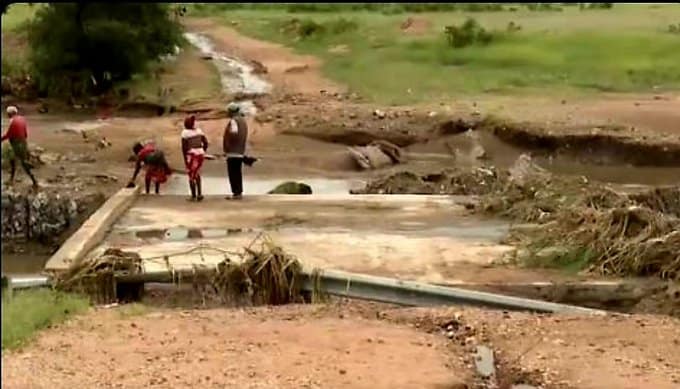
Aerial and ground surveys paint a picture of widespread ruin. The province’s already vulnerable road infrastructure has borne the brunt of the onslaught.
- Major Arteries Severed: Key national and regional routes, including sections of the N1 near Mokopane, the R71 to Tzaneen, and the R81, have suffered massive washaways, deep sinkholes, and collapsed embankments, creating impassable chasms.
- Bridge Collapses: Dozens of bridges, from small rural crossings to major structures over the overflowing Olifants, Lepelle, and Mogalakwena rivers, have either been completely swept away or left critically compromised, cutting off access to villages, farms, and clinics.
- Rural Isolation: The damage to thousands of kilometers of gravel and dirt roads in districts like Vhembe, Mopani, and Sekhukhune is incalculable but severe, leaving remote communities marooned without access to supplies, markets, or emergency services.
“The R8 billion estimate is not for luxury or expansion; it is the bare minimum required to restore basic functionality and connectivity,” stated the MEC for Public Works, Roads, and Infrastructure. “We are not talking about potholes. We are talking about vast sections of our transport map that have been erased, requiring complete reconstruction from the ground up.”
Human Cost and Mounting Secondary Crises
Beyond the asphalt and concrete, the human suffering deepens. Over 15,000 people have been displaced, many taking refuge in temporary community halls and schools. The loss of life, including several victims who perished in vehicles swept away at low-water crossings, has cast a pall of grief over the province.
The infrastructural collapse has triggered cascading secondary emergencies:
- Healthcare Access: Patients in critical condition cannot reach hospitals. Medication and supplies cannot be delivered to clinics.
- Economic Paralysis: Farmers cannot transport produce to market, leading to spoilage and financial ruin. Mining operations and tourism have ground to a halt in affected areas.
- Water and Sanitation: Flood damage to water treatment plants and pipes has contaminated supplies in some areas, raising fears of waterborne disease outbreaks.
A Daunting Road to Recovery
The provincial government has declared a state of disaster, unlocking emergency funding channels. However, the R8 billion requirement far exceeds local fiscal capacity, necessitating a major intervention from National Treasury and potential international disaster relief loans.
“The scale of this disaster demands a national response akin to the reconstruction after the KZN floods of 2022,” said an economist from the University of Limpopo. “The funds will need to be guarded with extreme vigilance to prevent corruption, and the rebuild must incorporate climate-resilient designs, as these extreme weather events are becoming our new normal.”
As the water slowly recedes, revealing the full extent of the devastation, Limpopo stands at a crossroads. The path to recovery will be long, expensive, and fraught with challenges. The R8 billion price tag is not just a repair bill; it is a stark measure of the vulnerability of South Africa’s infrastructure in the face of climate change and a testament to the urgent need for resilient planning. For the people of Limpopo, the immediate future holds the arduous tasks of mourning, rebuilding, and hoping that the foundations laid down this time will be strong enough to withstand the storms to come.
About The Author