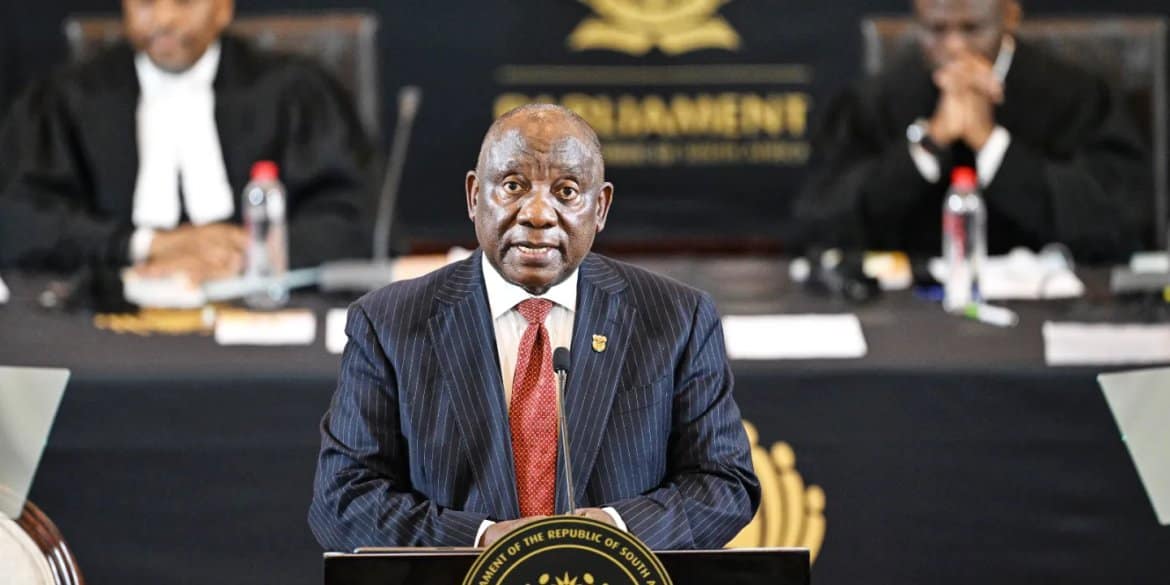
In a powerful address aimed at reinvigorating a cornerstone of the economy, President Cyril Ramaphosa has issued a clarion call to the construction industry, urging it to “go and construct South Africa” and transform the country into a “busy construction site.” The President’s rallying cry, delivered at the Second Annual National Construction Summit at the Birchwood Hotel on Thursday, positions the sector as the primary engine for national recovery, backed by the government’s ambitious R1 trillion infrastructure commitment over the medium term.
Speaking to a gathering of industry leaders, engineers, emerging contractors, and labour representatives, Ramaphosa framed the current moment as a historic opportunity, drawing parallels to the sector’s pivotal role in building a new nation post-1994.
A Foundation for Growth and a Legacy of Delivery
“We stand at a similar precipice of possibility today,” the President declared. “Just as this industry helped build the bridges, roads, and houses that connected a newly democratic nation, it is now called upon to drive our economic recovery and lay the foundation for a sustainable future. The plans are in place, the funding is being mobilised, and the need is urgent. The time for building is now.”
The R1 trillion infrastructure fund is the centrepiece of this vision. Ramaphosa detailed a pipeline of strategic integrated projects (SIPs) spanning energy, water, transport, and human settlements. Key focus areas include:
- Energy & Logistics: Accelerating the rollout of new electricity generation capacity and fundamentally reforming the country’s ports and rail network to unblock economic bottlenecks.
- Water Security: Investing in major water infrastructure projects to ensure long-term water security for households and industries.
- Human Settlements: Scaling up the delivery of integrated, well-located housing and social infrastructure.
Acknowledging Past Hurdles, Promising Reforms
In a nod to the industry’s long-standing frustrations, the President directly addressed the systemic challenges that have often hamstrung both public and private construction. He acknowledged issues of late payment by government entities, bureaucratic red tape, and the corrosive impact of corruption and tender manipulation.
“We have heard your concerns, and we are acting,” he asserted. “We are working to streamline processes, ensure prompt payment, and create a stable and predictable pipeline of projects. We are committed to creating a environment where you can invest in your equipment and your people with confidence.”
A Charge for Inclusive Development
Crucially, Ramaphosa challenged the sector to not only build infrastructure but to also build the nation’s social fabric. He emphasised the non-negotiable need for inclusive growth, calling for the accelerated development of black-owned, women-owned, and youth-owned construction firms.
“This build programme must also be a broad-based empowerment programme,” he stated. “It must transfer skills, create jobs for local communities, and ensure that the benefits of this investment are shared widely, not concentrated in a few hands.”
The speech was largely welcomed by industry bodies, who expressed optimism but also a wait-and-see attitude, stressing that action on the ground—in the form of shovels hitting the dirt and contracts being paid—would be the ultimate measure of success. As the summit concluded, the charge was clear: the blueprint is drawn, the capital is pledged, and the nation is waiting to be built.
About The Author