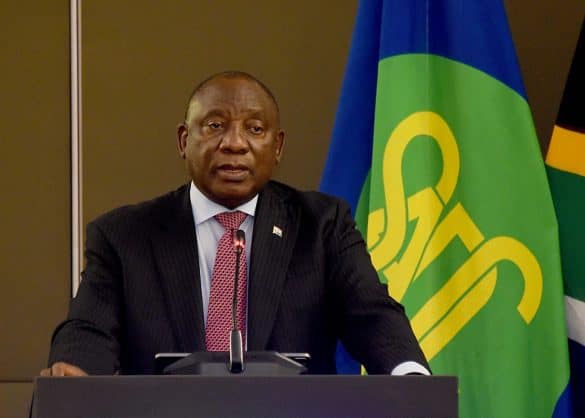
In a pivotal moment for South Africa’s long-troubled legal and security landscape, President Cyril Ramaphosa has formally received the interim report of the Madlanga Commission of Inquiry, a landmark investigation probing corruption, political meddling, and systemic dysfunction within the nation’s criminal justice system. The handover of the document on Wednesday, 17 December 2025, marks the culmination of months of highly sensitive and high-stakes investigation, offering the first official, consolidated diagnosis of the ailments crippling the very institutions meant to uphold the rule of law.
The establishment of the commission, headed by esteemed Constitutional Court Justice Mbuyiseli Madlanga, came amid a perfect storm of public disillusionment. Years of high-profile state capture revelations, the persistent collapse of critical prosecutions, allegations of political sabotage within the police and National Prosecuting Authority (NPA), and a pervasive sense of impunity for the powerful had corroded the foundational contract between citizens and the state. The commission’s mandate, therefore, was not merely investigatory but profoundly restorative: to dissect the mechanisms of compromise and lay a groundwork for reclaiming institutional integrity.
A Probe into the Heart of the System
The commission’s work has operated on an unprecedented scale, examining the interlocking functions of the South African Police Service (SPA), the Directorate for Priority Crime Investigation (Hawks), the NPA, the Department of Correctional Services, and the judiciary itself. Its focus has reportedly spanned:
- Political Interference: Investigating claims of improper external influence over prosecutorial decisions, police appointments, and investigations, particularly in cases involving politically connected individuals or matters of significant state interest.
- Systemic Corruption: Unpacking networks of graft that facilitate the manipulation of dockets, the loss of evidence, the intimidation of witnesses, and the improper granting of bail or parole.
- Institutional Weakening: Assessing how years of state capture, poor leadership, and resource mismanagement have depleted the capacity, morale, and operational independence of key agencies.
The Significance of the Interim Report
While the final report is expected later, the submission of this interim document is a critical procedural and political milestone. It suggests the commission has identified urgent findings or recommendations requiring immediate presidential attention, possibly including:
- Recommendations for Urgent Structural Reforms: These could involve proposed changes to the appointment processes for heads of the NPA and Hawks to insulate them from political pressure, or the creation of new, ring-fenced oversight bodies.
- Referrals for Prosecution or Disciplinary Action: The commission has the power to refer evidence of criminal conduct to prosecuting authorities. The interim report may contain such referrals concerning individuals who have been implicated in testimony.
- An Assessment of Specific High-Profile Cases: The commission likely examined the handling of several emblematic cases that have eroded public trust. The interim report may provide preliminary findings on why these cases stalled or collapsed.
A Nation Awaiting Accountability
The handover occurs against a backdrop of intense public scrutiny. Civil society organizations, opposition parties, and ordinary citizens view the Madlanga Commission as a litmus test for the government’s genuine commitment to ending an era of impunity. “This is not just another report for a shelf in the Union Buildings,” stated Advocate Thandiwe Mbeki of the Legal Resources Centre. “This document must be the catalyst for immediate, transparent, and decisive action. The people of South Africa are watching to see if the powerful will finally be held accountable by a system they have manipulated for years.”
President Ramaphosa’s office has acknowledged receipt, stating the President will “apply his mind to the contents with the urgency it deserves.” The nation now awaits his response, which will signal whether this interim blueprint will gather dust or become the first chapter in a genuine rebuild. The credibility of South Africa’s journey toward a functional, fair, and fearless criminal justice system may well hinge on what happens in the weeks following this quiet handover in Pretoria.
About The Author