For millions of South African students from poor and working-class families, the National Student Financial Aid Scheme (NSFAS) represents the only pathway to higher education—a lifeline that transforms dreams of university or technical college into tangible reality. But behind that noble mission, a darker reality has taken root: an institution riddled with fraud, mismanagement, and governance failures so profound that it has now triggered direct ministerial intervention.
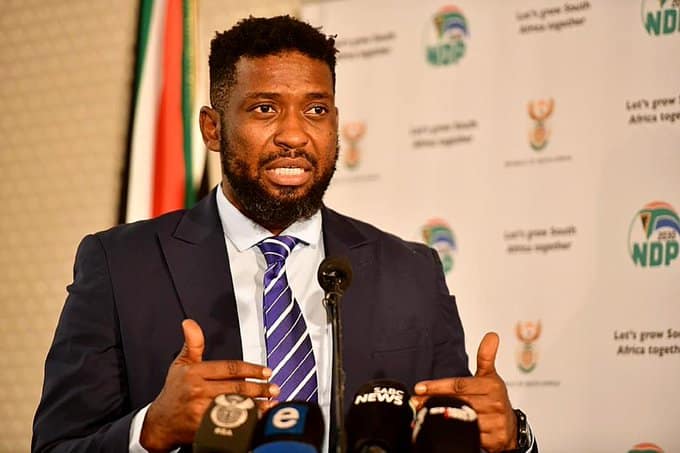
Higher Education and Training Minister Buti Manamela has issued a firm and urgent directive to the NSFAS Board: activate the scheme’s dormant forensic unit immediately and ensure it works hand-in-glove with the Special Investigating Unit (SIU) on cases already under investigation. The instruction, delivered in a formal written directive, also demands that the board refer any identified instances of fraud, misrepresentation, and financial misconduct to the appropriate law enforcement authorities without delay.
The minister’s intervention comes as NSFAS finds itself in the eye of a perfect storm. The scheme, which administers over R40 billion annually in student funding, recently received a damning audit outcome from the Auditor-General (AG) for the 2023/24 financial year—a report that laid bare systemic weaknesses in financial controls, procurement processes, and governance oversight. But the audit findings represent only the visible tip of a much deeper crisis.
Behind closed doors at NSFAS’s Pretoria headquarters, investigators have been piecing together a disturbing picture of how public money meant for student allowances, accommodation, and tuition fees has allegedly been siphoned through ghost students, inflated service provider contracts, and opaque payment systems. The SIU, which was granted a proclamation by President Cyril Ramaphosa to investigate NSFAS in 2022, has already uncovered evidence of widespread irregularities, including the registration of fictitious students, collusion between officials and private accommodation providers, and the awarding of lucrative contracts without following proper tender procedures.
“The time for half-measures is over,” Minister Manamela said in a statement released by his office following the directive. “NSFAS holds the future of our nation’s youth in its hands. Every rand lost to fraud or mismanagement is a rand stolen from a young person who could have been a doctor, an engineer, a teacher. The board has my full confidence to act decisively, but act they must—immediately, thoroughly, and without fear or favor.”
The forensic unit within NSFAS has existed on paper for years, but sources close to the scheme describe it as having been “chronically under-resourced, under-staffed, and in practice, largely inactive.” The unit’s activation now is intended to create a dedicated in-house investigative capacity that can work alongside the SIU, allowing for faster information sharing, more coordinated investigations, and a clearer chain of accountability from detection to prosecution.
According to the minister’s directive, the forensic unit is expected to prioritize several key areas: the vetting of service providers who were awarded contracts to distribute student allowances through the controversial direct payment system; the verification of student registration data across universities and Technical and Vocational Education and Training (TVET) colleges; and the investigation of complaints from students who have reported being forced to pay kickbacks to access their own allowances.
The direct payment system, introduced in 2023 to replace the previous system where funds were channeled through universities, has been a particular flashpoint. Under the new model, NSFAS appointed several private fintech companies to manage student allowance payments. Almost immediately, complaints flooded in: students reported exorbitant transaction fees, delayed payments, and in some cases, demands from service providers that students sign over portions of their allowances in exchange for “expedited” processing. The SIU’s investigation is believed to be examining whether the tender process for these contracts was properly conducted and whether any officials received improper benefits.
“We have students who cannot afford to buy food because their allowances are weeks or months late,” said Thabo Mokoena, president of the South African Union of Students (SAUS), which has been lobbying for stronger oversight of NSFAS. “Meanwhile, we hear reports of millions disappearing into the pockets of well-connected service providers. This is not a technical problem. This is corruption. And we welcome the minister’s instruction, but we will be watching closely to see if it leads to actual arrests, not just more reports.”
The Auditor-General’s findings, which were presented to Parliament’s Portfolio Committee on Higher Education last month, painted a grim picture of an organisation struggling with basic financial controls. The AG flagged material irregularities in procurement, irregular expenditure running into hundreds of millions of rands, and a failure to implement corrective measures recommended in previous audits. Perhaps most troublingly, the AG noted that senior management had repeatedly disregarded advice from the scheme’s own internal audit and risk management committees.
The NSFAS Board, chaired by Ernest Khosa, has accepted the minister’s directive and has committed to its full implementation. In a brief statement, the board said it “shares the minister’s sense of urgency and is taking immediate steps to activate the forensic unit with the necessary resources and mandate to ensure that all identified cases of fraud and misconduct are thoroughly investigated and appropriately referred.”
But critics argue that the board itself must shoulder some of the responsibility for the scheme’s troubles. Several board members have been in their positions since 2021, and oversight hearings in Parliament have repeatedly highlighted governance failures. Some civil society organisations have called for a complete overhaul of the board, arguing that new leadership is needed to restore public trust.
“The same board that presided over this mess is now being asked to clean it up,” said Nomfundo Mhlanga, a policy researcher at the Centre for Applied Legal Studies. “We need to ask whether the current structure is fit for purpose. A forensic unit is essential, but it must be backed by a board that is genuinely independent, technically skilled, and willing to take on vested interests. That has not always been the case.”
The stakes could hardly be higher. NSFAS is the primary vehicle for South Africa’s commitment to widening access to higher education. In the current academic year, the scheme is funding over 1.2 million students at 26 universities and 50 TVET colleges—a number that has grown rapidly following the #FeesMustFall movement and government’s decision to subsidise students from households earning less than R350,000 per year. But the scheme’s financial sustainability has come under increasing scrutiny, with some economists warning that current funding models are not sustainable without significant reform and far stronger controls.
Minister Manamela’s directive also includes a requirement that the NSFAS Board report back to him within 30 days on the status of the forensic unit’s activation, including the resources allocated, the cases prioritised, and the coordination mechanisms with the SIU and other law enforcement bodies. The minister has indicated that he will provide a public update once that report is received.
For the thousands of students who have written affidavits about missing allowances, forged signatures, and unexplained deductions, the activation of the forensic unit offers a fragile hope that justice may finally be coming. But for many, trust has been severely damaged. “I had to drop out for a year because my NSFAS funding never arrived,” said Amanda Ndlovu, a former student at the Tshwane University of Technology who now works as a cashier while trying to save for a return to her studies. “I was told there was a ‘discrepancy’ in my file. Now I hear about this forensic unit. If it catches the people who stole my chance, good. But will it give me back my year?”
As the forensic unit begins its work, the pressure on NSFAS will only intensify. The SIU is expected to release a comprehensive report on its NSFAS investigation in the coming months, and Parliamentary oversight hearings are scheduled to resume after the current constituency period. With student funding a highly emotive issue and an election year backdrop, the political cost of further delays or half-measures will be severe.
Minister Manamela was unequivocal in his closing remarks to the board: “The South African people have a right to know that their taxes are being used to educate young people, not to enrich criminals. Activate the unit. Refer the cases. Let the law take its course. No one is above accountability—not here, not now, not ever.”
The directive has been issued. The board has accepted it. Now, South Africa waits to see whether NSFAS can be pulled back from the brink—and whether the students who depend on it will finally get the protection, and the justice, they deserve.
About The Author