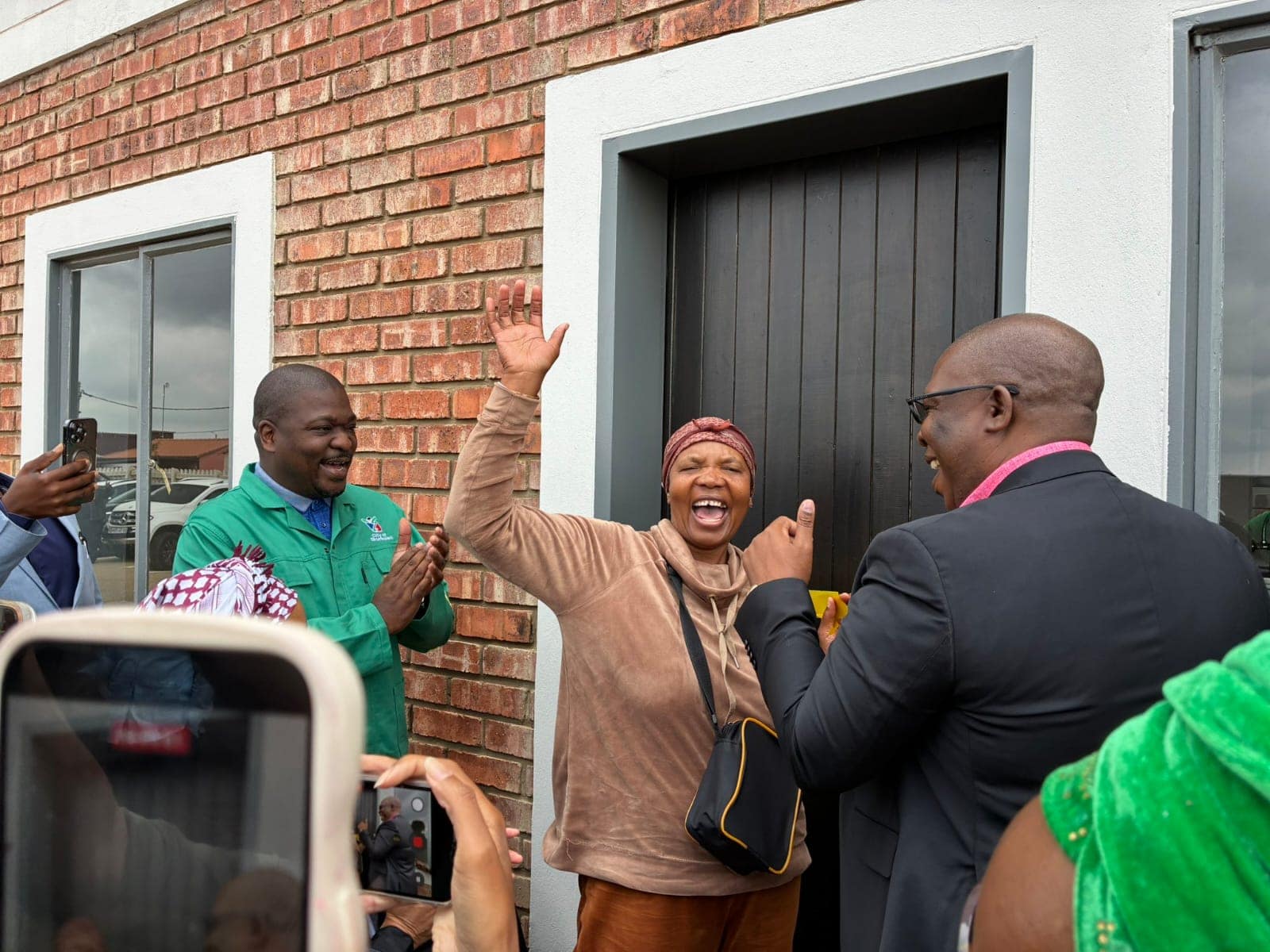
The air in Chief Albert Luthuli, a sprawling settlement on the eastern fringes of Ekurhuleni, usually smells of dust and coal smoke. But on this crisp autumn morning, it smelled of fresh paint, new concrete, and possibility. For 188 families who have waited years—some for decades—the day had finally arrived.
In a ceremony that blended the formality of government protocol with the raw emotion of community celebration, the Executive Mayor of the City of Ekurhuleni, Alderman Nkosindiphile Xhakaza, joined Gauteng Premier Panyaza Lesufi and MEC for Human Settlements Tasneem Motara to hand over the keys to 188 brand-new housing units. The project, part of the province’s ambitious effort to eradicate informal settlements and provide dignified shelter, represents more than bricks and mortar; it is a tangible promise kept.
From Waiting Lists to Welcome Mats
For seventy-three-year-old Miriam Dlamini, the handover was the end of a journey that began when she was a young mother. She had raised her children, and now her grandchildren, in a shack of corrugated iron and plastic sheeting, where winter brought a biting cold and summer rains turned the floor to mud.
“When they told me my name was on the list, I did not believe it,” she said, clutching a set of keys as if they might disappear. “I have heard promises before. But today, I touched the walls. I turned the tap. The water came out. This is real.”
Dlamini’s new home is one of 188 single-storey structures, each featuring two bedrooms, a combined living and dining area, a separate kitchen, and a toilet and shower. The units are modest by design but monumental in impact, equipped with pre-paid electricity meters and connected to the municipal water grid.
The project, officially named the Chief Albert Luthuli Integrated Housing Development, is a collaboration between the Gauteng Department of Human Settlements and the City of Ekurhuleni. It forms part of a broader pipeline aimed at delivering over 30,000 housing units across the province in the current financial year.
Leadership on the Ground
Premier Panyaza Lesufi, known for his hands-on approach to service delivery, arrived not in a motorcade but walking through the newly laid streets, stopping to shake hands with residents and inspect the workmanship. In his address to the gathered crowd, he framed the handover as a matter of justice.
“A home is not a privilege,” Lesufi told the crowd, his voice amplified by a makeshift sound system. “It is a basic human right. For too long, our people have waited in the cold while the rich build palaces. Today, we are restoring dignity, one house at a time. This is what radical economic transformation looks like.”
Standing beside him, MEC Tasneem Motara emphasised the collaborative effort behind the project. She noted that the development had created local employment opportunities during construction, with a significant portion of the labour sourced from the surrounding community.
“We are not just handing over houses,” Motara said. “We are building communities. We are creating jobs. We are ensuring that the people who live here are part of the process from the ground up. That is the only way this work becomes sustainable.”
Mayor Xhakaza, speaking directly to the new homeowners, urged them to take pride in their new environment and to guard against the vandalism of infrastructure that often plagues new developments.
“These houses are yours,” he said. “Protect them. Maintain them. And look out for one another. A house becomes a home only when it is filled with love and community spirit. Let us build that spirit here in Chief Albert Luthuli.”
A Broader Vision
The Chief Albert Luthuli project is more than a standalone development. It is strategically located near transport routes, schools, and clinics, ensuring that residents are not isolated from the amenities they need. The provincial government has indicated that the area has been earmarked for further phases of development, with additional units planned as funding becomes available.
For the beneficiaries, however, the focus is on the present. As the officials cut the ribbon and posed for photographs, families began moving in. Children ran through empty rooms, their voices echoing off the new walls, imagining where their beds would go. Neighbours introduced themselves for the first time, knowing that they would now share a street, a community, a future.
Among them was Thabo Sithole, a father of three who had spent the past fifteen years living in a backyard shack in a nearby township. He works as a security guard, earning just enough to feed his family but never enough to save for a deposit on a home.
“To have a place of my own, with my name on the title deed—I cannot describe it,” he said, his eyes welling up. “My children will not grow up in someone else’s yard. They will have a place to call home. That changes everything.”
The Road Ahead
As the last of the officials departed and the dust settled, the new residents of Chief Albert Luthuli began the slow work of turning houses into homes. Cardboard boxes were unpacked, curtains hung, and the first meals cooked on new stoves.
The handover of 188 units is a milestone, but it is also a reminder of the scale of the challenge that remains. Gauteng, as South Africa’s economic heartland, continues to attract migrants from across the country and the continent, placing immense pressure on its housing infrastructure. Informal settlements still dot the landscape, and the waiting list for housing runs into the hundreds of thousands.
But for one morning, in one corner of Ekurhuleni, the system worked. Promises were fulfilled. And 188 families, clutching their new keys, stepped into a future that finally felt like their own.
About The Author