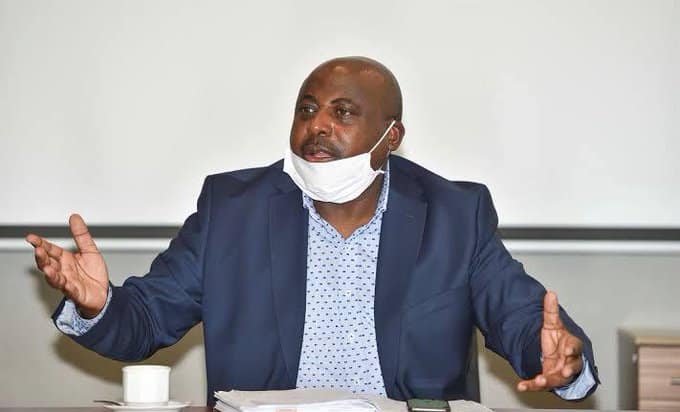
The long-simmering tensions at the heart of Maluti-A-Phofung Local Municipality’s (MAP) crippling water service delivery crisis erupted into a fiery confrontation on Tuesday, as a coalition of enraged water utility workers and supportive union members descended on the municipal headquarters, demanding the immediate ouster of Municipal Manager Advocate Mzwakhe Mofokeng.
The scene, described by onlookers as “chaotic and charged,” saw employees from the water services department, backed by the South African Municipal Workers’ Union (SAMWU), occupying the administration building’s foyer. Their chants of “Mofokeng must go!” and “No to victimization!” echoed through the corridors, bringing municipal business to a grinding halt.
At the core of the uprising is a controversial wave of staff transfers within the already beleaguered water department, which employees and union representatives are calling “punitive” and “revenge-driven.”
A Department Under Siege
“The water section is in shambles, and instead of fixing the broken infrastructure and getting us the resources we need, the manager’s solution is to break the remaining spirit of the workers,” declared Thabo Nkosi, a senior technician with 15 years of service, speaking to reporters outside the building. “We are being uprooted from our posts, sent to far-flung stations without tools, vehicles, or support, for one reason only: because we have spoken out about the corruption and the incompetence that is keeping our people thirsty.”
The MAP region, encompassing towns like Phuthaditjhaba and Harrismith, has been plagued by chronic water failures for years. Residents frequently endure weeks without running water, relying on sporadic tanker deliveries—a service itself mired in allegations of irregular contracts. The water department employees have long positioned themselves as both frustrated insiders and first-hand witnesses to the systemic failures.
The “Revenge Transfer” Catalyst
According to SAMWU regional secretary, Portia Mbele, the spark was the sudden, unilateral transfer of several key, outspoken personnel within the Water and Sanitation division last week. Among them was a pump station operator who had repeatedly logged official complaints about the dire state of crucial machinery.
“These are not operational transfers. They are a clear purge,” Mbele stated firmly. “Advocate Mofokeng is removing those with institutional knowledge and a conscience, those who can point fingers at where the real problems lie. He is scattering the very people who keep the little water that flows, flowing. It is an act of sabotage against the community and a blatant intimidation tactic against workers.”
The union alleges the transfers are retaliation for a series of leaked internal memos and direct appeals to the council that highlighted how budget allocations for water infrastructure repair were being diverted or left unspent, while emergency contracts were awarded to dubious companies.
Management’s Rebuttal and Escalating Stakes
Reached for comment, Advocate Mofokeng issued a terse statement dismissing the protests as “unlawful disruption” fueled by “individuals resistant to necessary operational changes.”
“The restructuring within the water services division is a strategic imperative to improve efficiency and accountability,” the statement read. “The municipality will not be held hostage by employees who oppose transformation. The rule of law and disciplinary procedures will be followed.”
This response has only poured petrol on the flames. Employees argue that “transformation” is a smokescreen for systemic collapse. They cite vacant critical posts left unfilled, the non-payment of suppliers leading to a halt in chemical deliveries for water purification, and a fleet of broken-down service vehicles.
“This isn’t about resistance to change; it’s about a fight for survival—for the community’s survival,” said Nomsa Dlamini, a water quality sampler. “When you transfer the only person who knows how to fix an old pump to a desk job 50 kilometers away, that’s not strategy. That’s a death sentence for that reservoir. They want us to fail so they can justify privatizing our jobs, or worse, so no one can trace where the money went.”
A Community on Edge
The worker’s protest has resonated deeply with the parched community. A small but growing crowd of residents gathered in solidarity outside the gates, echoing the calls for Mofokeng’s removal.
“Our children are sick from dirty water, our businesses are closing. We stand with these workers because they are the only ones telling the truth,” said community leader Paulus Mokoena. “The manager must go. He has failed. This transfer fight is just the proof of his failure.”
As the standoff continues, the situation presents the provincial government with a profound dilemma. The MAP council remains deeply divided, with a faction supporting Mofokeng’s “clean-up” and others siding with the workers. The African National Congress (ANC) provincial leadership is said to be in crisis meetings, wary of both the escalating service delivery backlash and the powerful union’s influence.
One thing is clear: the water crisis in Maluti-A-Phofung has evolved from a failure of infrastructure into a full-blown crisis of governance, trust, and now, internal war. The pipes may be dry, but the political ground is rapidly flooding, and the demand for Adv. Mzwakhe Mofokeng’s head is becoming the rallying cry for a community and its workers pushed to the brink.
About The Author