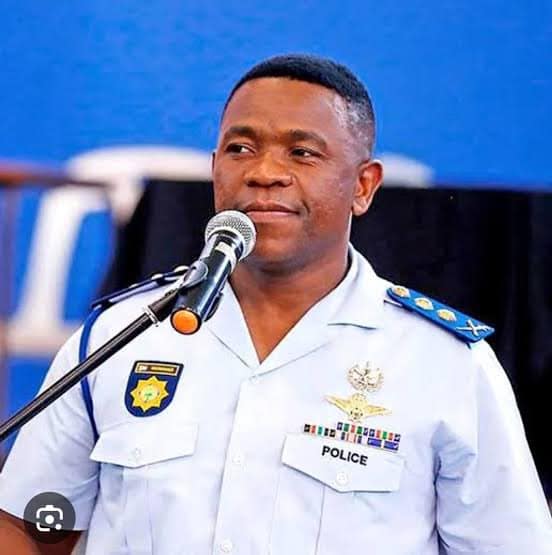
In a move that has been met with widespread approval from political leaders, business forums, and community organisations alike, Lieutenant-General Nhlanhla Mkhwanazi has been reappointed as the Provincial Commissioner of Police for KwaZulu-Natal. The announcement of his second term, confirmed by national police management, ensures that one of South Africa’s most respected and recognisable senior officers will continue to lead the charge against crime in the country’s most volatile province.
Mkhwanazi’s reappointment comes at a critical juncture for KwaZulu-Natal. The province remains a complex policing environment, plagued by high levels of violent crime, political tensions, and the lingering shadows of the July 2021 civil unrest that exposed deep fault lines in the social fabric. In Mkhwanazi, the government has signalled its preference for continuity, stability, and a firm hand.
A Proven Track Record in Turbulent Times
Since his initial appointment in 2018, Mkhwanazi has carved out a reputation as a no-nonsense, hands-on leader. Unlike some of his predecessors who remained behind desks, Mkhwanazi has been a visible presence at crime scenes, on patrols in high-risk areas, and in the media, where he delivers frank, unvarnished assessments of the crime situation without resorting to bureaucratic jargon.
His leadership was put to its most severe test during the July 2021 unrest, when parts of KwaZulu-Natal descended into an orgy of looting and violence. As supply chains collapsed and industries burned, Mkhwanazi was the public face of the police response. He was praised for his calm demeanour and his willingness to speak truth to power, even when it meant contradicting political narratives emanating from national government. His assessment that the unrest had “insurrectionist undertones” was later echoed in official reports, cementing his credibility with a public hungry for straight talk.
Beyond the crisis moments, Mkhwanazi has overseen a sustained focus on organised crime, cash-in-transit heists, and the illicit economy that thrives in the province’s sprawling townships and rural areas. Under his command, the province has seen numerous high-profile arrests, and specialised units have been revitalised to target specific crime categories.
Why a Second Term Matters
The decision to renew Mkhwanazi’s contract is significant for several reasons. Firstly, it provides institutional memory and leadership stability. Policing is a long-game endeavour; building networks of informers, dismantling criminal syndicates, and fostering community trust takes years. A new commissioner would have to start from scratch. By keeping Mkhwanazi in place, national police management is acknowledging that the work he has begun is far from complete.
Secondly, the reappointment is a political statement. In a province where political rivalries often spill over into violence, Mkhwanazi has managed to maintain a degree of independence. He has worked with all political parties represented in the provincial legislature, but has not been seen as a captive of any. His willingness to investigate politically connected individuals, regardless of their affiliation, has earned him respect across the aisle. His second term signals a desire to keep policing at arm’s length from political interference.
Thirdly, Mkhwanazi’s focus on rebuilding the relationship between the police and the community has been a hallmark of his tenure. In the aftermath of the Marikana massacre and numerous other incidents that damaged public trust in the police, Mkhwanazi has prioritised visible policing and engagement. His regular walkabouts in crime hotspots and his accessibility to the media have helped humanise the police force in a province where many residents view law enforcement with suspicion.
The Challenges Ahead
Despite the confidence in his leadership, Mkhwanazi’s second term will be anything but easy. KwaZulu-Natal continues to grapple with a murder rate that ranks among the highest in the country. The taxi industry remains a theatre of violent conflict, with rival associations battling for routes and killing competitors with impunity. Extortion rackets have become endemic in many communities, with business owners forced to pay protection money or face violent consequences.
Moreover, the police service itself is not immune to internal rot. Allegations of corruption within the ranks, including collusion between officers and criminals, remain a persistent challenge. Mkhwanazi has spoken openly about the need to “cleanse” the force, but rooting out bad apples from within a large, entrenched bureaucracy is a task that will consume much of his second term.
The province also faces unique geographical challenges. It boasts a long, porous coastline that is a gateway for drug trafficking, as well as land borders with Mozambique and eSwatini that are notoriously difficult to police. International crime syndicates use the province as a transit route for heroin, cocaine, and other illicit goods, fuelling local addiction and violence.
A Community’s Hope
For the residents of KwaZulu-Natal, Mkhwanazi’s reappointment offers a measure of reassurance. In a province where news headlines are often dominated by violence and dysfunction, he has become a symbol of the state’s capacity to push back.
Business leaders, who were particularly hard hit by the July unrest, have welcomed the continuity. “General Mkhwanazi understands that crime is not just a social issue, it’s an economic one,” said a representative of the Durban Chamber of Commerce. “When businesses are attacked, jobs are lost. His focus on protecting economic infrastructure is vital for the province’s recovery.”
Community policing forums across the province have also expressed their support, though they caution that one man cannot do it alone. “We welcome the general back,” said a forum leader from Inanda. “But he needs resources. He needs more boots on the ground. He needs the government to back him up with the tools to do the job. Without that, even the best commissioner will struggle.”
A Second Chance to Finish the Job
As Lieutenant-General Nhlanhla Mkhwanazi begins his second term, he carries with him the weight of a province’s expectations. The initial years of his leadership were defined by crisis management—navigating a pandemic, civil unrest, and flood disasters. His second term offers the opportunity to move from reaction to prevention, to build on the foundations he has laid, and to leave a lasting legacy of safer communities.
In a brief statement following the announcement, Mkhwanazi struck a characteristically humble and determined tone. “This is not about me,” he said. “It is about the men and women in blue who put their lives on the line every day. It is about the communities we serve. We have made progress, but the work is far from over. We will continue to fight, and we will not rest until every citizen of this province can live in peace.”
For KwaZulu-Natal, a province that has seen more than its share of turmoil, that commitment is precisely what is needed.
About The Author