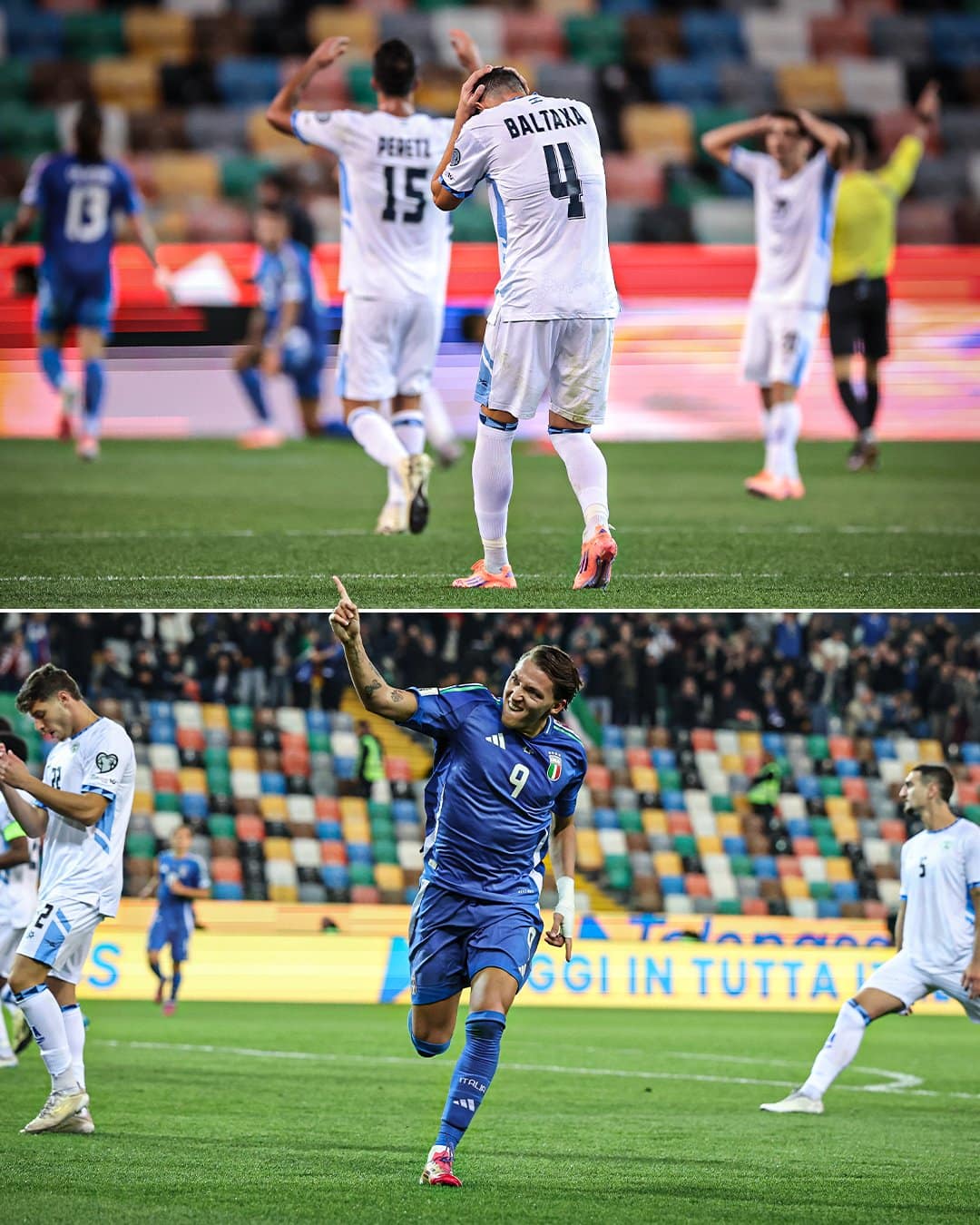
In a match played against a backdrop of geopolitical tension and subdued fanfare, the Italian national team delivered a crucial and professionally executed 3-0 victory over Israel on Tuesday night. The result at Udine’s Bluenergy Stadium keeps the Azzurri’s hopes of direct qualification for the 2026 FIFA World Cup firmly alive while simultaneously confirming the elimination of their opponents from the competition.
A Clinical Performance on the Pitch
From the outset, Italy asserted its dominance, controlling possession and patiently breaking down a resilient Israeli defense. The breakthrough came from striker Mateo Retegui, who solidified his growing importance to the squad with a well-taken first-half goal. The Genoa forward doubled his tally after the interval, showcasing the clinical edge that has often been missing from the Italian attack, effectively putting the game beyond doubt.
The victory was sealed late on when AS Roma’s Gianluca Mancini rose powerfully to meet a corner, nodding home a definitive third goal. The comprehensive scoreline reflected Italy’s control, providing a much-needed injection of confidence for a team still navigating its path under coach Luciano Spalletti.
A Victory with Dual Significance
The three points propelled Italy to 13 points in UEFA Group I, now sitting just two points behind second-place Norway, with the crucial advantage of a game in hand. More significantly, the result mathematically guarantees Italy at least a spot in the playoffs, a vital safety net as they push for an automatic qualification berth. For Israel, which remains rooted to the bottom of the group with only three points from seven matches, the loss confirmed an early exit from the World Cup qualifying cycle.
A Stadium Shadowed by Protest
However, the football itself was often secondary to the charged atmosphere surrounding the event. The match was staged in Udine, a city chosen for its perceived security advantages, yet it drew a sparse crowd of under 10,000, creating a muted environment far from Italy’s typical passionate home support.
The ongoing conflict in Gaza cast a long shadow over the 90 minutes. The Israeli national anthem was met with a chorus of boos from sections of the crowd, a stark indicator of the political sentiments permeating the event. Outside the Bluenergy Stadium, the tension escalated into physical clashes between pro-Palestinian protesters and law enforcement, underscoring the deep divisions that extended far beyond the football pitch.
The evening, therefore, ended as a tale of two outcomes: a resounding and successful sporting result for Italy that brightens their World Cup prospects, set against a somber and contentious backdrop that highlighted the inescapable intersection of global politics and sport. For the Azzurri, the focus now shifts solely to the final group matches, with the mission of ensuring their presence in North America is secured through the front door of automatic qualification.
About The Author