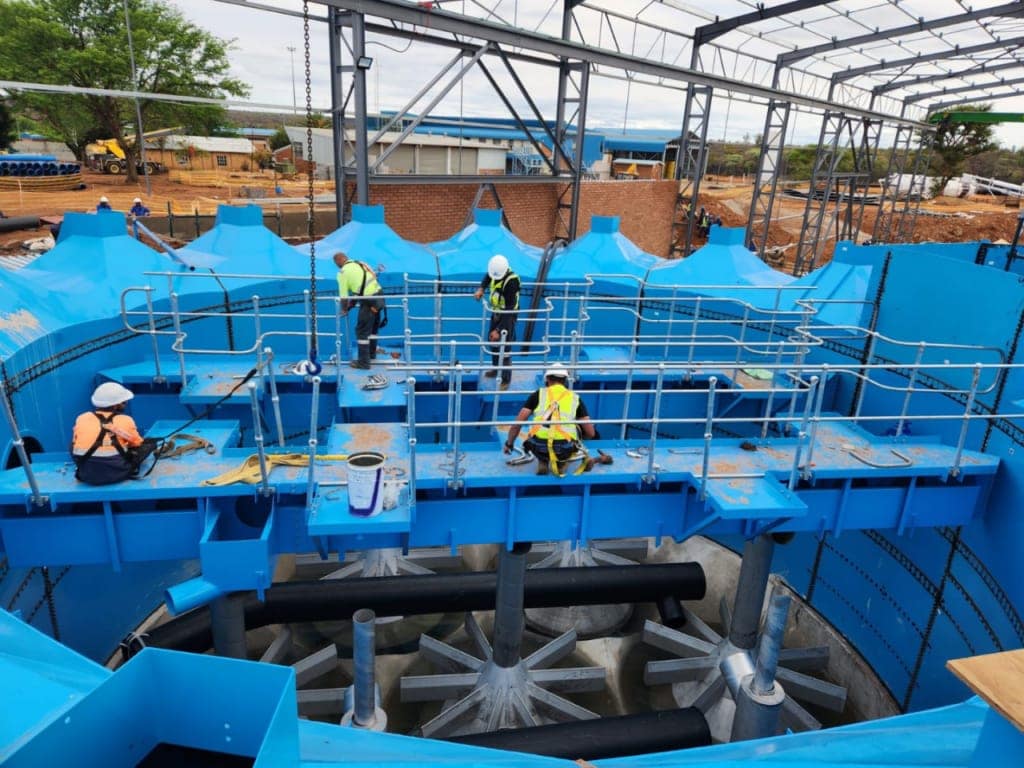
The Hammanskraal Water Intervention Project continues to make steady progress in restoring reliable access to clean, potable water to affected communities, according to a joint statement by the Department of Water and Sanitation, the City of Tshwane and Magalies Water.
Areas including Mandela Village, Marokolong, Ramotse and Kekana Gardens (Steve Biko Village), as well as Babelegi Industrial, Kude Units 1, 2, 3, 6 and 10, Unit D and Majaneng Moshate, are currently receiving water from the Klipdrift Water Treatment Works. Authorities have confirmed that the water supplied meets standards for human consumption.
Significant milestones have been achieved, including the completion of a 50 megalitres-per-day package plant and the refurbishment of the Babelegi Pump Station. Once fully operational, the pump station will enable water to be pumped to the Temba reservoir and distributed to outstanding areas. Construction work on the Klipdrift pump station and energising of the Babelegi pump station is continuing, with critical equipment such as pumps and motor control centres already delivered and being installed.
Despite improvements in both Phase 1 and Phase 2 areas, residents are urged to use water sparingly due to ongoing demand-supply constraints driven by population growth and seasonal factors. Peak water demand is experienced between 05:00 and 10:00 daily. To supplement shortages, the City of Tshwane continues to provide water through tankering during off-peak periods.
Water quality from the newly commissioned system is being closely monitored to prevent health risks. Authorities have also called on communities to report vandalism or illegal connections, stressing the importance of protecting water infrastructure.
The project reflects cooperation across national, provincial and local government and aligns with South Africa’s National Development Plan 2030 and the United Nations Sustainable Development Goals, particularly the goal of universal access to safe drinking water.
About The Author