On Monday, February 9, 2026, Manqoba Mnisi kissed his grandmother goodbye at the gate of Bernard Isaacs Primary School in Coronationville, a modestly prosperous suburb on Johannesburg’s western edge. He was wearing his school uniform, neatly pressed, his grey shorts and white shirt still crisp from the weekend washing. He was carrying a small backpack containing his lunch, his water bottle, and the reading book he had chosen from the classroom library on Friday.
By Tuesday morning, he was dead. By Wednesday, his family was demanding answers that no one seemed able to provide. And by Thursday, the Gauteng Department of Education had announced what should have been automatic: an independent investigation into the circumstances of his death, conducted by an external law firm, with a mandate to establish what happened and who was responsible.
“It should not have required public pressure,” said department spokesperson Steve Mabona, his voice carefully modulated to convey appropriate gravity. “The death of a child in our care is an event of profound significance. We are committed to understanding what occurred and ensuring that appropriate measures are taken.”
The announcement came too late for Manqoba’s family. They had spent three days navigating a system that seemed designed to obscure rather than illuminate, to protect rather than reveal, to manage the narrative rather than uncover the truth. They had been met with silence from school officials, evasion from district authorities, and the particular bureaucratic opacity that transforms grief into frustration and frustration into rage.
“We want the truth,” said Manqoba’s grandmother, her voice breaking as she spoke to journalists gathered outside the school gates. “We want to know what happened to our child. We want to know who was responsible for his care. We want to know why we were not told, why we had to fight for information, why his death has been treated as an inconvenience rather than a tragedy.”
The Day That Changed Everything
The precise sequence of events on February 9 remains unclear, pending the outcome of the investigation. What is known is fragmentary, pieced together from the incomplete accounts provided by school officials and the desperate inquiries of family members.
Manqoba arrived at school at approximately 7:30 AM, deposited at the gate by his grandmother, who watched him walk toward the Grade R classroom before returning home to prepare for her shift as a domestic worker in nearby Roosevelt Park. He was, by all accounts, in good health and good spirits, excited about the week ahead.
Sometime during the morning, something went wrong. The nature of the medical emergency that befell him has not been publicly disclosed, pending the results of a post-mortem examination. What is known is that he was transported from the school to a medical facility—which facility, at what time, and by what means remain unclear—and that he was pronounced dead shortly after arrival.
The family was not notified until late in the afternoon. They received a telephone call from the school, the voice on the other end delivering the news that no family should ever receive: your child is dead. No explanation was offered. No condolences were expressed. No support was provided. Just words, cold and final, ending a life and beginning a nightmare.
“I collapsed,” the grandmother said. “I could not breathe. I could not speak. I could not understand what I was hearing. My child, my baby, the light of my life—gone. And they told me on the telephone like they were reading a weather report.”
The Silence That Followed
In the hours and days following Manqoba’s death, the family encountered a wall of silence that compounded their grief with frustration and suspicion. School officials declined to provide details about the circumstances of his death, citing confidentiality concerns and the ongoing investigation. District authorities referred inquiries to the provincial department. The provincial department issued statements that acknowledged the incident while providing no substantive information.
“We have been treated like enemies,” said a family spokesperson, speaking on condition of anonymity. “Like we are trying to cause trouble rather than seeking answers. Like our questions are unreasonable, our grief inconvenient, our desire to understand what happened to our child somehow inappropriate.”
The silence bred suspicion. If there was nothing to hide, the family reasoned, why was information being withheld? If the school had acted appropriately, why were officials unwilling to explain what had occurred? If Manqoba’s death was a tragic accident, why the secrecy, the evasion, the bureaucratic deflection?
“We do not know what to believe,” the spokesperson said. “We do not know if our child received proper care. We do not know if someone failed in their duty. We do not know if this could have been prevented. We know nothing except that he went to school alive and came home dead. That is all we know. That is all they have told us.”
The Community’s Response
The Coronationville community, a historically colored area that has become increasingly diverse in the post-apartheid era, responded to Manqoba’s death with the particular energy that tragedy generates in close-knit neighborhoods. Parents kept their children home from school. Community meetings were convened. Petitions were circulated demanding accountability.
“We cannot send our children to a school that will not tell us what happened to a child in its care,” said Thabo Ndlovu, whose daughter attends Grade R at Bernard Isaacs. “We cannot trust a system that responds to tragedy with silence. We cannot accept that our children’s safety depends on the goodwill of officials who refuse to answer basic questions.”
The school, for its part, has remained largely silent. A brief statement was issued on Tuesday, expressing condolences to the family and confirming that an investigation was underway. No further communication has been provided. The principal has not made herself available to parents or media. Teachers have been instructed not to discuss the matter.
“We understand the need for confidentiality during an investigation,” Ndlovu said. “But there is a difference between protecting the integrity of an inquiry and hiding from accountability. The school’s response has felt like hiding. It has felt like there is something to hide. It has felt like our children are not safe.”
The Investigation Mandate
The Gauteng Department of Education’s decision to appoint an independent law firm to investigate Manqoba’s death represents an acknowledgment that the internal processes available to the department are insufficient to the task. An external investigation, conducted by professionals with no institutional connection to the school or the district, offers the best hope of establishing the facts without fear or favor.
The terms of reference for the investigation have not been publicly disclosed, but are understood to include: the circumstances of Manqoba’s medical emergency; the adequacy of the school’s response; the timeliness and appropriateness of medical intervention; the communication with the family; and the broader systems and protocols governing the care of children in Gauteng’s primary schools.
“We have given the investigators full access to all relevant information,” Mabona said. “We have instructed them to conduct a thorough and impartial inquiry. We have committed to making their findings public and to implementing their recommendations. We owe that to Manqoba, to his family, and to every child in our schools.”
The investigation is expected to take several weeks. The law firm, which has experience in education-related matters and a reputation for rigorous analysis, will interview witnesses, review documents, and examine the physical environment in which Manqoba spent his final hours. Their report, when completed, will be submitted to the department and, presumably, shared with the family and the public.
The Legal Dimensions
Manqoba’s death raises legal questions that extend beyond the investigative mandate. If the inquiry reveals negligence or misconduct on the part of school officials, criminal charges could follow. If systemic failures are identified, civil claims for damages could be pursued. If regulatory violations are uncovered, disciplinary proceedings could be initiated against responsible individuals.
The family has retained legal representation, a Johannesburg firm with experience in education law and civil claims. Their lawyers have been present at meetings with department officials, have reviewed available documentation, and are preparing for the possibility of legal action depending on the investigation’s findings.
“We are not presuming any outcome,” said attorney Mandla Dlamini, who represents the family. “We are gathering information. We are preserving evidence. We are ensuring that the family’s rights are protected throughout this process. If the investigation reveals that Manqoba’s death resulted from negligence or misconduct, we will pursue all available legal remedies.”
The legal path is long and uncertain. Civil claims against the department could take years to resolve. Criminal prosecutions would require evidence sufficient to meet the high threshold of proof beyond reasonable doubt. Disciplinary proceedings against individual officials would depend on the department’s willingness to hold its employees accountable.
“We want accountability,” Dlamini said. “We want to know what happened. We want to ensure that it does not happen again. We want Manqoba’s death to mean something, to change something, to protect other children from suffering the same fate. That is what his family wants. That is what any family would want.”
The Broader Context
Manqoba Mnisi’s death did not occur in a vacuum. It occurred within a public education system that has been chronically underfunded, overstretched, and inadequately monitored. It occurred in a school that, like many in South Africa, faces daily challenges of resource constraints, staff shortages, and the accumulated burdens of serving communities with complex needs.
The Department of Education’s response—the delay, the evasion, the initial reluctance to engage—reflects patterns that critics have identified across the system. When things go wrong, the instinct is to protect the institution rather than the individuals affected. When questions are asked, the default is deflection rather than disclosure. When accountability is demanded, the response is procedural rather than substantive.
“This is not an isolated incident,” said education activist Phumzile Mlambo. “This is a symptom of a system that has lost sight of its fundamental purpose. Schools exist for children. Everything else—the jobs, the budgets, the policies, the procedures—is means, not end. When a child dies, the system should fall over itself to provide answers, to offer support, to ensure accountability. Instead, we get silence. Instead, we get delay. Instead, we get families fighting for information that should be freely given.”
The systemic failures do not diminish the individual responsibility of those who may have failed Manqoba on February 9. But they provide context for understanding why such failures occur and why they are so difficult to address. A system that is broken at multiple levels cannot reliably protect the children in its care.
The Grief That Remains
In the Mnisi household, the routines of daily life have been suspended indefinitely. The peanut butter sandwiches remain unmade. The small bed remains unmade. The crayons and coloring books remain untouched on the table where Manqoba left them on Friday afternoon, planning to continue his drawing on Monday after school.
The grandmother who raised him—his mother died when he was two, and his father is absent—moves through the house like a ghost, her body present but her spirit elsewhere. She cannot eat. She cannot sleep. She cannot imagine a future that does not include the child who was her reason for waking each morning.
“He was my everything,” she said. “Not just my grandson. My child. My companion. My reason. He made me laugh. He made me proud. He made me feel that my life had meaning, that my struggles were worthwhile, that there was purpose in the difficult days and the long hours and the sacrifices I made for him.”
She paused, her voice catching. “Now he is gone. And I do not know why. I do not know how. I do not know who is responsible. I do not know if anyone will be held accountable. I know nothing except that he is gone, and I am here, and the world makes no sense without him.”
The Questions That Linger
The investigation will answer some questions. It may establish the medical cause of Manqoba’s death. It may determine whether school officials responded appropriately. It may identify systemic failures that contributed to the tragedy. It may recommend changes that prevent similar incidents in the future.
But it will not answer all questions. It will not explain why a healthy five-year-old died on an ordinary school day. It will not explain why his family had to fight for information that should have been freely provided. It will not explain why the system seemed more concerned with protecting itself than with supporting those who had lost everything.
These questions will linger, unanswered and perhaps unanswerable, in the spaces where Manqoba used to play, used to laugh, used to call his grandmother’s name with the particular emphasis that made it a song.
“We will never stop asking,” the family spokesperson said. “We will never stop fighting. We will never stop demanding that our child’s death mean something. But we will also never stop grieving. We will never stop missing him. We will never stop wishing that we could go back to February 9, to that morning at the school gate, to the moment when he waved goodbye and walked away.”
The Road Forward
The investigation proceeds. The family waits. The community watches. And Bernard Isaacs Primary School, its gates closed to journalists and its officials silent, attempts to resume normal operations while the memory of what happened in its classrooms on February 9 lingers in every corridor, every classroom, every moment of silence that falls when children are dismissed for the day.
The investigation’s findings, when released, will not bring Manqoba back. They will not restore what his family has lost. They will not erase the trauma of a child’s death or the frustration of a system that seemed more concerned with its own protection than with the truth.
But they may provide something else. They may provide answers. They may provide accountability. They may provide the basis for changes that protect other children from suffering the same fate. They may provide Manqoba’s family with the knowledge that his death was not meaningless, that his short life mattered, that his loss changed something in the world.
“We want his name to mean something,” the grandmother said. “We want people to remember Manqoba. We want his death to be the reason that other children live. We want something good to come from this horror, because if nothing good comes, then the horror is all there is.”
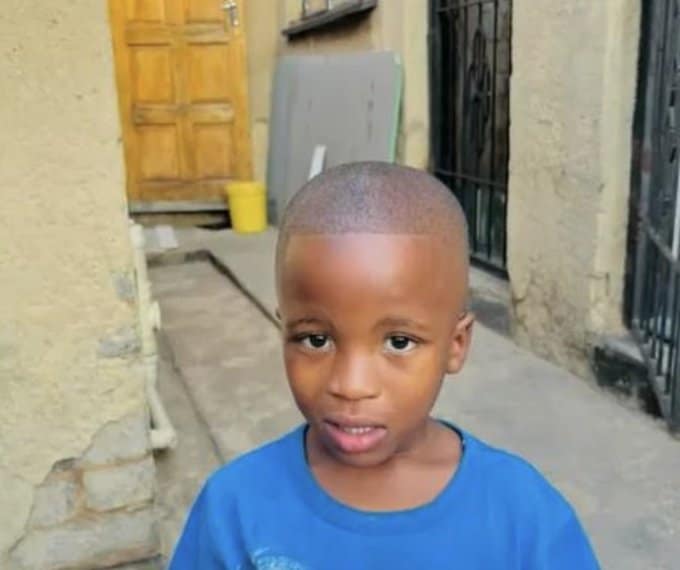
She paused, looking at the photograph of her grandson that she now carries everywhere, the image of a smiling five-year-old in his school uniform, ready for a day of learning and play and life.
“He deserved so much more,” she said. “He deserved to grow up. He deserved to learn to read properly, to write his name without the letters wobbling, to make friends and have adventures and discover what he wanted to be. He deserved a future. They took that from him. They took everything.”
The investigation will determine who “they” are. It will determine what happened and why and who bears responsibility. It will produce a report, and recommendations, and perhaps accountability.
But it will not bring Manqoba back. It will not fill the empty space in his grandmother’s heart. It will not restore the future that was stolen on February 9.
It will only provide answers. For a family drowning in questions, that is something. For a system that failed a child, that is the beginning of accountability. For a society that claims to value its children, that is the minimum required.
The investigation proceeds. The family waits. Manqoba Mnisi, five years old, lover of peanut butter sandwiches and proud writer of his own name, rests in whatever peace the living cannot provide.
About The Author