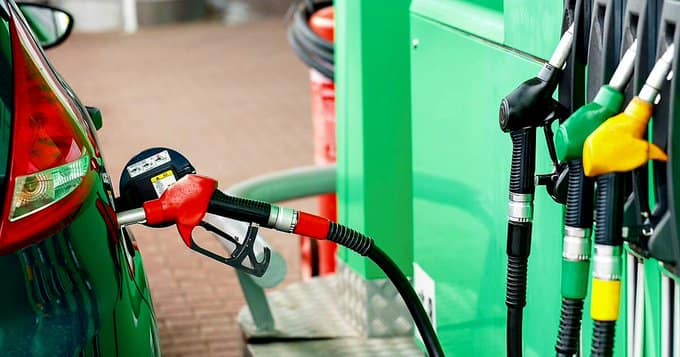
In a significant boost for strained household budgets and the broader economy, South African motorists can expect a welcome and substantial decrease in fuel prices in February 2026. According to unaudited data from the Central Energy Fund (CEF), all grades of fuel are projected to see a notable drop at the pumps, driven by a favourable confluence of stronger international oil prices and an appreciating Rand.
The anticipated cuts, if current trends hold until the end of the month, would mark the third consecutive month of price reductions, offering sustained, if gradual, relief from the high cost of living. Preliminary data suggests the decreases could be among the most significant in recent months.
A Dual Driver: Global Oil and Local Currency
The primary driver behind the expected relief is a sustained period of lower average international petroleum product prices. After volatility in late 2025, Brent crude oil has traded in a more favourable band for importing nations, influenced by tempered global demand forecasts and increased output from non-OPEC producers. This has directly reduced the basic fuel price, which forms the core of the domestic fuel cost.
Compounding this positive trend has been the performance of the South African Rand. The local currency has shown relative strength against the US Dollar during the current averaging period, further reducing the Rand cost of purchasing fuel on the international market. This combination of lower product prices and a stronger exchange rate has created a sizable over-recovery in the fuel price slate.
Projected Decreases (Unaudited Mid-Month Data):
While the final figures will be confirmed by the Department of Mineral Resources and Energy (DMRE) in the first week of February, mid-month CEF projections indicate:
- Petrol 95 (ULP & LRP): A decrease of approximately R1.45 to R1.60 per litre.
- Petrol 93 (ULP & LRP): A decrease of approximately R1.40 to R1.55 per litre.
- Diesel 0.05% Sulphur: A decrease of around R1.20 to R1.35 per litre.
- Diesel 0.005% Sulphur: A decrease of around R1.25 to R1.40 per litre.
- Illuminating Paraffin: A decrease of approximately 95 cents to R1.10 per litre.
Impact on Consumers and the Economy
The relief will be felt directly by millions of commuting South Africans and will have a cascading positive effect on the economy. Transport costs are a major input cost for most goods and services. A reduction at the pump eases pressure on:
- Household budgets, freeing up income for other essentials.
- Small businesses and the logistics sector, lowering operational costs for delivery and transport services.
- Formal and informal public transport operators, potentially slowing fare increase pressures.
“This is very welcome news for consumers and businesses alike,” said economist Thabi Leoka. “While it is not a solution to structural economic challenges, consistent fuel price reductions act as a de facto stimulus. They lower input cost inflation and increase disposable income, which is critical in the current environment.”
The Automobile Association (AA) welcomed the projections but urged fiscal restraint. “While the international factors are working in our favour, the basic fuel price is only one part of the equation. We continue to call for a review of the General Fuel Levy and the Road Accident Fund levy, which constitute a significant fixed cost on every litre sold, regardless of international oil prices,” the AA stated in a comment.
If implemented, the February decrease will provide a tangible respite as the new year gets underway, offering a measure of financial breathing room for a nation still grappling with elevated costs across the board. The official announcement is expected on or around February 5, 2026, with changes taking effect at midnight on Tuesday, February 3.
About The Author