The Licensing Impasse: More Than Bureaucratic Delay
For over two years, SpaceX’s Starlink has been navigating South Africa’s regulatory maze. The Independent Communications Authority of South Africa (ICASA) requires any satellite service operator to have a 30% ownership stake from historically disadvantaged groups (HDGs), a cornerstone of the country’s Broad-Based Black Economic Empowerment (B-BBEE) policies. Starlink’s application, according to sources close to the process, has stalled over this requirement. The company has argued that as a global service with a unified infrastructure, altering its ownership structure for a single market is operationally and legally complex.
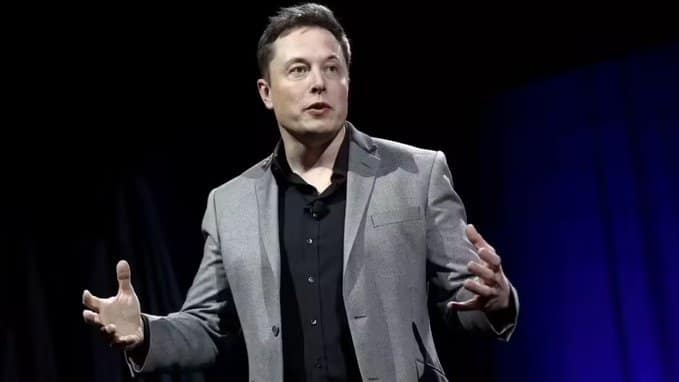
Musk’s recent outburst frames this not as a regulatory hurdle, but as systemic discrimination. “They are super racist against anyone who isn’t Black,” he stated, pointing to B-BBEE laws designed to redress the economic inequalities of apartheid. “This is racist, plain and simple.” This characterization has ignited fury from officials and support from some opposition quarters, cleaving public opinion along familiar yet volatile fault lines.
The Catalyst: The Blocked School Offer
The dispute turned from a corporate regulatory issue into a potent public relations and moral battle when it was revealed that Musk had attempted to bypass the impasse with a direct philanthropic gesture. Following a series of private communications, Musk offered to provide free Starlink internet terminals and data to thousands of rural and underserved schools across South Africa.
The proposal, which could have bridged the digital divide for hundreds of thousands of students in regions where terrestrial broadband is nonexistent, was effectively blocked. The government’s position, as explained by the Department of Communications and Digital Technologies, is that even donated services must operate through a licensed entity. Without a license, the terminals would be illegal, and their use could violate telecommunications laws.
Critics of the government call this a heartless betrayal of the rural poor. “They are so obsessed with race-based ownership that they would rather let children go without the internet than accept help that doesn’t fit their ideological framework,” said one opposition MP. Proponents of the law argue that waiving the rules for a billionaire sets a dangerous precedent, undermining the very laws meant to ensure South Africans own a share of their economy. “We cannot be bribed with philanthropy to surrender our sovereignty and our commitment to transformation,” a government spokesperson retorted.
The Government’s Furious Rebuttal
The response from Pretoria has been swift and severe. Officials have rejected Musk’s “racist” label as a gross misrepresentation of laws designed for redress.
“Mr. Musk’s comments are deeply offensive and a deliberate misunderstanding of our history and our laws,” said Minister of Communications Mondli Gungubele. “B-BBEE is not racism. It is a corrective justice measure for centuries of colonial and apartheid rule that systematically excluded Black people from the economy. Every nation has the right to set its own rules for entry.”
Analysts note that South Africa is not alone in its stance; Starlink has faced similar localization challenges in other countries, including India and Ghana. However, the charged history of South Africa, coupled with Musk’s own background as a white former resident who left, has injected a uniquely personal and political toxicity into the negotiations.
The Broader Implications: Digital Colonialism vs. Digital Equity
The stalemate has sparked a heated global debate that transcends the specifics of the license. Some frame it as a clash between “digital colonialism” and “digital sovereignty.” Is Musk, a foreign billionaire, trying to strong-arm a developing nation into abandoning its empowerment policies? Or is an inflexible government cutting off its nose to spite its face, denying its citizens a transformative technology out of ideological rigidity?
For rural communities, the debate is abstract; the need is concrete. “We have children sharing one textbook, teachers with no access to online resources, and clinics that can’t transmit patient data,” said a principal from the Eastern Cape, who asked not to be named. “They are arguing about ownership in boardrooms while we are stuck in the past.”
What Comes Next?
The path forward is fraught. SpaceX could seek a local equity partner, a move it has so far resisted. The government could explore creating a special license category for satellite broadband, though it would face political pressure not to be seen as capitulating. The third, and most likely, outcome is a prolonged legal and public relations battle, with South Africa’s millions of unconnected citizens caught in the middle.
Musk’s accusation has undoubtedly scorched the earth, making diplomatic resolution more difficult. It has ensured that the issue of Starlink in South Africa is no longer just about broadband, but about the unresolved and painful questions of race, power, and who gets to define justice in a post-apartheid nation. The world is watching, as a tech mogul’s frustration collides with a nation’s fraught journey toward equity, with the promise of free internet for schoolchildren hanging in the balance.
About The Author