The sleek, modern headquarters of the City of Ekurhuleni in Germiston have long projected an image of efficiency and order. But behind the glass façade, a storm has been brewing—one that has now claimed its highest-profile casualties. In a move that sends a clear signal through the corridors of municipal power, the metro has suspended two of its most senior officials: Kemi Behari, the Head of Legal Services and Risk, and Linda Gxasheka, the Head of Human Resources.
The suspensions, announced late on Friday afternoon, are described by the city’s communication team as part of an “ongoing programme of institutional renewal.” But in the world of local government politics, everyone knows the truth: these suspensions are a direct and necessary response to the damning testimony emerging from the Madlanga Commission of Inquiry.
The commission, established to root out corruption and maladministration within Ekurhuleni’s ranks, has become a crucible for the metro’s dirty laundry. Week after week, witnesses have taken the stand to describe a culture of impunity, where rules are bent for the connected and internal disciplinary processes are manipulated to protect the powerful. The testimony that finally triggered the suspensions centred on one man: Julius Mkhwanazi, the acting chief of the Ekurhuleni Metropolitan Police Department (EMPD).
Mkhwanazi, a controversial figure who has been at the centre of multiple allegations, was reportedly facing a raft of internal charges. But according to testimony from Xolani Nciza, the former head of employee relations, those charges were abruptly halted around February 2023. The reason, Nciza alleged, was pressure from the very top—specifically from the then city manager, Dr Imogen Mashazi.
The implication was clear: the disciplinary process against a senior official had been weaponized or neutered to suit political or personal interests. And standing in the middle of this alleged interference, according to the testimony, were Behari and Gxasheka. They were portrayed as key figures in a group that helped shield Mkhwanazi, using their legal and HR expertise to throw up procedural roadblocks and ensure the charges never stuck.
But the allegations did not stop at obstruction of justice. The commission also heard explosive claims about the circumstances surrounding Behari and Gxasheka’s own appointments and salary adjustments. Records presented to the commission paint a startling picture: less than two months after being appointed to their posts, both officials received a 28% salary increase, amounting to roughly R585,000 each. Their annual remuneration jumped from approximately R2 million to nearly R2.7 million.
The timing, prosecutors suggest, is everything. The increases were not the result of a standard annual review or a promotion. They came swiftly, in the wake of their appointments, and allegedly served as a “reward” for loyalty—specifically, for their role in protecting Mkhwanazi and, by extension, the leadership that wanted him protected.
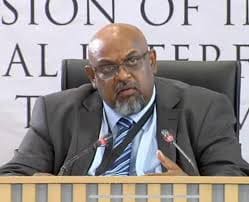
When Behari took the stand earlier this month, he faced the allegations head-on. Dressed in a dark suit, he maintained his composure as he was questioned about the salary hike. “It was shocking to hear I have received a R600,000 bribe,” he told the commission, his voice firm. He insisted that the increase followed a legitimate expansion of his duties and was not linked to any improper conduct. The raise, he argued, was commensurate with his new responsibilities and had been processed through proper channels.
Gxasheka has yet to have her day at the commission. She is scheduled to testify on 26 and 27 February 2026, a date that now looms large on the metro’s calendar. Her testimony is expected to shed further light on the HR mechanics behind the alleged cover-up and the salary adjustments.
The City’s decision to suspend both officials, pending disciplinary proceedings, is a calculated move. By acting swiftly, Executive Mayor Nkosindiphile Xhakaza is attempting to get ahead of the narrative. He has repeatedly emphasized a “zero tolerance” stance on misconduct, framing 2026 as a defining year to restore public trust in local government. The suspensions allow the city to claim the moral high ground, demonstrating that no one is above the rules.
But the move is not without risk. Both Behari and Gxasheka are entitled to a fair disciplinary process, and their lawyers are likely to argue that the suspensions are premature or politically motivated. If the internal committee ultimately clears them, the city will face embarrassment. If it upholds the allegations, the fallout will be even more severe, potentially implicating higher-ups who have so far remained in the shadows.
For the residents of Ekurhuleni—the commuters who rely on EMPD to clear traffic, the ratepayers who expect their taxes to fund services, not salaries—the saga is yet another chapter in a long story of disappointment. The metro, which includes the industrial heartland of Germiston and the sprawling townships of Vosloorus and Katlehong, has struggled for years with allegations of mismanagement. The Madlanga Commission was supposed to be the cure. Instead, it has revealed just how deep the sickness goes.
As Behari and Gxasheka prepare to face the disciplinary committee, the spotlight remains fixed on the mayor. He has drawn a line in the sand. The question now is whether that line will hold, or whether the next wave of testimony will wash away more than just two senior officials. In Ekurhuleni, the house of cards is trembling. And the Madlanga Commission is not done pulling out the cards.
About The Author