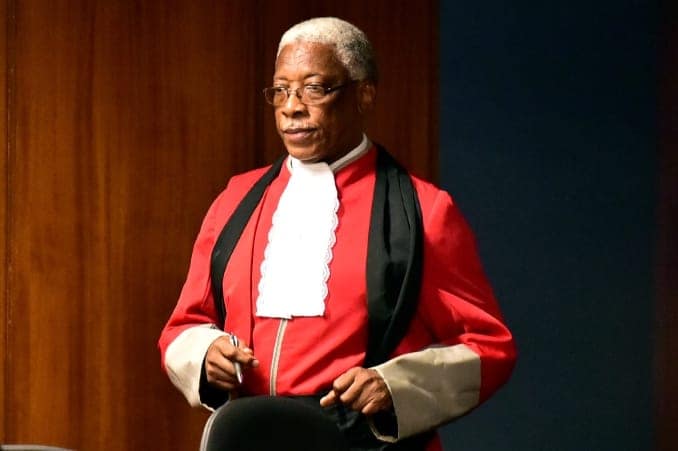
In a landmark ruling that has brought closure to a protracted and closely-watched judicial proceeding, Eastern Cape Division of the High Court Judge President, Selby Mbenenge, has been exonerated on all charges of gross misconduct. The judicial conduct tribunal, established to investigate allegations that threatened to unseat one of the country’s most senior judicial officers, found the evidence presented insufficient to sustain claims of impeachable conduct.
The Allegations and the Tribunal’s Findings
The inquiry, which spanned nearly two years, centered on a series of complaints lodged with the Judicial Service Commission (JSC). The most serious of these alleged that Judge President Mbenenge had improperly interfered in case allocations and displayed bias in certain high-profile matters. Additional peripheral concerns related to administrative governance within the Eastern Cape High Court were also examined.
In a detailed, 87-page report delivered to the JSC and the Presidency, the tribunal—chaired by a Supreme Court of Appeal judge and including two senior legal practitioners—concluded that while certain administrative challenges within the division were noted, the core allegations of gross misconduct amounting to impeachable behavior were not substantiated by evidence. The tribunal emphasized the high threshold required for removing a judge, as set out in Section 177 of the Constitution, and found this threshold had not been met.
“The role of a Judge President is complex, involving both judicial leadership and intricate administrative oversight,” the report stated. “After careful scrutiny of testimony and documentation, the tribunal finds that the applicant’s conduct, even where open to critique on managerial grounds, did not cross the constitutional line into gross misconduct warranting removal from office.”
Reactions from the Legal Community and Political Sphere
The exoneration has been met with widespread relief within the Eastern Cape legal fraternity, where Judge President Mbenenge is regarded as a stabilizing force following years of backlogs and institutional challenges.
“The ruling is a vindication not only for Judge President Mbenenge but for the integrity of the judicial conduct process itself,” said Advocate Vuyani Ngalwana, SC, echoing sentiments from the National Association of Democratic Lawyers. “It demonstrates that serious allegations are thoroughly investigated, but also that our system rightly protects judicial independence from unsubstantiated attacks.”
The Office of the Chief Justice, in a brief statement, acknowledged the conclusion of the process and reaffirmed its commitment to “supporting the leadership of all divisions in their service to the administration of justice.”
From the political arena, responses have been measured. The Ministry of Justice and Correctional Services noted it would “respect the outcome of the independent tribunal process.” Opposition parties offered mixed reactions, with some calling for greater transparency in judicial administration, while others welcomed the clarity the decision brings.
Implications for Judicial Governance and the Eastern Cape Division
Analysts suggest the outcome averts a potential crisis of leadership in one of South Africa’s busiest judicial divisions. The Eastern Cape High Court has grappled with significant caseloads and infrastructure issues. Judge President Mbenenge’s continued leadership is now expected to provide the continuity needed to advance ongoing reform projects aimed at improving access to justice in the province.
“This decision allows the division to move forward and focus on its core mandate: delivering justice efficiently and effectively,” said legal professor Nomfundo Makhubo of Rhodes University. “The shadow of uncertainty has been lifted.”
However, the tribunal’s report did include advisory comments regarding administrative protocols for case management, recommendations that the Office of the Chief Justice indicated would be “studied for potential application across all divisions.”
A Personal and Professional Vindication
For Judge President Mbenenge, a respected jurist with a career spanning the Bench, the Bar, and academia, the exoneration concludes a deeply stressful chapter. Sources close to him indicate he is eager to return his undivided attention to his judicial and administrative duties.
In a short, dignified statement issued through his attorney, he expressed gratitude for the support of his family, colleagues, and the public. “I have always had faith in the process and in the institutions that uphold the rule of law. I am pleased that this arduous journey has concluded and look forward to continuing to serve the people of the Eastern Cape and South Africa with unwavering dedication.”
With the tribunal’s work complete and the threat of impeachment removed, the Eastern Cape judiciary can now look to the future, its leadership confirmed and its authority reaffirmed by due process. The case underscores the rigorous, albeit often painful, mechanisms in place to hold the judiciary accountable while safeguarding its essential independence.
About The Author